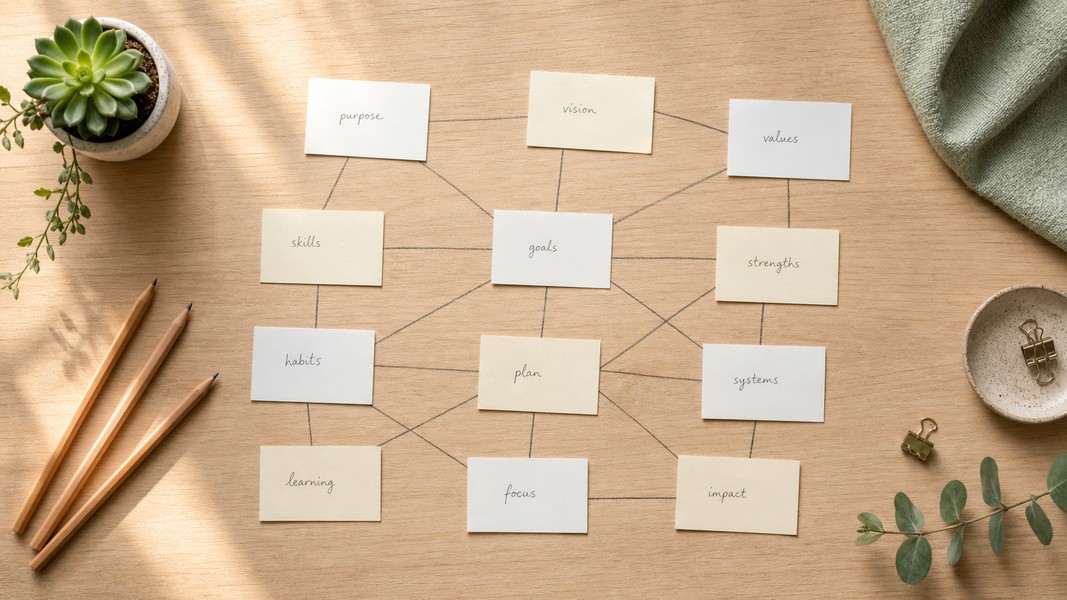
Zettelkasten: How to Build a Knowledge System
July 24, 2026
Learn how the Zettelkasten method works, why linked notes beat linear notebooks, and how to build your own knowledge system from scratch.


June 29, 2026
Every meeting ends with decisions and commitments that need to happen before the next one. A meeting minutes template with action items gives those commitments a clear home: a structured record that captures who agreed to do what and by when.
Done well, your minutes become the operational link between the meeting room and your team's actual work. Done poorly, they become a document nobody reads and action items quietly disappear.
This guide covers what every effective template needs, three ready-to-use formats for different contexts, and a practical system for making sure action items actually get completed.
The core of any meeting minutes template is a consistent set of fields. Whether you are running a weekly team check-in or a formal project review, these elements belong in every set of minutes.
Meeting metadata covers date, time, location or meeting link, and the meeting type. This context makes minutes searchable and helps absentees understand the setting immediately.
Attendees and roles records who was present and in what capacity. For recurring teams this may be brief; for formal or cross-functional meetings, noting roles prevents later confusion about who had decision-making authority.
Agenda items with decisions captures a brief record of each topic discussed and its outcome. This is not a transcript. Each agenda item needs just enough context to explain what was decided, without reproducing the full conversation.
Action items is the section that determines whether your minutes actually drive work forward. This section requires its own structure: a specific task, a named owner, and a deadline. When all three are present, action items get completed. When any one is missing, they tend to disappear.
Next meeting date belongs at the bottom so it is easy to find at a glance.
Discussion notes and action items serve different purposes. Discussion notes capture context; action items capture commitments. Mixing them into narrative paragraphs makes it harder for both humans and tools to find and track them later.
A well-formed action item has three components: a specific task, a single named owner, and an explicit deadline. Project management guidance consistently frames these as the three Ws: what, who, and when. For recurring meetings, adding a status column (Not started, In progress, Blocked, or Done) turns your minutes into a living tracker that opens every future meeting with a natural accountability review.
The most common failure mode for action items is vague language. An item like "review the proposal" gives the owner no signal for what "done" looks like. A clearer version: "Draft a two-page executive summary of the vendor proposal by Thursday." The difference in follow-through is significant.
This format works for most weekly or cross-functional meetings. The key is separating discussion outcomes from commitments clearly.
Meeting: Q3 Planning Review Date: June 29, 2026, 10:00 AM Attendees: Sarah K. (PM), Marcus T. (Engineering), Priya R. (Design) Note-taker: Sarah K.
Agenda and Decisions
| Topic | Decision |
|---|---|
| Q3 budget review | Approved 10% increase for engineering headcount |
| Product roadmap | Delayed mobile feature to Q4; web launch proceeds as planned |
Action Items
| Task | Owner | Due Date | Status |
|---|---|---|---|
| Draft updated hiring plan with new budget allocation | Sarah K. | July 3 | Not started |
| Update roadmap slide to reflect mobile delay | Marcus T. | June 30 | Not started |
| Schedule follow-up with product lead on mobile timeline | Sarah K. | July 1 | Not started |
Next meeting: July 6, 2026, 10:00 AM
Anyone who missed the meeting can read the decisions column; anyone responsible for next steps can scan the action items table without reading the full notes.
For project teams with ongoing deliverables, you want minutes that connect action items to specific milestones and make blocking relationships visible.
Meeting: Redesign Project Status Check Date: June 29, 2026 Attendees: Project team
Milestone Review
| Milestone | Status | Blocker |
|---|---|---|
| Design handoff | Complete | None |
| Backend API v1 | In progress | Awaiting design specs |
| QA testing setup | Not started | Waiting on API |
Decisions
Action Items
| Task | Owner | Due Date | Dependencies | Status |
|---|---|---|---|---|
| Finalize design specs and send to engineering | Priya R. | June 30 | None | In progress |
| Set up QA environment once API v1 is ready | Dev lead | July 5 | Backend API v1 | Blocked |
| Update stakeholder timeline document | Marcus T. | July 1 | None | Not started |
Next meeting: July 6, 2026
The "Dependencies" column makes blocking relationships visible without requiring anyone to re-explain them at the next meeting. Any "Blocked" item gets surfaced immediately when you open with an action items review.
One-on-ones are less formal but benefit from consistent structure, especially for tracking development goals and recurring commitments.
Meeting: 1:1 - Jordan (Manager) / Alex (Direct report) Date: June 29, 2026
Topics Covered
Brief notes on each area discussed: current project status, any blockers, feedback given and received, development goals check-in.
Action Items
| Task | Owner | Due Date |
|---|---|---|
| Share revised project plan with stakeholder | Alex | July 2 |
| Connect with onboarding lead about new hire setup | Jordan | July 1 |
Notes for follow-up: Revisit workload balance at next session given Q3 ramp-up.
One-on-ones rarely need milestone tracking or quorum records. A lightweight format with a clear action items table keeps the record useful without adding overhead that slows things down.
The research on action item follow-through is consistent: specificity, single ownership, and deadlines predict completion. Teams that apply these consistently see action completion rates above 85%, compared to significantly lower rates when items are vague or unowned.
Specificity means writing tasks with an observable outcome. "Research pricing" becomes "Compile pricing from three vendors and summarize in a shared doc by Friday." The first version leaves the owner guessing; the second leaves no ambiguity about what done looks like.
Single ownership means one named person is accountable, even if others are involved in the work. "Alice and Bob will coordinate" creates diffusion of responsibility. "Alice owns this; Bob is supporting" preserves accountability while acknowledging collaboration.
Deadlines should be specific dates, not "ASAP" or "soon." ASAP reads as low priority to most people; a real date creates a real commitment. For work that has dependencies, including those dependencies in the item prevents owners from being blocked without warning.
Avoid bundling multiple tasks into one action item. Overloaded items obscure what done means and make progress hard to track. When you notice an item growing into two or three distinct steps, split it.
Opening each recurring meeting by reviewing last session's action items, with current statuses visible, creates natural accountability without the friction of external reminders. It also sends a clear signal that commitments made in this room get followed up.
A meeting minutes template is only as useful as the system around it. The standard recommendation for high-functioning teams is to distribute minutes, or at least the action items list, within 24 to 48 hours of the meeting. Time-sensitive decisions warrant same-day distribution.
For ongoing teams, the most effective approach integrates meeting action items with wherever work is already tracked. That might mean converting action items into tasks in a project management tool, adding them to a shared doc that serves as a running backlog, or including them as the opening agenda item for the next meeting so progress is reviewed before new work is introduced.
The goal is to prevent your meeting minutes from living as a static document that nobody opens again. When action items move into your team's actual workflow, they get completed at much higher rates.
You can find more detailed guidance on capturing meeting notes and action items if you want to go deeper on the capture process itself, including how to structure note-taking during the meeting.
The biggest friction point in meeting documentation is the manual work: someone has to listen, write, and structure everything in real time while also participating in the conversation. AI-powered tools have changed this considerably.
Voice Memos lets you record any meeting, then automatically detects commitments from the transcript and categorizes them into six types: tasks, events, reminders, locations, contacts, and notes. Instead of manually scanning a recording to find action items, you get structured output where tasks are already separated from discussion context.
This is particularly useful for meetings where the note-taker is also an active participant. Trying to capture accurate minutes while contributing to a conversation compromises both. Recording and processing afterward means you can be fully present in the meeting itself and still produce complete documentation.
The templates in this guide work well alongside automated detection. The AI output gives you the raw material; the template gives it structure. A brief human review confirms that the auto-detected tasks match what was actually agreed, and your minutes are ready to distribute.
For teams working across languages or time zones, Voice Memos also supports transcription in 40+ languages with automatic translation, which keeps meeting documentation consistent for global teams.
For more context on note-taking formats across different meeting types, meeting notes templates covers additional structures worth considering alongside the action items formats above.
A meeting minutes template with action items is not just an organizational tool. It is the mechanism that converts discussion into execution. Every commitment captured with a specific task, a named owner, and a real deadline has a significantly higher chance of being completed than one buried in narrative notes or left unwritten.
Start with a format that fits your meeting type, apply it consistently, and review action items at the start of every recurring session. That habit, more than any specific template, is what closes the gap between what gets discussed in a meeting and what actually gets done afterward.
Discover more insights and tips to enhance your productivity
Learn how the Zettelkasten method works, why linked notes beat linear notebooks, and how to build your own knowledge system from scratch.
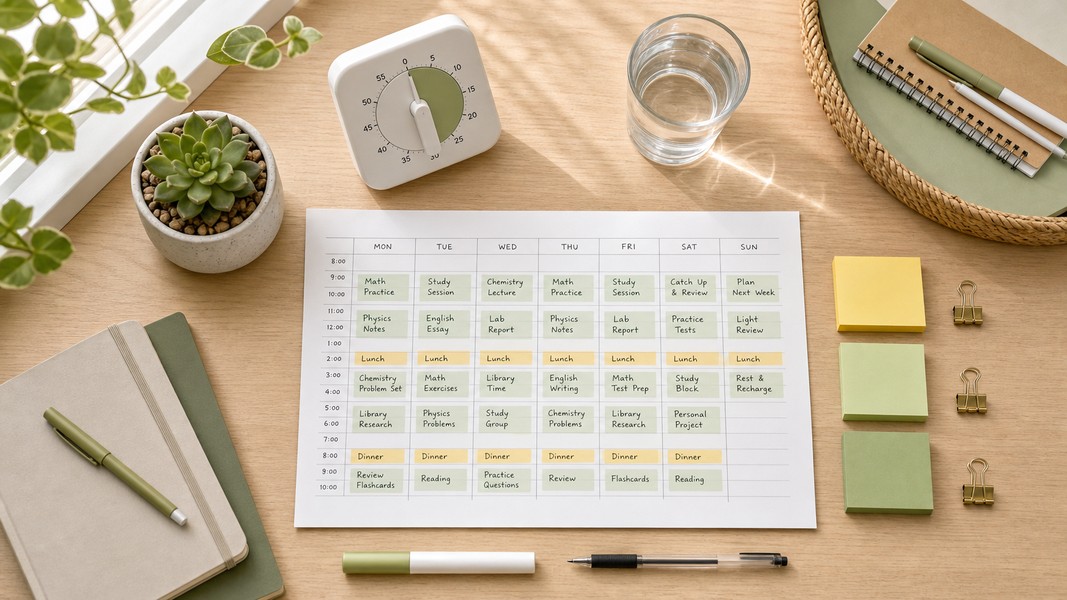
Struggling to manage your time as a student? These 7 evidence-backed tactics fix the real reasons students fall behind and waste hours.

Fathom AI is great for free Zoom notes, but it has real limits. Here are the best fathom ai alternatives for meetings, students, and multi-format capture.