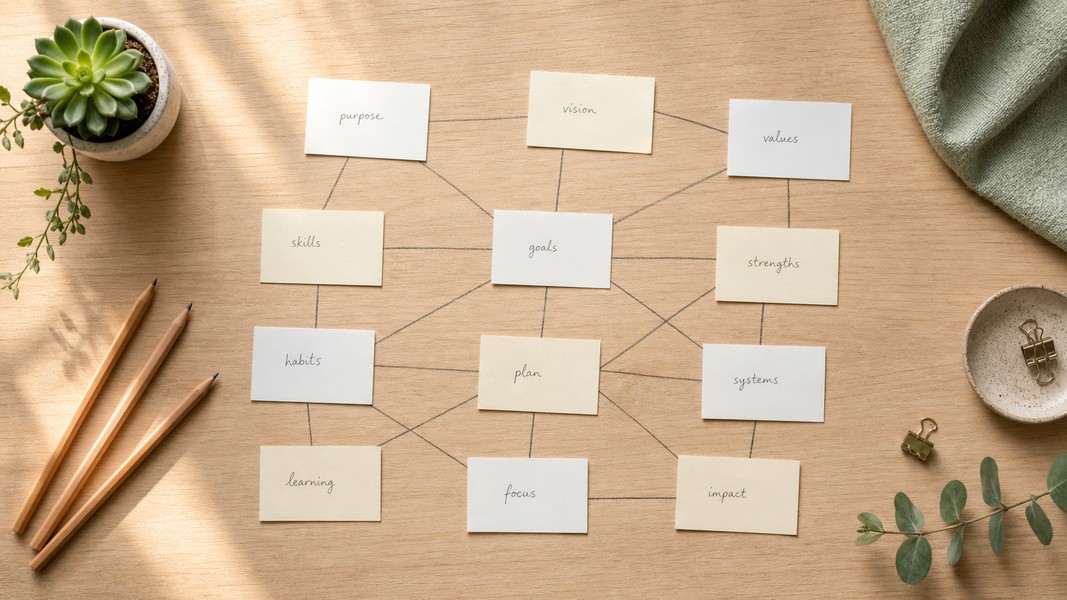
Zettelkasten: How to Build a Knowledge System
July 24, 2026
Learn how the Zettelkasten method works, why linked notes beat linear notebooks, and how to build your own knowledge system from scratch.


March 8, 2026
Active recall is a study technique where you actively retrieve information from memory instead of passively reviewing it. You close your notes, test yourself, and reconstruct what you know. Research consistently shows this approach improves long-term retention far more than re-reading, highlighting, or any passive method.
If you have ever crammed for an exam, felt confident going in, and then blanked on questions you "knew," you have experienced the gap between recognition and recall. Active recall closes that gap.
This guide covers the science behind the method, the specific techniques that work, how to adapt them across subjects, and how to build a study system you can actually maintain.
Active recall is the practice of generating information from memory without looking at your notes or textbook. Instead of reading a passage and moving on, you close the book, ask yourself what you just learned, and attempt to reconstruct the answer.
The mechanism matters. When you force your brain to retrieve a piece of information, you strengthen the neural pathway associated with that memory. Each successful retrieval makes future retrieval faster and more reliable. Each struggle to remember, even when you fail, primes the memory to stick better on the next attempt.
The concept traces back to Hermann Ebbinghaus, the 19th-century psychologist who first studied memory through systematic self-testing. His work revealed the forgetting curve: without reinforcement, people forget roughly 70% of new information within 24 hours. Active recall directly counteracts this decay by scheduling retrieval before forgetting sets in.
Modern research formalized what Ebbinghaus observed. Psychologists Henry Roediger and Jeffrey Karpicke named it the testing effect: retrieving information during study produces better long-term retention than spending the same time restudying.
The numbers are hard to argue with. Roediger and Karpicke's landmark 2006 study found that students using retrieval practice recalled 80% of material after one week. Students who re-read the material recalled only 36%. Both groups spent the same total time studying.
A follow-up study in 2008 reinforced the finding: repeated testing led to twice the retention of repeated reading after a delay. These are not marginal improvements. They represent the difference between remembering half a semester's material and remembering almost none of it.
The neurological explanation is straightforward. Passive review builds recognition: your brain identifies something as familiar when you see it again. Active recall builds retrieval strength: your brain can produce the information without any cues. Exams test retrieval, not recognition. This is why material that felt familiar during re-reading disappears on the day of the test. The Learning Scientists document extensive evidence for retrieval practice across decades of cognitive research.
Retrieval practice strengthens the specific pathways you use to access a memory, not just the memory itself. The more retrieval attempts, the more robust those pathways become. The struggle to remember, even before you succeed, is itself the mechanism of learning. This counterintuitive fact is well-documented in memory research and explains why the difficulty of active recall is a feature, not a problem.
Passive review methods like re-reading, highlighting, and summarizing feel productive because they are cognitively comfortable. Running your eyes over familiar text generates a sense of recognition that the brain interprets as mastery. Researchers call this the fluency illusion: material feels known because it looks familiar, not because you can actually produce it.
Highlighting is particularly misleading. It requires so little cognitive effort that even highly motivated students report spending hours on it with minimal retention gains. Re-reading is slightly better, but Ebbinghaus's forgetting curve still applies: without retrieval, the material decays.
The fluency illusion explains why students who re-read extensively often feel confident before exams and then perform poorly. The confidence is real, but it is based on recognition, not recall. Change the format: remove the textbook, vary the question wording, or test under timed conditions, and the illusion collapses.
| Method | Memory Type | Retention After 1 Week | Cognitive Load |
|---|---|---|---|
| Active recall | Retrieval | 50-80% | High |
| Spaced repetition | Retrieval | 60-80%+ | Medium-High |
| Re-reading | Recognition | 30-40% | Low |
| Highlighting | Recognition | Similar to re-reading | Very low |
The table above illustrates why switching from passive to active methods produces such dramatic results. It is not that students suddenly become more intelligent; it is that they are training the right type of memory for the right type of task.
There is no single correct way to do active recall. The underlying principle is the same across all methods: generate the information from memory before you check whether you are right. What follows are the most effective implementations of that principle.
Flashcards are the most common implementation of active recall, and for good reason. Each card prompts a retrieval attempt; you either remember the answer or you do not, and immediate feedback helps calibrate your confidence. The key to making flashcards effective is combining them with a spaced repetition schedule.
On their own, reviewing flashcards in a fixed daily stack works reasonably well. Combined with spaced repetition (where cards you know confidently appear less frequently and cards you struggle with appear more often), the results are significantly better. Cepeda et al.'s 2006 meta-analysis of 254 studies found that spacing reviews at increasing intervals improves long-term retention substantially compared to massed practice.
One card should cover one fact or concept. The question side should be specific enough to force genuine retrieval; "What is active recall?" is a better card than "Explain memory."
You can create flashcard decks directly from your notes using AI tools. Spaced repetition flashcards generated from a voice recording, lecture PDF, or typed notes give you a ready-to-use active recall system without the manual card-creation overhead.
Close everything and write down everything you remember about a topic on a blank page. No prompts, no structure, just retrieval. When you are done, open your notes and check what you missed.
This method is particularly good for identifying gaps you did not know you had. Material you thought you understood often disappears under the pressure of free recall. That disappearance is useful information: it tells you exactly what to review next.
Free recall works best at the end of a study session as a consolidation tool. After covering a chapter or attending a lecture, spend ten minutes reconstructing the key ideas from memory before you close your books. If you record lectures with Voice Memos, you can replay short segments and immediately test yourself without re-listening to the whole thing.
Convert your notes into question-answer pairs as you write them. For each key concept, write the concept on one side and formulate a question that would require you to recall it. During review, you cover the answers and test yourself.
The Cornell note-taking format applies this principle directly: a narrow left column for questions, a wide right column for answers, and a summary at the bottom. But the format is secondary to the behavior: if you are turning your notes into tests you can take later, you are doing it right.
Simulating exam conditions is one of the most effective forms of active recall. Past papers force you to retrieve information under time pressure, without notes, in a format that mirrors the actual test. The encoding specificity principle helps here: practicing in conditions similar to the test environment improves performance in that environment.
The critical step is reviewing your errors immediately. The moment you identify a wrong answer is a highly effective retrieval attempt for the correct one. Students who skip this step lose most of the benefit.
Draw a mind map of a topic from memory on a blank page. Start with the central concept, branch out into sub-topics, and draw connections between related ideas. Check your map against your notes once you are done.
This technique is especially useful for subjects that require understanding relationships between concepts rather than isolated facts. Biology, history, and economics all benefit from this approach. The act of placing concepts in relation to each other is itself a retrieval and integration exercise.
Uploading your notes, lecture recordings, or PDF textbook chapters to an AI tool that generates quiz questions automates the creation step without skipping the retrieval step. You still have to answer the questions from memory; the AI simply removes the manual work of writing them.
Voice Memos, for example, processes voice recordings, PDFs, images, and YouTube videos and generates interactive quiz questions automatically. You can move from a recorded lecture to a quiz session in minutes rather than spending study time creating the questions yourself. Tools like this make active recall easier to maintain consistently because the barrier to starting is lower.
Active recall and spaced repetition are complementary, not competing, methods. Active recall is the mechanism: you retrieve information from memory. Spaced repetition is the schedule: you determine when to retrieve it.
The forgetting curve makes the combination powerful. Without review, memories decay rapidly in the first 24-48 hours, then more slowly over subsequent days. Retrieving a memory just as it is about to be forgotten produces a stronger memory trace than retrieving it immediately after learning. Spaced repetition algorithms, like those used in Anki, identify that window automatically.
Combined, the two methods address both the how and the when of effective studying. Active recall without spaced repetition still works better than passive review. Spaced repetition without active recall is just rereading on a schedule. Together, they produce retention gains in the range of 40-60% over either method used alone, according to research compiled by Cepeda et al.
For most students, the practical implementation is simple: use flashcard software with a built-in spaced repetition algorithm, or create a manual review schedule where cards you know well move to longer intervals (7 days, 14 days, 30 days) and cards you struggle with stay on short intervals (1 day, 3 days).
The principle is universal; the implementation varies by content type.
Sciences and STEM: Focus on problem types rather than facts. For physics or calculus, active recall means attempting a problem from scratch without looking at the worked solution. For chemistry, it means producing the mechanism or equation from memory. Flashcards work well for formulas and definitions; practice problems do the heavy lifting for application.
Medical school: The volume of memorization required in anatomy, pharmacology, and pathology makes spaced repetition flashcards close to mandatory. Active recall during clinical rotations, such as explaining a drug's mechanism aloud before checking, is a well-documented technique among high-performing medical students. The combination of high-frequency retrieval and spaced scheduling is particularly effective for pharmacology retention.
Humanities and social sciences: Free recall works well here. After reading a chapter on a historical period or sociological theory, write down the key arguments, dates, and figures from memory. Question-based notes are effective for exam preparation: "What caused the collapse of the Roman Republic?" requires a more integrative retrieval attempt than "Who was Julius Caesar?"
Languages: Vocabulary flashcards with spaced repetition are the standard approach, and they work. Sentence-level flashcards, where you produce a full sentence using a target word rather than just translating it, build more durable vocabulary. Grammar rules respond well to the free recall method: write down the rule and produce three examples before checking.
Knowing the method does not automatically mean applying it correctly. A few consistent mistakes reduce the effectiveness of active recall even when students believe they are using it.
The most common error is checking the answer too quickly. The struggle to retrieve information before you succeed is where the learning happens. Giving up after three seconds and flipping the card trains you to give up, not to retrieve. Let the retrieval attempt run for at least 20-30 seconds before checking.
Practicing only easy material is the second most common problem. Students naturally gravitate toward cards and questions they already know because it feels productive and generates correct answers. This is a form of the same fluency illusion that makes re-reading feel like studying. Prioritize the material you are failing, not the material you have already mastered.
Massed practice, where you do all your active recall in one long session close to the exam, replicates the gains of cramming, which are mostly short-term. Spreading sessions across days or weeks is what produces the durable retention that carries through to the exam and beyond.
Finally, some students convert their notes into question-answer format but then re-read the questions rather than answering them. Writing "Q: What is the testing effect?" at the top of your notes is useless unless you actually cover the answer and test yourself.
A sustainable active recall system does not require hours of extra work. Most students can integrate it into existing study time by changing what they do during review sessions, not adding more sessions.
A basic structure for a daily study session: spend the first 10-15 minutes reviewing material from previous sessions using active recall (flashcards, free recall, or practice questions from old material). Spend the remaining time on new content. End with 10 minutes of free recall on what you just covered.
For weekly planning, use the first session of the week to review everything from the previous week before adding new material. This forces retrieval of older content before it decays and makes the new material connect to what you already know.
You can adapt your existing note-taking methods to support active recall without changing your workflow completely. If you already take notes in class, converting those notes to question-answer format during a review session costs relatively little extra time and dramatically improves what you retain.
The key variable is not the specific technique you choose; it is the consistency of retrieval practice over time. Any of the methods described in this guide will produce better results than passive review if you use them regularly. Pick one that fits how you study and build the habit before adding complexity.
Active recall works because it trains the specific mental skill that exams test: retrieving information without cues. Re-reading and highlighting train recognition, which feels like learning but breaks down under test conditions.
The testing effect is one of the most replicated findings in cognitive science. Retrieval practice consistently outperforms passive study in long-term retention experiments, across subjects, age groups, and content types.
Start with one technique, whether that is flashcards, free recall, or question-based notes, and use it consistently for two to three weeks. Compare how you feel going into your next exam against how you felt after a cramming session. The difference tends to be noticeable.
Discover more insights and tips to enhance your productivity
Learn how the Zettelkasten method works, why linked notes beat linear notebooks, and how to build your own knowledge system from scratch.
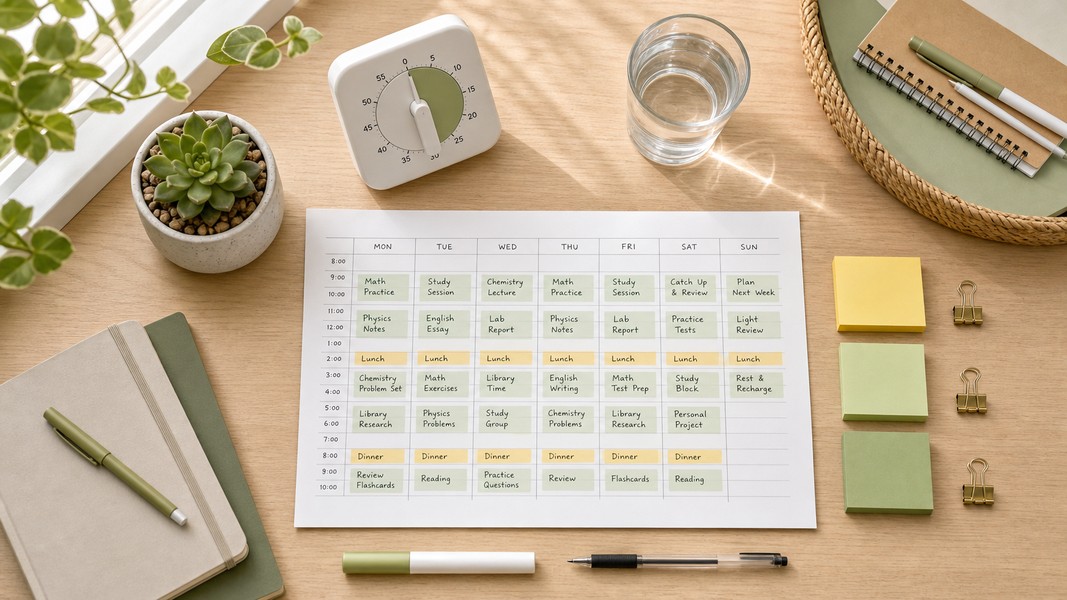
Struggling to manage your time as a student? These 7 evidence-backed tactics fix the real reasons students fall behind and waste hours.

Fathom AI is great for free Zoom notes, but it has real limits. Here are the best fathom ai alternatives for meetings, students, and multi-format capture.