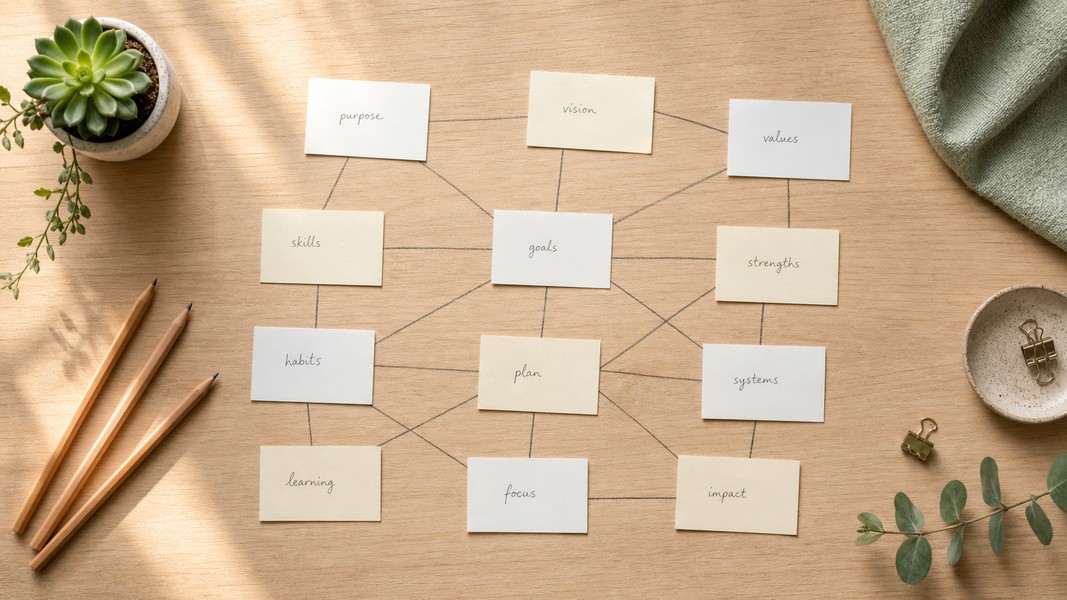
Zettelkasten: How to Build a Knowledge System
July 24, 2026
Learn how the Zettelkasten method works, why linked notes beat linear notebooks, and how to build your own knowledge system from scratch.


March 29, 2026
An AI quiz generator is software that uses natural language processing to analyze your study material and automatically create quiz questions from it. Upload a PDF, paste your notes, record a lecture, or paste a YouTube link, and the AI identifies key concepts, builds multiple-choice and short-answer questions, and gives you a ready-to-use quiz in seconds.
For students who spend hours rereading notes, AI quiz generators represent a fundamentally better approach to studying. Rather than passively reviewing material, you test yourself on it, which research consistently shows is far more effective for long-term retention.
The core principle behind quiz-based studying is active recall: retrieving information from memory, rather than simply exposing yourself to it again. When you reread notes, you recognize familiar information. When you answer a quiz question, you reconstruct it, which strengthens the neural pathways associated with that memory.
Studies show quizzes improve retention 2 to 3 times compared to passive review. A 2024 scoping review published in Computers & Education found that adaptive learning powered by AI quizzes increased academic performance in 59% of studies reviewed, and boosted student engagement in 36%.
This is why AI quiz generators have become central to modern study workflows. They automate the creation step, which used to be the bottleneck. Making good quiz questions by hand takes time, so most students skipped it. With AI, the quiz is ready as soon as your content is uploaded.
Behind every AI quiz generator is a process that breaks your content into meaningful pieces and turns those pieces into questions.
The AI reads your input, identifies key terms, concepts, and relationships, then generates questions at varying difficulty levels. Most tools produce multiple-choice, true-or-false, and short-answer formats. More sophisticated systems include real-time feedback, adapting question difficulty based on your performance.
What separates the better tools from basic ones is how many input formats they accept. Most AI quiz generators are text-only. You paste or type your content, and the AI processes it. That works for typed notes, but it falls short for students whose study material lives in recordings, PDFs, videos, or handwritten pages.
One of the most underused workflows for students is going from voice recording to quiz. If you record lectures, office hours, or your own verbal summaries of readings, you're sitting on study material that most quiz tools can't touch.
The process works like this: the AI transcribes the audio into text, identifies key content within the transcript, and generates questions based on what it found. A one-hour lecture becomes a quiz in a few minutes, without any manual transcription on your part.
For medical students especially, this matters. You record pathophysiology lectures, upload the file, and get terminology and mechanism questions ready for review that same evening. For law students, it means turning recorded case discussions into issue-spotting practice questions.
Voice Memos handles audio-to-quiz in a single workflow. You record directly in the app or upload an existing file, and the AI transcribes in over 40 languages before generating study content including interactive quizzes.
PDF-to-quiz is the most common use case for students working from textbooks, lecture slides, or reading packets. The AI parses the document, extracts meaningful content, and generates questions around key ideas.
The quality of the output depends on how well the AI can identify what matters in the document. Superficial tools produce surface-level questions that test vocabulary rather than understanding. Better systems distinguish between definitions, concepts, processes, and relationships, producing questions that require genuine comprehension.
Voice Memos processes PDFs directly, allowing you to upload a textbook chapter or a set of lecture slides and receive structured study content, including quizzes, without any copy-pasting or manual formatting.
Academic YouTube content has grown into a legitimate study source. Medical students use Khan Academy videos to supplement lectures. Law students watch Supreme Court oral argument analysis. Engineering students work through concept explanations on specialized channels.
AI quiz generators that accept YouTube URLs can pull the video's transcript and turn it into quiz questions just like any other text content. This brings any YouTube video into your study system without requiring you to take notes while watching.
For students who combine video lectures with AI-generated study materials, this is one of the most efficient pipelines available: watch once, quiz repeatedly.
Physical notes present a different challenge. Some students think better on paper, and whiteboard diagrams or handwritten problem sets don't fit into text-based tools.
AI quiz generators with camera scan or image input use optical character recognition to read handwritten or printed material and process it the same way they would a digital document. Photograph your notes, upload the image, and the AI generates quiz questions from what it reads.
This is particularly useful for STEM students who photograph problem sets or derivations, and for anyone who sketches out concepts on paper before transferring them to digital formats.
Most tools handle text-only input. A few have expanded beyond that.
| Tool | Text | Audio | YouTube | Camera | |
|---|---|---|---|---|---|
| Quizlet AI | Yes | No | No | No | No |
| Anki | Yes | No | No | No | No |
| Revisely | Yes | Yes | No | No | No |
| QuizGecko | Yes | Yes | No | No | No |
| StudyFetch | Yes | Yes | No | No | No |
| Voice Memos | Yes | Yes | Yes | Yes | Yes |
Quizlet and Anki remain popular for their large shared deck libraries, but neither generates quizzes natively from multi-modal inputs. You build or import your content first. For students whose material exists in lecture recordings or PDFs, that manual step is a significant friction point.
Revisely and QuizGecko have added PDF support, which handles a major use case. Audio, YouTube, and camera remain gaps for most tools on the market.
Voice Memos is built around the premise that study material comes in many forms. The quiz generator is one part of a broader toolkit that includes spaced repetition flashcards, mind maps, and deep research mode, all drawing from the same uploaded content.
Medical and nursing students benefit most from audio-to-quiz workflows. Lecture recordings are dense and long; turning them into terminology and mechanism questions creates daily review sessions that would take hours to build manually.
Law students working through case law find quiz generation from case brief PDFs or recorded case analyses valuable for issue-spotting practice. The quiz reinforces the rules and elements in a way that passive reading of case summaries does not.
University students across disciplines gain the most when they connect their existing note-taking workflow to a quiz generator. If you already record lectures or work from PDFs, the marginal cost of generating a quiz is near zero. You're just adding a step to a workflow you're already running.
Professionals who learn from documents, articles, or training videos use AI quiz generators to retain technical information longer. The same active recall principle that benefits students applies to anyone trying to learn from written or recorded content.
International students face a specific challenge that multi-modal quiz generators address well. If you are studying in a language that is not your first, transcribing lecture audio and generating questions in your native language creates a review loop that bridges the comprehension gap. Voice Memos supports transcription in over 40 languages, which means students can upload a lecture in one language and review it through quiz questions in another.
Generating a quiz is only the first step. How you use it determines whether the time spent pays off.
Space your quiz sessions out. Testing yourself immediately after studying and then again at intervals is more effective than massed practice the night before an exam. This is the logic behind spaced repetition systems, and it applies equally to quiz-based review.
Pay attention to which questions you miss, not just your overall score. Patterns in your wrong answers reveal the concepts you haven't fully understood, not just the ones you haven't memorized.
Use quizzes to preview material, not just review it. Testing yourself on a chapter before reading it closely, known as pre-testing, has been shown to improve encoding during the subsequent read. Generate a quiz from your PDF before you study it, not just after.
AI quiz generators work best when they meet your material where it actually lives. Most tools still require text input, which means recording a lecture or working from a PDF sends you back to manual steps before you can even generate a quiz. Multi-modal tools eliminate that gap.
The shift from passive review to active testing is the most impactful change most students can make to their study routines. Active recall consistently outperforms rereading in controlled studies, and AI quiz generators make it easier to build that habit into every study session, regardless of where your source material started.
Discover more insights and tips to enhance your productivity
Learn how the Zettelkasten method works, why linked notes beat linear notebooks, and how to build your own knowledge system from scratch.
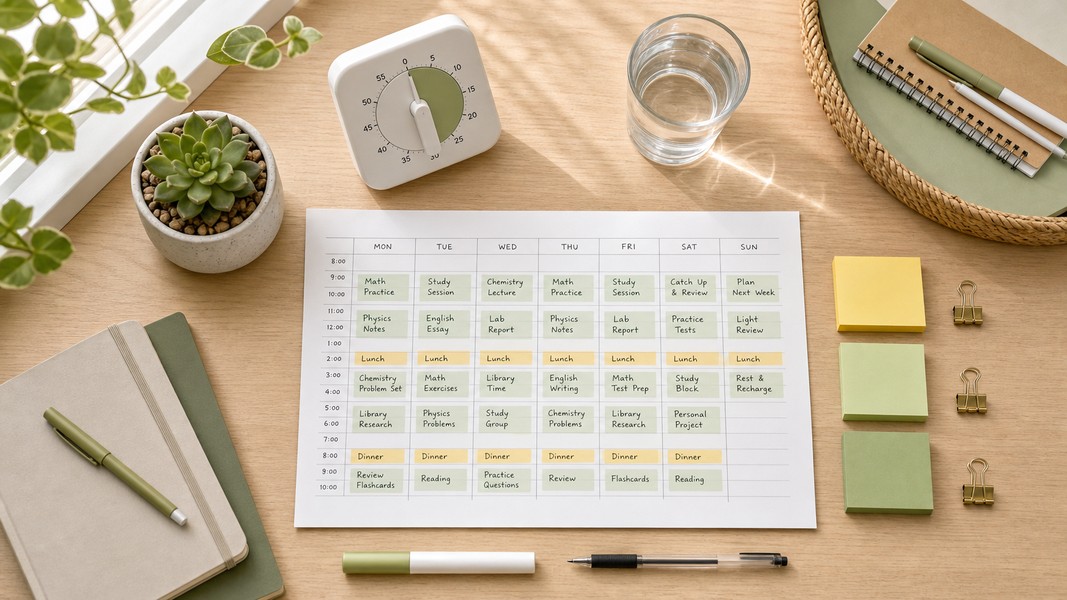
Struggling to manage your time as a student? These 7 evidence-backed tactics fix the real reasons students fall behind and waste hours.

Fathom AI is great for free Zoom notes, but it has real limits. Here are the best fathom ai alternatives for meetings, students, and multi-format capture.