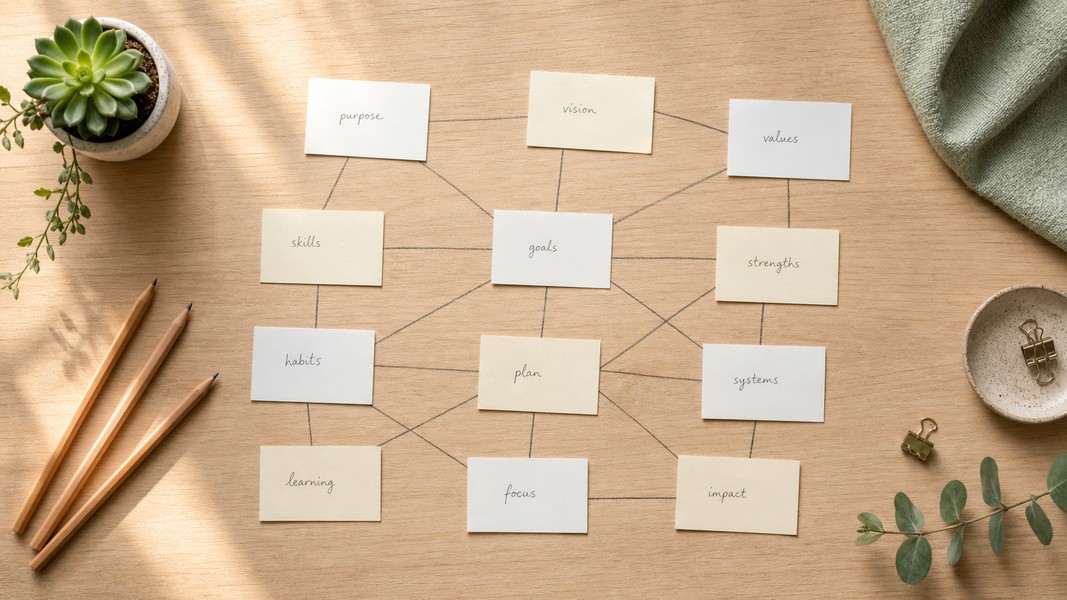
Zettelkasten: How to Build a Knowledge System
July 24, 2026
Learn how the Zettelkasten method works, why linked notes beat linear notebooks, and how to build your own knowledge system from scratch.


March 27, 2026
Active recall is a study technique where you actively retrieve information from memory rather than passively reviewing your notes. If you have ever closed a textbook and tried to recall everything you just read, you have already practiced it. Research consistently shows it is one of the most effective methods available for long-term retention, outperforming re-reading by a wide margin.
This guide covers what active recall is, the cognitive science that explains why it works, and specific techniques you can start using in your next study session.
Active recall means testing yourself on material rather than simply reading or reviewing it. Instead of scanning your notes again before an exam, you close them and try to reconstruct the key points from memory, without any prompts.
The distinction matters because the act of retrieval itself is what strengthens memory. Every time you pull a fact or concept out of your brain independently, you make that memory more stable and easier to access in the future. It is not enough to recognize information when you see it on a review sheet; you need to be able to generate it on your own.
Passive study methods like re-reading, highlighting, and rewatching lecture recordings feel productive because they keep you engaged with the material. The problem is that none of them require your brain to do the one thing that actually builds durable memory: retrieve information without a prompt. That gap between feeling like you know something and actually being able to recall it under pressure is precisely where passive studying fails.
Active recall closes that gap. It is the difference between practicing a skill and watching someone else practice it.
The research on active recall is unusually consistent across decades of cognitive psychology. Scientists call this the testing effect (also referred to as retrieval practice): the repeated finding that testing yourself on content improves long-term retention significantly more than re-studying the same material.
In a foundational study, Roediger and Karpicke demonstrated that students who tested themselves on content retained far more one week later than students who spent the same time re-reading. The researchers found that retrieval practice produced roughly 50% better long-term recall compared to repeated study sessions on identical material.
Why does this happen? When you retrieve a memory, you are not simply accessing a stored file. You are reconstructing it from fragments, which strengthens the neural pathways associated with that information. Each successful retrieval makes the next one easier and more reliable. Passive review, by contrast, strengthens recognition memory but does little for your ability to generate information independently.
Kornell and colleagues found in 2009 that effortful retrieval produces the most benefit. When retrieval is easy, the memory gains are modest. When it is difficult but ultimately successful, the gains are substantial. This is why reviewing material you already know well yields diminishing returns, while testing yourself on concepts you are shaky on pays off disproportionately.
The implication for how you study is direct: the discomfort of struggling to remember something is not a sign that your study session is going poorly. It is the signal that memory consolidation is happening.
Most students default to passive study habits: reading chapters, reviewing highlighted sections, watching recorded lectures a second time. These methods have one thing in common. They give you the answer before you have tried to generate it yourself.
The problem is not that passive methods fail to create any memory. They do. The problem is that they create recognition memory without building retrieval ability. You might read a definition three times and feel confident you understand it, but recognition memory during review does not translate to recall memory during an exam. Recognition is triggered by seeing the information. Recall requires generating it from nothing.
This gap produces what researchers call the illusion of fluency: because material feels familiar after re-reading, it feels learned. Familiarity and actual retrieval ability are not the same thing, but passive review makes them feel identical.
The numbers make the contrast stark. Two hours of active recall practice can produce better long-term retention than six hours of passive review on the same material. That is not a minor efficiency gain. It represents a fundamentally different way your brain processes and stores what you study. Learning scientists consistently rank retrieval practice as one of the two or three most effective study strategies available, alongside spaced repetition.
The most common passive habits to replace are: re-reading notes the night before an exam, reviewing highlighted passages without testing recall, and rewatching recorded lectures as a substitute for active engagement. All of them feel like studying. None of them build the retrieval pathways that exams require.
The core method is simple: study material once, then test yourself on it without looking at your notes. You can do this in several formats depending on the subject and what you are preparing for.
Self-quizzing is the most direct approach. After reading a section or watching a lecture, close your materials and write down everything you can recall about that topic. Do not organize it or worry about completeness. Just retrieve whatever surfaces. Then check your notes to see what you captured and what you missed. Your next review session should focus almost entirely on the gaps, not on the content you already retained correctly.
Flashcards are structured for active recall by design. The question on one side, the answer on the other. Every card forces retrieval before you see the answer. Traditional paper flashcards work well, but they require manual scheduling. Digital tools that apply spaced repetition to your deck go further: they schedule each card to appear just before you are likely to forget it, combining retrieval practice with timing optimization.
Brain dumps work well for topics with breadth. After a lecture or reading session, take a blank document and write everything you remember, in any order and without structure. The constraint of no notes forces retrieval across the full scope of what you studied. When you compare your brain dump to the source material, the missing content shows you exactly where to focus next.
Practice tests replicate the conditions you will actually be tested under. When you work through an old exam or a self-constructed mock test under timed conditions, you are practicing active recall in its most realistic form. Even if no past papers exist, writing your own questions from your notes is nearly as effective.
Different subjects and learning goals call for different retrieval methods. Here are five specific techniques with clear applications.
Voice Memos supports active recall directly through its built-in quiz and flashcard modes. When you record a lecture, upload a PDF, or paste notes into the app, the AI automatically generates quiz questions and flashcard decks from the content. You can move from capture to retrieval practice immediately, without any manual formatting.
Active recall tells you what to do when you study. Spaced repetition tells you when to do it.
Memory degrades in a predictable pattern after initial learning. Hermann Ebbinghaus documented this decay in the 1880s: retention drops steeply in the first day or two after learning, then levels off. Spaced repetition interrupts this decay by scheduling retrieval sessions at increasing intervals: review shortly after learning, then a few days later, then a week later, then further out. Each successful retrieval resets the interval to a longer one. Each failed retrieval resets it to a shorter one.
When you combine active recall with spaced repetition, you get a system that is both effective and efficient. Retrieval strengthens memory. Spacing ensures you are retrieving at the moment when your memory is about to weaken, which produces the most consolidation per minute of study.
For students working with large volumes of material, particularly medical, law, and engineering students, this combination is close to optimal. A deck of 200 flashcards managed with spaced repetition takes a fraction of the time it would take to review all 200 cards manually every day, and it produces better retention because you are only retrieving cards you are about to forget.
The best AI flashcard tools now automate this scheduling entirely. You review the cards the system presents, and it handles the interval logic in the background. Voice Memos applies spaced repetition to automatically generated decks, so even if you start with a recording from today's lecture, your review schedule is already optimized.
The most frequent mistake students make when starting with active recall is treating it as a check at the end of studying rather than the primary study activity. Active recall should not be the last step before an exam. It should replace most of what currently fills a study session.
The second common mistake is reviewing material you already know well because it feels good to get answers right. The retrieval benefit is highest when you succeed on difficult items, not on easy ones. If you are getting every card right with minimal effort, that material is already consolidated. Spend that time on the items you are getting wrong.
A third mistake is passive flashcard review: reading the question, peeking at the answer before fully attempting to recall it, and marking it as known anyway. This erases the retrieval benefit and replaces it with recognition exposure. Cover the answer completely before you try to recall, and be honest when you fail.
The simplest way to begin is with a single session. Pick one subject you are currently studying. After your initial read or review, close your notes and write down everything you remember. Do not worry about structure or completeness; focus only on retrieval. Check against your source, note the gaps, and schedule a second retrieval session in two days.
From there, add flashcards for material that requires precise recall. Convert factual content into question-and-answer pairs and work through them using a tool with spaced repetition scheduling. If you use Voice Memos, you can upload your notes, PDFs, or recordings and let the app generate a flashcard deck automatically, then review it using the app's spaced repetition mode.
The fundamental shift is this: treat retrieval as your primary study activity, not a final check. Re-reading should be a fallback for topics where your retrieval attempts consistently fail, not the default method you return to when study time is short.
Active recall works because retrieval itself is a learning event, not just a test of learning. Every time you pull information from memory successfully, you make it more durable and more accessible under real exam conditions. The research on this is extensive and consistent across decades: retrieval practice outperforms re-reading, re-watching, and re-highlighting by a substantial margin.
The techniques themselves are not complex. Self-quizzing, flashcards, brain dumps, and practice tests all apply the same core principle. What separates students who use this method consistently from those who do not is one shift in default behavior: replacing passive review with active retrieval every time you open your notes.
Discover more insights and tips to enhance your productivity
Learn how the Zettelkasten method works, why linked notes beat linear notebooks, and how to build your own knowledge system from scratch.
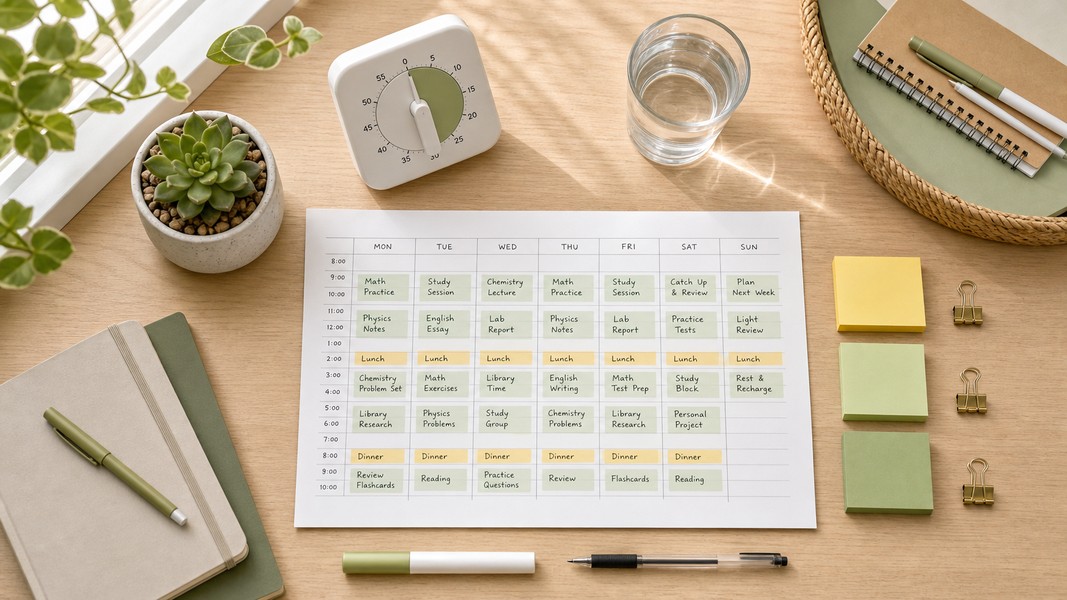
Struggling to manage your time as a student? These 7 evidence-backed tactics fix the real reasons students fall behind and waste hours.

Fathom AI is great for free Zoom notes, but it has real limits. Here are the best fathom ai alternatives for meetings, students, and multi-format capture.