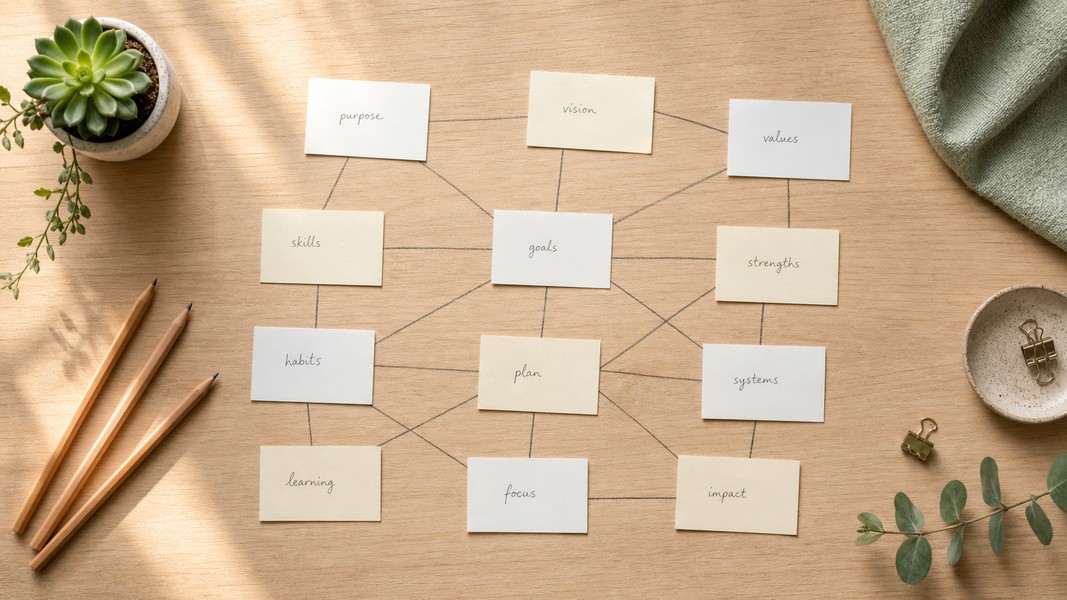
Zettelkasten: How to Build a Knowledge System
July 24, 2026
Learn how the Zettelkasten method works, why linked notes beat linear notebooks, and how to build your own knowledge system from scratch.

May 13, 2026
Reading comprehension strategies are specific techniques that help you actively engage with a text, process its ideas, and retain them beyond the next hour. The seven methods below are backed by cognitive science research and work across textbooks, academic papers, PDFs, and any other dense reading material students encounter.
Most students read the way they were taught years ago: start at the first word, move through to the last, then flip the page. That approach works for simple narrative content. It fails with complex academic material, where ideas build on each other and every paragraph assumes you absorbed the previous one.
If you finish a chapter and can't summarize what it covered, passive reading is the problem. The strategies here will fix that.
Passive reading produces roughly 10% retention after 24 hours, according to research on the illusion-of-competence effect. Your brain treats familiar words as processed information, even when no real understanding has formed. You reach the end of a section feeling like you read it; you did, but the content didn't get encoded into long-term memory.
Active strategies fix this by forcing your brain to do something with the information as it arrives. Questioning, summarizing, and testing yourself create deeper encoding pathways than simply moving your eyes across words.
Data from national reading assessments show that a significant portion of students score below basic reading proficiency, even by high school. The issue isn't effort; it's method. The seven strategies below give you a concrete method.
Before reading a single sentence, spend two to three minutes surveying the material. Scan the title, all headings, bold terms, and the first and last sentence of each major section. Read the summary or abstract if one exists.
This technique activates your prior knowledge and creates a mental framework for the content that follows. Research by Duke and Cartwright demonstrates that previewing significantly improves comprehension because it prepares your brain to recognize connections as they appear. Students who skim before reading form better predictions about what they'll encounter, which makes the actual reading faster and more focused.
After your preview, write down one or two questions you expect the text to answer. Then approach reading as finding the answers, not just consuming words.
If you're working from a PDF, Voice Memos can process the uploaded file and extract a structured outline of headings and key terms instantly, giving you that preview layer without skimming through the full document yourself.
Annotation turns passive reading into an active dialogue with the text. As you move through each paragraph, underline or highlight one key phrase, then add a brief note: a question the paragraph raises, a connection to something you already know, or a one-word label like "key claim" or "evidence."
The constraint matters. Students who highlight everything learn nothing from their highlights. Deciding what deserves a mark is where the thinking happens, and thinking is where encoding happens.
Reading Rockets, a research-based reading resource, consistently identifies active annotation as one of the highest-impact reading strategies available to students. The process of marking and labeling keeps you alert to the structure of an argument, not just the surface of a sentence.
Limit your annotation to roughly 10% of the text. More than that is noise. When you finish the section, your annotations become the raw material for your notes, and they pair naturally with Cornell notes as a structured follow-up system.
After each major section, look away from the page. In your own words, say or write what the section covered. Aim for two to three sentences, and resist the urge to look back before you try.
Then check yourself. Return to the text and verify whether your summary captured the main point. If it didn't, reread only the parts you missed, not the entire section.
This technique works because paraphrasing builds stronger memory traces than re-reading. When you reconstruct meaning in your own language, your brain actively processes the ideas rather than recognizing familiar sequences of words. Research on explicit summarization instruction finds consistent comprehension gains when students apply this practice systematically across a reading.
The stop-and-summarize step also surfaces comprehension gaps while you still have context to fix them. Discovering at the end of a chapter that you missed a key concept is frustrating. Discovering it after a single section is fixable in a minute.
Self-questioning is one of the most consistently supported reading comprehension strategies in the research literature. Generating your own questions while reading keeps attention focused and activates a metacognitive loop: you notice when you don't understand something, which signals you to slow down.
At each section break, ask yourself: What was the main claim? What evidence supported it? How does this connect to what came before? You don't need to write every question down. Mentally posing them and holding off on reading further until you can answer is enough to shift from passive to active processing.
If you consistently can't answer your own questions after a section, that's a signal to reread more slowly, not to push forward. Speed is irrelevant if the material isn't sticking. The goal of any reading session is understanding, not page count.
Self-questioning pairs particularly well with annotation from Strategy 2. The questions you mark in the margins become the review questions you use later in Strategy 6.
After completing a chapter or major section, draw a diagram that shows how the key concepts relate to each other. Put the central idea in the middle, branch out to sub-ideas, and draw connecting lines between related points wherever you see them.
This technique is rooted in dual-coding theory: creating a visual representation alongside verbal notes encodes the information through two separate memory pathways. That redundancy makes retrieval easier later because you have more than one route back to the information.
You don't need to be a skilled illustrator. A rough diagram that shows the relationships between ideas is more useful than a polished one that took 20 minutes to perfect. The goal is to see the structure of the content, not just its sequence.
Voice Memos generates mind maps automatically from any uploaded content, including scanned textbook pages and PDFs. For longer reading assignments, using the generated mind map as a starting point and then annotating it manually gives you the benefits of both approaches without starting from a blank page.
Before you close the material and move on, spend five minutes testing yourself on what you just covered. Retrieve the key points from memory without looking, then check which ones you got wrong. Spend your remaining time only on those gaps.
This is the testing effect, one of the most replicated findings in memory research. According to retrieval practice research by Roediger and Karpicke, students who tested themselves after reading retained roughly 50% of the material a week later. Students who reread the same material retained about 30%. The act of retrieval, not the act of reviewing, is what builds durable memory.
This principle is the foundation of active recall as a study method. The key mechanic is always the same: retrieve first, then check. Looking up the answer before you attempt retrieval eliminates the benefit.
Voice Memos generates quiz questions automatically from any processed content, including uploaded PDFs and recorded lectures. For long reading assignments, this removes the friction of writing your own questions and lets you move directly into the retrieval practice.
A single reading session, even a rigorous one applying all six strategies above, isn't enough to retain information beyond the next few days. To hold knowledge for weeks or months, you need spaced reviews: return to your summary notes the day after you read, then again one week later.
Each review session takes a fraction of the original time: five to ten minutes on your notes and mind map is enough. You're not re-reading the material. You're testing whether you can still retrieve the core ideas, and strengthening the memory traces each time you do.
The spacing effect is one of the most reliable findings in cognitive science. Revisiting material at increasing intervals forces your brain to reconstruct the information each time, which builds more robust long-term retention than any amount of same-session repetition. A week of spaced reviews across multiple sessions consistently outperforms a single long study block.
Treat your summary notes and self-test questions as the content for these reviews, not the original text. Everything you need is already captured in the notes you took during the initial reading.
Reading comprehension strategies work best when stacked together. Preview before you read, annotate as you go, summarize section by section, and question yourself throughout. After finishing, map the structure visually, test yourself immediately, and return for two spaced reviews.
No single technique transforms comprehension on its own. But combining three or four of these into your regular reading routine produces meaningfully better understanding and retention than passive reading produces after hours of effort. Start with previewing and stop-and-summarize. Add self-testing once those feel natural. Build from there.
Discover more insights and tips to enhance your productivity
Learn how the Zettelkasten method works, why linked notes beat linear notebooks, and how to build your own knowledge system from scratch.
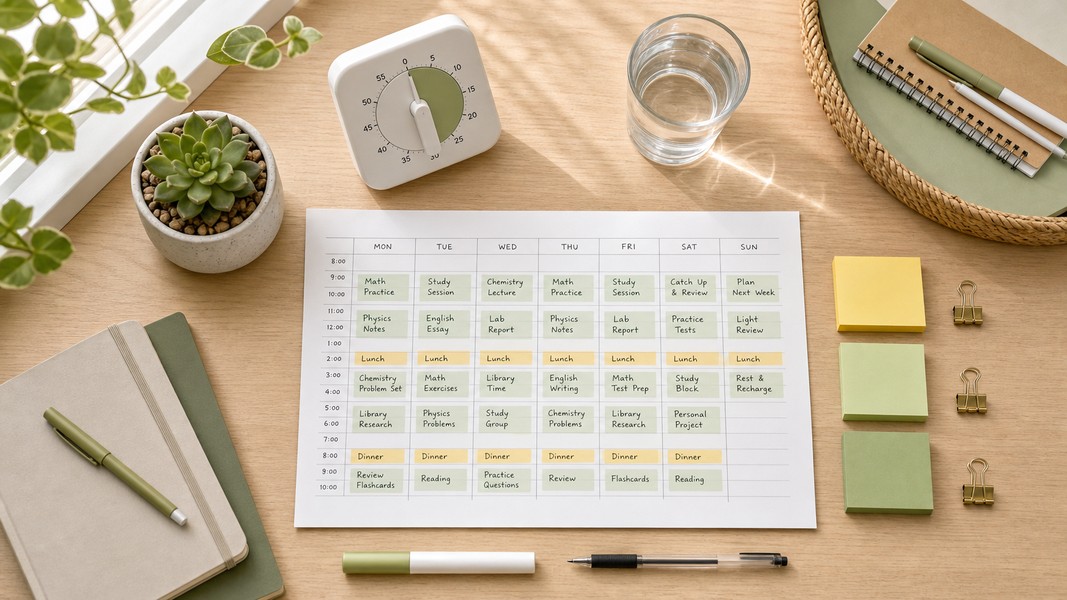
Struggling to manage your time as a student? These 7 evidence-backed tactics fix the real reasons students fall behind and waste hours.

Fathom AI is great for free Zoom notes, but it has real limits. Here are the best fathom ai alternatives for meetings, students, and multi-format capture.