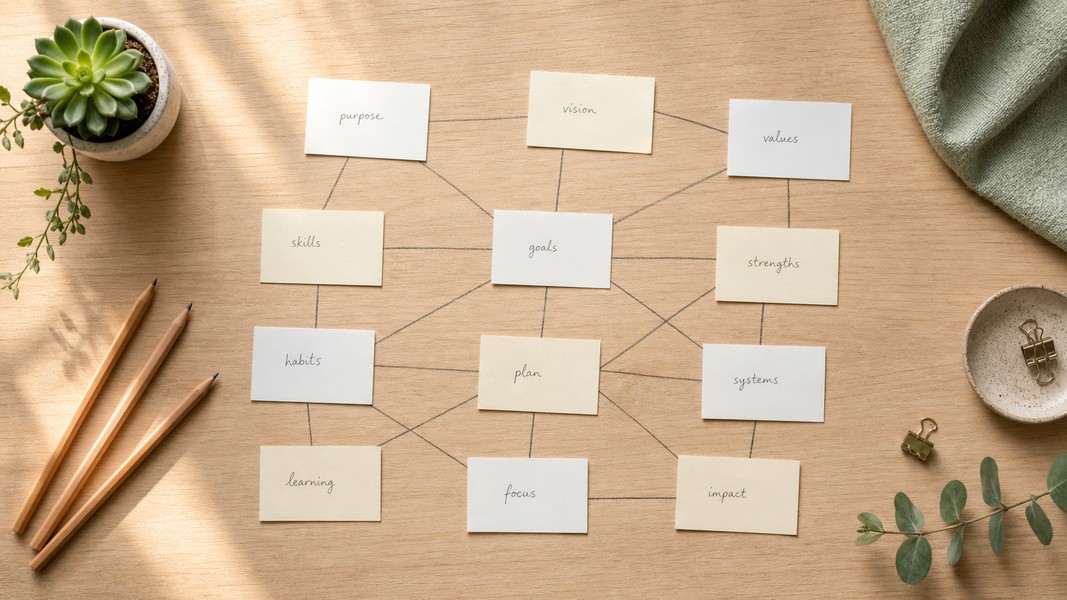
Zettelkasten: How to Build a Knowledge System
July 24, 2026
Learn how the Zettelkasten method works, why linked notes beat linear notebooks, and how to build your own knowledge system from scratch.


February 27, 2026
The 6 best AI mind map generators for students in 2026 are Mapify, Atlas, MindMap AI, Coggle, Whimsical, and GitMind. Each handles different input types and study workflows, so the right choice depends on whether you need multi-modal input (voice, PDFs, video), research-grade accuracy, or a solid free option.
If you record lectures, upload textbooks, or paste YouTube links to build your study materials, a multi-modal tool like Mapify or Voice Memos will serve you better than text-only generators. If you need source-verified maps for research papers, Atlas is purpose-built for that. And if you want something free and fast with no learning curve, Coggle and GitMind both deliver.
Here is what each tool does well, where it falls short, and how to pick the right one for your courses.
An AI mind map generator takes your content (text, a PDF, a recorded lecture, a YouTube video) and automatically builds a visual map showing how ideas connect. Instead of drawing nodes and branches by hand, you paste your source material and the AI extracts key concepts, identifies relationships, and arranges them into a structured diagram.

The underlying process involves three steps. First, natural language processing analyzes your input to find the most important terms and how they relate. Second, the system builds a knowledge graph, treating concepts as nodes and relationships as connections. Third, a layout algorithm renders this graph as a visual diagram with color coding and spatial organization designed for readability.
The sophistication varies significantly across tools. Basic generators use keyword extraction, which works for simple topics but misses nuanced relationships in complex academic material. More advanced systems use multi-stage reasoning that understands context and hierarchy before generating output, which matters when you are mapping a dense research paper or a two-hour biology lecture.
Research consistently shows that mind maps improve retention compared to traditional linear notes. In a peer-reviewed study with nursing students, those using mind maps achieved significantly higher one-month retention scores than the text-based group; the difference was statistically significant at p=0.03. The reason involves two learning principles: dual coding theory, which holds that information encoded both visually and verbally creates stronger memory traces, and generative learning, which requires you to actively organize material rather than passively read it.
This creates an important trade-off with AI-generated maps. When you build a map manually, the act of deciding how concepts relate forces deep processing. AI generation saves time but removes some of that cognitive work. The most effective approach is to use AI for initial structure, then refine the map yourself. This hybrid workflow keeps the time-saving benefits while preserving the active learning component.
One more consideration: AI models hallucinate. A 2026 study found that even advanced models achieve only 61-68% accuracy under stress testing for summarization tasks, and AI-generated summaries are roughly five times more likely to overstate scientific findings than human-written ones. For academic work, always verify AI-generated maps against your source material rather than treating them as authoritative.
We assessed each tool across eight criteria most relevant to students: input format flexibility (text, PDF, voice, YouTube), AI sophistication level, output accuracy for academic content, collaboration features, export options, platform availability, free-tier functionality, and study-specific features like flashcard integration or lecture timestamps.
Input flexibility earned heavy weight because students work with diverse source formats. A tool that only accepts typed text forces you to manually transcribe recordings, adding friction. Tools that natively process PDFs, voice recordings, and video URLs eliminate that intermediate step.
| Tool | Best For | Input Types | Free Tier | AI Depth |
|---|---|---|---|---|
| Mapify | Multi-modal input | Text, PDF, voice, YouTube, images | Limited AI maps/month | Advanced |
| Atlas | Research papers | Documents, PDFs | Basic features | Source-grounded |
| MindMap AI | Fast iteration | Text | Full features, limited exports | Moderate |
| Coggle | Free manual mapping | Text (manual) | Unlimited public maps | None (manual) |
| Whimsical | Brainstorming | Text prompts | Unlimited AI maps | Moderate |
| GitMind | Templates + beginners | Text | AI on free tier | Basic |

Mapify accepts text, PDFs, Word documents, YouTube URLs, voice recordings, images, and webpage content, covering everything students typically work with. The AI performs genuine document analysis rather than simple keyword extraction, preserving technical terminology and understanding structural relationships within your source material.
The standout feature for lecture-heavy courses is timestamped mind maps from YouTube videos. Every node links back to the exact moment in the video where that concept appears. For a two-hour lecture, this transforms review from scrubbing through video to clicking directly to the sections you need.
Mapify also includes a built-in chat interface so you can ask follow-up questions about your map, request simplified explanations of complex branches, or expand specific nodes with more detail. This dialogue layer supports the kind of active engagement that makes mind mapping effective for retention.
The free tier allows unlimited manual maps with limited monthly AI-generated maps. Paid plans unlock unlimited AI generation. The platform supports over 100 languages, which matters for international students studying in a second language.
Limitation: Smaller template library and community resources than older platforms. Collaborative features are restricted on the free tier.
For students using Voice Memos to record lectures, the workflow integrates naturally. You process your recording in Voice Memos to get a structured transcript and action items, then bring that content into Mapify to generate a visual overview. This is the kind of multi-step AI study workflow that compounds efficiency gains across your entire course load.
Atlas is designed for students doing serious academic research. When you upload multiple papers on a topic, Atlas generates a unified map showing how concepts connect across sources, immediately revealing which authors address similar questions and where they diverge.
Every node explicitly references the source document and passage, so you can verify any claim in seconds. This source-grounding addresses the hallucination problem directly: instead of trusting the AI to accurately represent your reading, you can check its work against the original. For literature reviews and research papers where accuracy is non-negotiable, this design earns Atlas a distinct place in the ranking.
The free tier includes basic document-based mind map generation. Premium unlocks advanced AI features and priority processing.
Limitation: Less useful for brainstorming or general study. It is built for source-based research workflows, not creative ideation.
MindMap AI generates maps quickly from minimal input and supports iterative refinement: you can expand specific branches without regenerating the entire map. This matters when you want to deepen one section of your notes without disrupting the overall structure you have built.
A useful feature is "no AI overwriting," which preserves your manual edits even as the AI refines other sections. The platform supports over 25 languages and exports to PNG, PDF, SVG, Markdown, and CSV, giving you flexibility to move content into other tools.
For students who want to start with a manual map and gradually add AI-generated detail, MindMap AI supports that hybrid workflow better than most alternatives.
Limitation: Text-only input. You cannot upload PDFs, recordings, or videos directly.
Coggle offers the most generous free tier: unlimited public maps and three private maps indefinitely. For students willing to keep study maps public, this means unlimited mapping at no cost.
There is no AI generation in Coggle, which is both a limitation and a feature. Building maps manually reinforces the generative learning benefits that AI tools trade away for speed. For courses where the instructor assigns mind mapping as a learning activity, Coggle supports the practice without shortcuts. Real-time collaboration requires only a shareable link, no account creation needed from collaborators.
Export options include PDF, PNG, SVG, and plain text. The interface is simple and keyboard-friendly, though it looks dated compared to newer tools.
Limitation: No AI features at all. Purely manual mapping, which is slower but arguably better for deep learning.
Whimsical integrates with ChatGPT to generate mind maps from text prompts, with unlimited free AI generation in the free tier. This makes it practical for rapid iteration: you can generate ten variations of a concept map without worrying about credit usage.
Beyond mind mapping, Whimsical includes flowcharts, wireframes, and other diagramming tools on the same canvas, useful when a project requires multiple visualization types. Integration with Notion and Slack means you can embed maps in your existing study notes without context switching.
Limitation: Document analysis is less sophisticated than Atlas or Mapify. Whimsical works best for generating maps from typed prompts, not processing complex PDFs.
GitMind includes over 100 templates organized specifically for educational use: essay outlines, research paper structures, project plans, and makes AI features available on the free tier. Students new to mind mapping benefit from these starting points, which eliminate blank-canvas paralysis.
Real-time collaboration works well on the free plan. Export options cover PNG, PDF, SVG, Markdown, and OPML. The interface is simple enough for students with no prior experience.
Limitation: The AI implementation is simpler than tools like Atlas or Mapify. It generates usable maps from text input but lacks the sophisticated relationship analysis that complex academic material requires.
The most efficient workflow depends on how you capture lectures in the first place.
If you record audio, start by getting an accurate transcript. Voice Memos processes recordings and automatically extracts structured notes, which gives you clean text to work with. From there, paste the transcript into Mapify or MindMap AI to generate an initial visual structure.
If you work with PDFs, Atlas handles direct document upload with source-grounded output, or you can upload to Mapify for a broader concept map. For YouTube lectures, Mapify's timestamp feature is the fastest path.
Once you have an initial map, spend ten minutes refining it yourself. Add connections the AI missed, collapse sections that are less relevant to your current exam or assignment, and annotate nodes with your own observations. This refinement step is where the cognitive work that drives retention happens.
Combining voice-to-structured-notes workflows with visual mapping is one of the most effective applications of AI in studying. It mirrors how active recall techniques work: the process of reorganizing information forces the kind of retrieval practice that cements long-term memory. For a broader look at how AI tools fit into an effective study system, the mind mapping complete guide covers the foundational techniques these tools build on.
If you record lectures or use YouTube as a study source, Mapify handles multi-modal input better than any other tool and the timestamp feature alone justifies using it.
If you write research papers or need to synthesize multiple sources, Atlas is purpose-built for that workflow and its source-grounded maps reduce the risk of acting on AI errors.
If you want fast iteration with a prompt-based workflow and zero cost, Whimsical's free unlimited AI generation makes it the practical choice.
If you want something free with no AI, Coggle is the most capable option and the manual construction process actually supports deeper learning.
If you are new to mind mapping and want guided templates with some AI assistance, GitMind's free tier covers the basics.
For complex, multi-source research workflows where accuracy matters, Atlas. For everything else with multiple input formats, Mapify.
AI mind map generators range from simple text-to-diagram converters to sophisticated multi-modal tools that process voice recordings, PDFs, and video lectures. The right choice depends on your study workflow: how you capture information, whether you need source verification, and whether you work individually or in groups.
The most consistent finding from learning research is that mind mapping works best when you engage with the structure rather than passively accept what the AI generates. Use AI to build the scaffold, then spend time refining it. That combination captures both the efficiency gains of automation and the retention benefits of active learning.
Discover more insights and tips to enhance your productivity
Learn how the Zettelkasten method works, why linked notes beat linear notebooks, and how to build your own knowledge system from scratch.
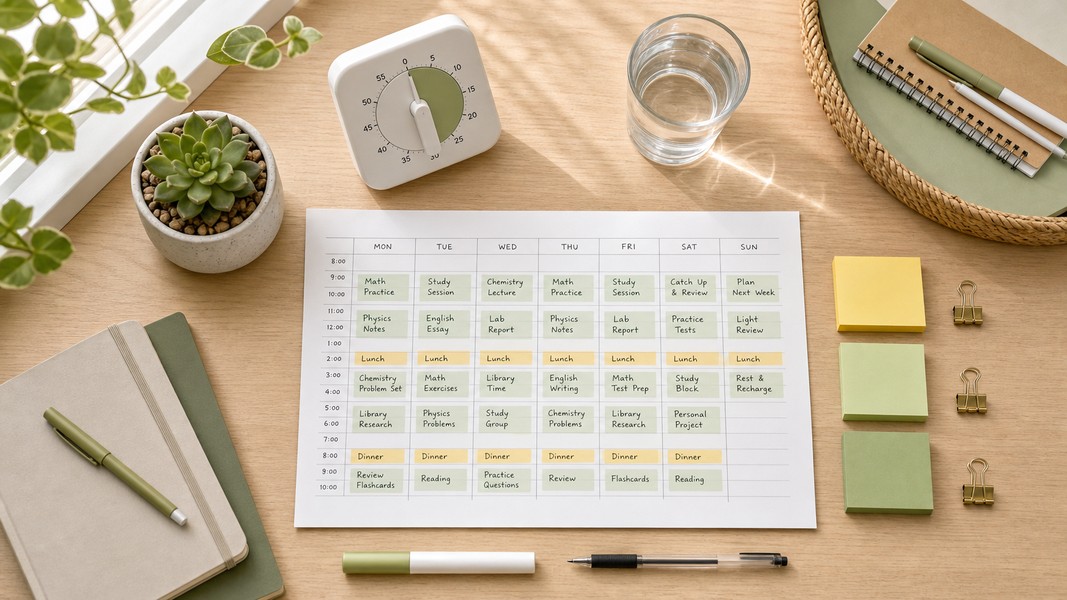
Struggling to manage your time as a student? These 7 evidence-backed tactics fix the real reasons students fall behind and waste hours.

Fathom AI is great for free Zoom notes, but it has real limits. Here are the best fathom ai alternatives for meetings, students, and multi-format capture.