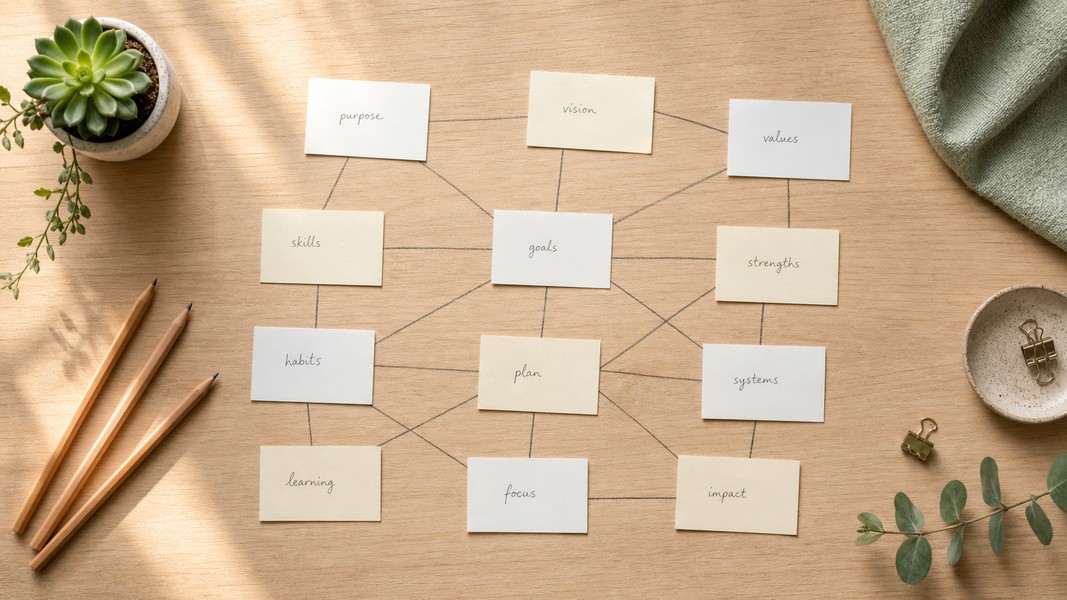
Zettelkasten: How to Build a Knowledge System
July 24, 2026
Learn how the Zettelkasten method works, why linked notes beat linear notebooks, and how to build your own knowledge system from scratch.

March 3, 2026
The best AI transcription apps for students in 2026 are Otter.ai, Transkriptor, Fireflies.ai, Notta, Descript, and apps that combine transcription with study material generation like Voice Memos. The right choice depends on what you need beyond the transcript: real-time capture during lectures, multi-language support, or automatic generation of flashcards and quizzes from recordings.
Transcription accuracy across leading platforms ranges from 82 to 99 percent, but those numbers reflect clean studio audio. In actual classrooms with background noise and multiple speakers, real-world accuracy drops 15 to 25 percent. Knowing that gap matters before you commit to a tool.
Here is how the leading options compare and which fits your workflow best.
Four things separate useful transcription apps from ones that create more work than they save.
Accuracy in real conditions matters more than benchmark claims. Independent testing in 2026 shows that Otter.ai achieves 82 to 85 percent accuracy on real-world meeting audio, while Transkriptor reaches up to 99 percent on academic content with specialized vocabulary. Every 10-decibel increase in background noise reduces accuracy by roughly 8 to 12 percent, and overlapping speakers can drop accuracy by 25 to 40 percent in active classroom discussions.
Real-time versus upload processing affects your workflow during class. Otter.ai and Fireflies.ai transcribe live as lectures happen, so you can verify the app is capturing correctly. Transkriptor and Notta process uploaded recordings after the fact, trading live feedback for higher post-processing accuracy.
Language support matters if you study in multiple languages or attend lectures in a non-native tongue. Otter.ai supports only four languages beyond English. Notta handles 58 languages with real-time translation. Transkriptor and Plaud Note support over 100 languages.
Study material generation separates transcription tools from learning tools. Some apps stop at text. Others automatically extract key concepts, generate flashcards, create quiz questions, and build summaries from the same recording. For students who actually want to learn from lecture content rather than archive it, that second category is worth the attention.
| App | Accuracy | Languages | Real-Time | Study Materials | Free Tier |
|---|---|---|---|---|---|
| Otter.ai | 82-85% | 5 | Yes | Basic summaries | 600 min/month |
| Transkriptor | Up to 99% | 100+ | No | Structured export | Limited |
| Fireflies.ai | 88-95% | 69 | Yes | Action items | Unlimited min |
| Notta | 90-95% | 58 | Yes | Summaries | 120 min/month |
| Descript | Up to 95% | Limited | No | Editing focus | 1 hour/month |
| Voice Memos | High | 40+ | Yes | Full suite | Yes |
Otter.ai is the most widely used transcription app among college students for a straightforward reason: it transcribes in real time as your lecture happens, so you can follow along and verify it is working correctly. The app joins Zoom, Google Meet, and Teams automatically when configured through calendar integration, recording and transcribing without you touching anything.
Accuracy runs 82 to 85 percent on real-world classroom audio. That is sufficient for most lectures but will produce errors on technical terminology or heavy accents, and performance dips further in noisy rooms. Speaker identification works reasonably well for distinguishing professors from students, though it struggles when multiple people speak simultaneously.
The free tier provides 600 minutes of transcription per month, around five to eight lectures depending on class length. AI summaries and searchable transcripts are included at no cost. A student discount is available with a .edu email address.
Limitation: Otter.ai supports only five languages total, making it unsuitable for multilingual students or international programs. All audio and transcripts are stored on cloud servers, which raises FERPA considerations for some institutional contexts.
Best for: Students who want live transcription during lectures and primarily study in English.
Transkriptor prioritizes post-processing accuracy over real-time capture, achieving up to 99 percent accuracy for academic content with specialized vocabulary. For students in medical, legal, engineering, or STEM programs where terminology errors create real problems, this accuracy advantage is meaningful.
The app supports transcription in over 100 languages with automatic language detection and translation, covering the widest language range of any tool reviewed here. A 50 percent student discount for verified students at accredited institutions brings pricing to roughly half the standard rate.
Automatic structuring of transcripts into formatted documents with headers, highlighted key terms, and summary sections reduces the work required to turn a raw transcript into usable study notes. Graduate students conducting interview-based research consistently rate Transkriptor well for qualitative research workflows.
Limitation: No real-time transcription. You upload or process recordings after lectures, which means you cannot verify during class that content is being captured. If your recording fails, you discover it after the fact.
Best for: Graduate students, researchers, and anyone in technical fields where accuracy on specialized vocabulary is non-negotiable.
Fireflies.ai offers the most generous free tier in the category: unlimited transcription minutes with 8,000 minutes of storage per seat. For most students, storage rather than transcription volume will be the actual constraint, which effectively means free unlimited use.
Accuracy runs 88 to 95 percent on clean audio, with strong performance on standard English. The app supports 69 languages, well beyond Otter.ai. Like Otter.ai, it joins scheduled calls automatically and transcribes live. Beyond transcription, Fireflies.ai detects action items, analyzes speaker talk time, and generates customizable summaries, features that prove useful in study groups and collaborative research settings.
Privacy-conscious students will note that Fireflies.ai processes audio locally rather than requiring cloud recording of the meeting itself, addressing concerns about institutional data handling.
Limitation: The paid plan costs $10 per month, slightly higher than Otter.ai. Summary quality and action item detection can vary depending on lecture structure and speaker clarity.
Best for: Students who want a genuinely useful free tier with multilingual support and don't want to track monthly minute limits.
Notta is built around multilingual transcription. The app supports real-time transcription in 58 languages with automatic translation, meaning you can receive a transcript in your preferred language even when the lecture is delivered in another. Accent handling across language families is stronger than most competing platforms, which matters directly for international students.
Accuracy runs 90 to 95 percent on clean audio, dropping to roughly 80 to 85 percent in moderately noisy environments. Processing speed is notably fast: a one-hour lecture transcribes in approximately five minutes. Both real-time and file-upload modes are available.
Limitation: The free tier is restrictive at 120 minutes per month with a maximum of three minutes per file. That ceiling is too low for regular lecture use without a paid plan. Speaker identification is inconsistent in group settings with diverse accents.
Best for: International students who need real-time translation of lectures into their native language.
Descript targets a different use case: students who need to edit, produce, and distribute audio or video content rather than purely transcribe lectures for personal study. The app achieves up to 95 percent accuracy and represents transcripts as editable text documents where changes to the text automatically edit the underlying audio or video.
For students creating course podcasts, video essays, recorded presentations, or accessibility versions of lectures, Descript's editing workflow is genuinely different. Removing filler words like "um" from the transcript removes them from the audio simultaneously. The Overdub feature enables voice cloning for correcting errors without re-recording.
Limitation: The free tier provides only one hour of media per month, and pricing for meaningful access starts at $24 per month, making it expensive for students who only need lecture transcription. It is not the right tool if your sole need is capturing class recordings for study.
Best for: Students producing audio or video content as part of coursework or extracurricular projects.
Fireflies.ai wins on free tier generosity: unlimited transcription minutes with meaningful storage. Otter.ai's 600 minutes per month covers most course loads without payment, and Google Docs Voice Typing provides real-time transcription at no cost for anyone with a Google account, though it lacks speaker identification, searchable archives, and any study features.
For students who need free transcription and nothing else, any of these three work. For students who want free transcription with study material generation included, Otter.ai alternatives worth examining include apps that combine transcription with automatic flashcard and quiz creation in the same interface.
Notta leads for real-time multilingual transcription with 58 languages and automatic translation. Transkriptor covers 100+ languages with higher accuracy for technical content. For students whose lectures mix languages or who attend programs taught in non-English languages, both are meaningfully better than Otter.ai's five-language limit.
Voice Memos supports transcription in 40+ languages with automatic translation, and combines that language coverage with built-in study mode generation. For an international student who records lectures in their second language and wants automatic flashcards in their native language, that combination addresses the full workflow. You can explore how this compares to other approaches in our overview of AI study methods for different content formats.
Pure transcription apps capture what was said. Study material generation apps turn that into something you can actually study from.
StudyFetch and RemNote represent one approach: upload a transcript, get flashcards and quizzes out. Both integrate with spaced repetition scheduling and support AI tutor interfaces for asking questions about lecture content.
Voice Memos takes a different approach by handling the full pipeline: record a lecture, get a transcript, structured notes, automatically extracted action items and events, and a set of flashcards and quiz questions ready for review. You paste a YouTube lecture URL and the same pipeline runs on video content. The four built-in study modes (quiz, flashcards, mind maps, deep research) eliminate the transfer step between apps.
For students whose study routine includes both capturing lectures and generating review materials, combining a dedicated transcription app with a separate flashcard app adds friction. An integrated system handles both in one pass.
Start with language. If you study in English and need real-time live transcription, Otter.ai or Fireflies.ai cover the basics well. If you study in multiple languages or attend lectures delivered in a non-native tongue, Notta or Transkriptor offer meaningfully better coverage.
Consider what happens after transcription. If you study from transcripts by reading them and making manual notes, any of the tools above will serve you. If you want the app to do the work of generating study materials (flashcards, quizzes, summaries), choose an integrated system that handles that step automatically rather than adding a separate tool to the chain.
Think about accuracy requirements. For technical content in medical, legal, or engineering fields, Transkriptor's post-processing accuracy is worth the trade-off of no live transcription. For general lectures in less technical subjects, Otter.ai or Fireflies.ai accuracy is sufficient and the live capture benefit is real.
For budget decisions: Fireflies.ai's free tier is the most practical for regular use. Otter.ai's student discount makes its paid plan affordable with .edu verification. Transkriptor's 50 percent student discount brings technical-grade accuracy within reach for students who need it.
AI transcription for students has moved well beyond simple audio-to-text conversion. The tools in 2026 vary significantly in accuracy under real classroom conditions, language coverage, and what they do with a transcript once they have it.
The best AI transcription app for students depends on whether you prioritize live capture, multilingual support, post-processing accuracy, or automated study material generation. Each of those needs points to a different tool, and understanding which matters most to your workflow narrows the decision quickly.
Discover more insights and tips to enhance your productivity
Learn how the Zettelkasten method works, why linked notes beat linear notebooks, and how to build your own knowledge system from scratch.
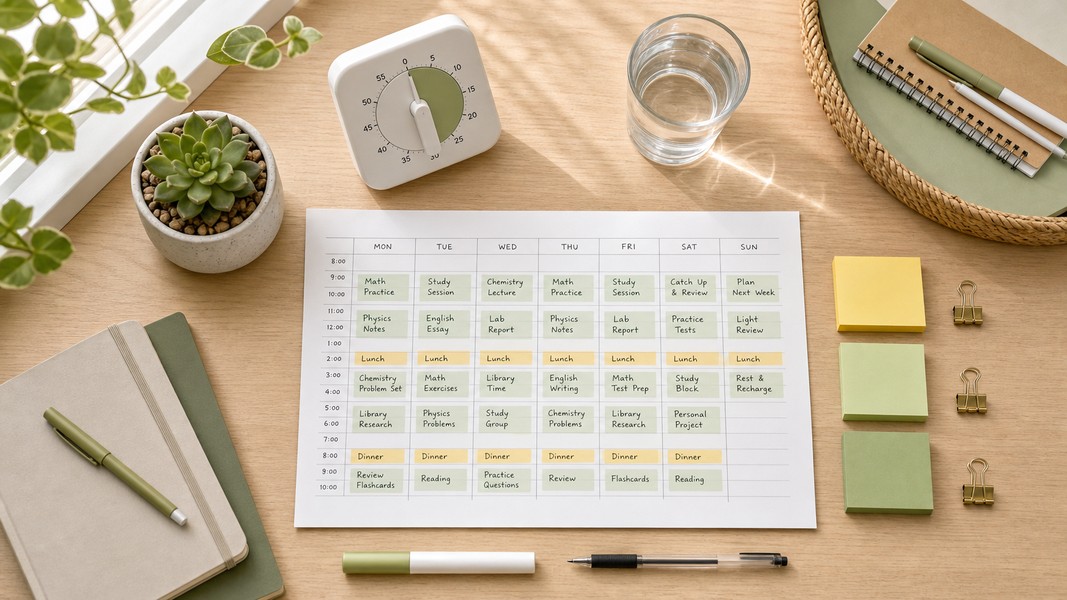
Struggling to manage your time as a student? These 7 evidence-backed tactics fix the real reasons students fall behind and waste hours.
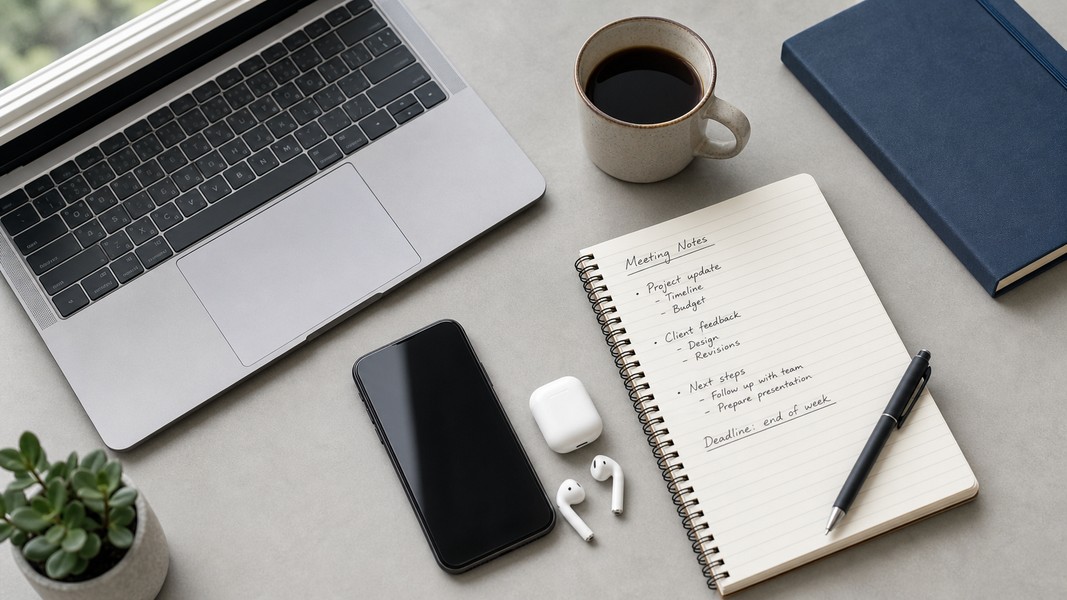
Fathom AI is great for free Zoom notes, but it has real limits. Here are the best fathom ai alternatives for meetings, students, and multi-format capture.