
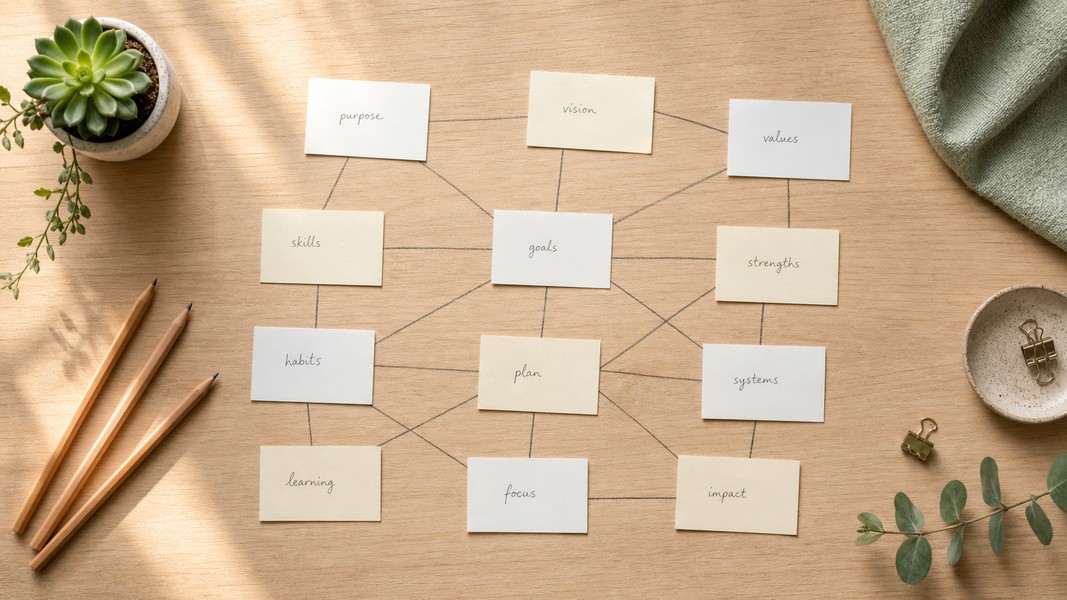
Zettelkasten: How to Build a Knowledge System
July 24, 2026
Learn how the Zettelkasten method works, why linked notes beat linear notebooks, and how to build your own knowledge system from scratch.

Recent
Coconote has built a real following among students for its clean lecture recording and automatic flashcard generation. But the Coconote app has clear limits: it's primarily mobile-focused, centered on audio input, and the free tier caps out fast. If you need to process PDFs, scan handwritten notes, or study in a language other than English, you'll run into friction quickly.
This guide covers the best Coconote alternatives for students, focusing on apps that offer broader input support, more study modes, and features that genuinely help you retain information, not just transcribe it.
Coconote works well for capturing lectures on the go. Where it falls short is versatility. Students juggling multiple input sources, such as textbook PDFs, YouTube lectures, or scanned class notes, need a tool that handles all of them without switching between apps.
The most common reasons students start evaluating other options come down to a few consistent patterns:
If any of those gaps match your situation, the apps below are worth your time.
| Tool | Best For | Free Tier | Standout Feature |
|---|---|---|---|
| Voice Memos | Full study pipeline | Yes | 4 study modes + action detection |
| Otter.ai | Meeting and lecture transcription | Yes | Real-time speaker identification |
| Notion | Custom note organization | Yes | Flexible databases and wikis |
| Evernote | Document archiving and search | Yes (limited) | Web clipper and PDF full-text search |
| HyNote | Multi-speaker recordings | Limited | Speaker diarization |
| Turbo AI | Visual and auditory learners | Limited | Mind maps and podcast from notes |
| Notewave | Science-based retention | Limited | Feynman technique integration |
Voice Memos is the most complete study pipeline in this list. Where Coconote handles audio and basic uploads, Voice Memos processes five input types: voice recordings, typed text, PDF uploads, camera scans of handwritten notes, and YouTube URLs. Every format flows into the same organized note structure automatically.
The depth of study modes is what separates it from every other app here. You get four distinct options: interactive quizzes, spaced repetition flashcards, deep research, and mind map generation, all built from the same captured content. Upload a lecture recording or a scanned textbook chapter and the AI generates the study materials without any manual work on your part.
For students working in a second language, Voice Memos transcribes in 40+ languages and translates automatically. The dyslexic-friendly formatting feature restructures any content into a layout designed to reduce reading fatigue, a feature no other app on this list offers. It's built for accessibility from the ground up, not added as an afterthought.
Voice Memos also detects action items across six categories: tasks, events, reminders, locations, contacts, and notes. A recorded meeting or lecture becomes an organized action list with nothing extra required from you. It fits naturally alongside other AI study tools in your academic toolkit.
Otter.ai is the industry standard for meeting and lecture transcription in English. It records audio in real time, identifies individual speakers, and generates a searchable transcript almost instantly. For students in seminars with multiple speakers, the diarization feature is genuinely useful.
Where Otter.ai falls short for academic use is the study layer. You get transcripts and summaries, but no flashcard generation, no quizzes, and no mind maps. It's a strong transcription engine that doesn't bridge into active study. Students who rely on it typically pair it with a separate app for review, which adds friction.
The free tier is functional for casual use. If your main need is clean lecture transcripts and you don't need dedicated study tools, Otter.ai handles that use case well.
Notion is a flexible workspace that students use to build custom note systems, organize assignments, and structure research across courses. It's not an AI transcription app, but its AI add-on can summarize and reorganize existing text.
The trade-off is setup time. Notion requires you to build your own structure from scratch using templates and databases. Students who enjoy that process thrive with it; students who want something that works immediately without configuration usually find it slow to adopt. There's no native audio recording, no real-time transcription, and no dedicated study modes.
As a standalone replacement for Coconote's lecture-to-study-material workflow, Notion doesn't fill that gap. It works best as part of a broader system, not as the primary capture and study tool.
Evernote's strength is storage and search. You can clip web pages, upload PDFs, and search text inside scanned documents. For students building a long-term research archive, that's genuinely useful.
The AI capabilities are limited compared to newer tools. There's no transcription, no flashcard generation, and no quiz mode. Dedicated note-taking apps have advanced significantly, and Evernote's premium tiers have become more expensive while the core feature set has stayed largely the same.
It's best suited for students who need a searchable document archive rather than an active study tool. If you're moving away from Coconote's study features specifically, Evernote won't replace them.
HyNote targets professionals and students dealing with multi-speaker recordings. Its speaker diarization separates individual voices in a recorded session, which is valuable in panel discussions, group study sessions, or clinical rounds for medical students.
The tool is built for accuracy in complex audio environments, which makes it more technically focused than student-friendly. The study tool suite is limited compared to apps designed specifically for academic use, and the learning curve is steeper than Coconote's. For a specific use case like medical school rotations with multiple speakers, it's worth evaluating. For general lecture capture, it's more than most students need.
Turbo AI takes a visual-first approach to note-taking. Instead of producing a transcript or flashcard deck, it can turn your notes into a mind map or a podcast-style audio summary. Students who are visual or auditory learners find this useful for processing dense material in a different format.
It's a newer tool with a narrower focus than Coconote. The podcast generation feature is genuinely novel, but the broader study suite doesn't match what more comprehensive platforms offer. Students who want to repurpose captured notes into different formats will get value from it; students who need a full lecture-to-exam pipeline may find it incomplete on its own.
Notewave, also marketed as Feynman AI, is built around the Feynman Technique: a retention method that improves recall by having you explain concepts in simple language. The app generates prompts that push you to simplify what you've captured, which is useful for understanding theory-heavy subjects rather than just memorizing facts.
It works best for students studying philosophy, economics, or advanced sciences where conceptual depth matters more than raw recall. As a replacement for Coconote's full lecture-recording and study workflow, it covers only part of the picture. Students who want a complete input-to-study-material pipeline will need to combine it with something else.
The right choice depends on what's missing from your current setup.
If you need more input types, such as processing PDFs, scanned handwriting, and YouTube lectures alongside audio, Voice Memos handles all of them without additional configuration.
If you need stronger transcription accuracy in English for meetings and group lectures, Otter.ai is the most proven option in this category.
If you're building a custom note organization system and don't need automated study tools, Notion gives you the most flexibility for structuring information your way.
If your priority is document archiving and full-text search across a growing library of notes and files, Evernote still handles that better than most.
If you work with multi-speaker recordings and need clean speaker attribution, HyNote is the most specialized option for that specific situation.
For visual and auditory learners who want notes transformed into a format beyond text, Turbo AI offers output options no other app here provides.
Coconote is a solid starting point for lecture capture, but students with more complex study needs quickly run into its ceiling. The alternatives above cover a range of strengths: some go deeper on transcription accuracy, others on document organization, and a few focus on specific learning methods or output formats.
The most meaningful difference between Coconote and the strongest alternatives is study tool depth. An app that records your lecture is useful. An app that turns that same recording into organized notes, quizzes, flashcards, and action items, without any extra steps, is what actually moves the needle on exam performance.
Discover more insights and tips to enhance your productivity
Learn how the Zettelkasten method works, why linked notes beat linear notebooks, and how to build your own knowledge system from scratch.

Struggling to manage your time as a student? These 7 evidence-backed tactics fix the real reasons students fall behind and waste hours.

Fathom AI is great for free Zoom notes, but it has real limits. Here are the best fathom ai alternatives for meetings, students, and multi-format capture.