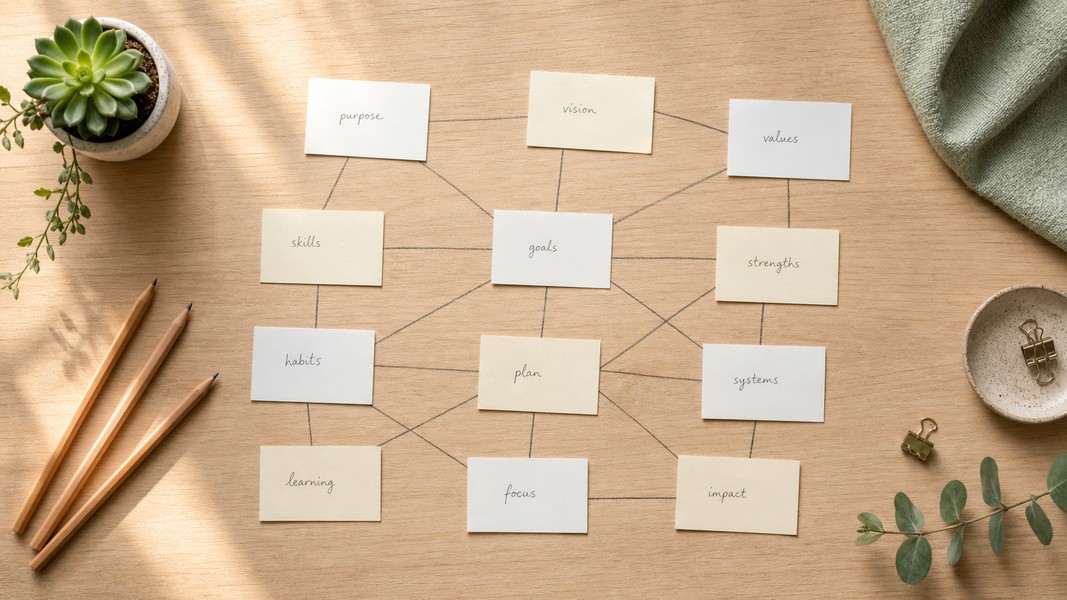
Zettelkasten: How to Build a Knowledge System
July 24, 2026
Learn how the Zettelkasten method works, why linked notes beat linear notebooks, and how to build your own knowledge system from scratch.

March 25, 2026
Both GoodNotes and Notability are excellent iPad note-taking apps, and both handle Apple Pencil input, PDF annotation, and cloud sync well. But the goodnotes vs notability decision comes down to one key question: do you rely on recording lectures, or do you need a deep organizational system across many subjects?
GoodNotes 6 wins on organization, handwriting fidelity, and AI-powered search. Notability wins on audio-linked notes, a feature with no real equivalent anywhere else. The sections below cover every factor that matters for students so you can pick the right one without second-guessing.
| Category | GoodNotes 6 | Notability |
|---|---|---|
| Best for | Organization, search, PDF annotation | Lecture recordings, audio-linked review |
| Handwriting | Excellent: natural, pressure-sensitive | Very good: strong Apple Pencil support |
| Organization | Deep folders, notebooks, covers, tabs | Sidebar subjects, dividers, tags |
| Audio recording | Basic, no timestamp sync | Synced to handwriting timestamps |
| AI features | Handwriting search, spell check, flashcards | Summaries, math, recognition (Plus plan) |
| Pricing model | One-time purchase | Subscription (free lite tier available) |
| Cross-platform | iPad, iPhone, Mac | iPad, iPhone, Mac, Windows (web) |
| Overall rating | 4.6/5 | 4.4/5 |
GoodNotes wins for students managing large note libraries across multiple courses. Notability wins for students who need to replay exactly what was said during a specific moment in a lecture.
GoodNotes 6 is developed by Time Base Technology Limited and has been the dominant digital notebook on iPad for years. Its core premise is to make handwriting feel as close to paper as possible while adding the searchability and organization that paper cannot offer.
Three strengths define it for students. First, the handwriting engine is precise and responsive. Palm rejection is consistent, pressure sensitivity feels natural across different pen types (ballpoint, fountain, and brush), and the pen-to-paper sensation holds up during long note-taking sessions. Second, GoodNotes has the most capable organization system of any iPad note app. You can build deep folder hierarchies, assign custom covers to notebooks, and open multiple documents simultaneously using a browser-style tab interface. Third, AI-powered handwriting recognition makes every note fully searchable, even if it is entirely handwritten, across multiple languages.
Recent updates have added more AI depth. Spell check, math conversion, AI writing assistance, and automatic flashcard generation from your own notes are all now built in. For students who already use AI flashcard makers, GoodNotes now partially replicates that workflow inside the app itself.
The main limitation is audio. GoodNotes records audio, but it does not link that audio to individual pen strokes. You can play back a recording, but you cannot tap a diagram and jump to the moment you drew it. For students in lecture-heavy disciplines where the spoken explanation matters as much as the written notes, this is a meaningful gap.
GoodNotes is available on iPad, iPhone, and Mac, with real-time sync across devices. It is a one-time purchase with no ongoing subscription, which makes it the better long-term value for students who plan to use it across multiple years of school.
Notability is developed by Ginger Labs, and its defining feature is audio-linked note-taking. When you record audio while writing, Notability timestamps each pen stroke to its exact moment in the recording. Tap any word or diagram later, and playback seeks to that precise moment. For anyone who has stared at a vague note from a lecture and wished they could hear what was being explained at that moment, this is a genuinely useful feature that no other mainstream app matches.
The interface is more streamlined than GoodNotes. Subjects and dividers in the left sidebar replace deep folder trees, which lowers the learning curve but limits complexity for large note libraries. Tags provide a second layer of sorting, and multi-window support lets you view two notes side by side on iPad, useful for comparing lecture notes with readings.
Notability's weaknesses are well-known among longtime users. The subscription pricing model has generated sustained frustration, particularly from users who paid a one-time price years ago before the model changed. Handwriting recognition and OCR search are functional but less precise than GoodNotes, which matters when you need to find a specific formula or term across hundreds of pages of handwritten content.
A free lite tier covers basic note-taking and audio recording, making it accessible for students who want to try before committing. The paid Plus tier adds handwriting recognition, AI summaries, and math support. Notability is available on iPad, iPhone, Mac, and via a web interface on Windows, giving it a slight cross-platform advantage for students who also work on non-Apple devices.
GoodNotes has a slight but consistent edge for students who prioritize the writing experience itself. The palm rejection is reliable enough that you can rest your hand naturally on the screen without producing stray marks. Pressure sensitivity across pen types feels varied and natural, and the lasso tool handles complex multi-element selections cleanly. Annotating PDFs is precise across textbooks, case documents, and research papers, with fine-grained control over highlight width, markup colors, and note placement.
Notability's handwriting tools are genuinely strong. Apple Pencil support is excellent, and the basic annotation set covers everything most students need for lecture notes and PDF review. The key difference is feel: GoodNotes mimics paper writing more convincingly, which becomes noticeable during extended writing sessions. For students who take handwritten notes for hours at a time during exams or long study blocks, this distinction matters.
GoodNotes also edges ahead for shape recognition and diagram creation. Shapes snap cleanly into geometric forms, and drawings remain editable after creation, which helps when building visual notes for STEM subjects.
This is where the gap between the two apps is largest for students managing notes across multiple courses and semesters. GoodNotes supports deep nested folder structures, custom notebook covers for visual navigation, and browser-style tabs that let you switch between two open documents without losing your place. For a student keeping separate notebooks for lecture notes, readings, and assignments across six courses, the structure scales without becoming cluttered.
Notability uses a sidebar with subjects and dividers, supplemented by tags. The system is clean and works well for students with focused organizational needs: one or two active courses at a time, or straightforward subject groupings. Where it falls short is depth. Long-term archiving and complex cross-reference organization feel cramped compared to GoodNotes.
AI-powered handwriting search is another GoodNotes advantage. It searches across every notebook simultaneously and supports multiple languages. If you take notes in a second language, include technical terms from a foreign language, or mix languages within the same notebook, this matters significantly.
Notability's audio sync is its most important feature for a large segment of students, and it executes it exceptionally well. You start recording before class begins, and every stroke you make from that point is bound to a timestamp. Tap the third bullet you wrote during a confusing part of the lecture and Notability plays the audio from that exact moment. For humanities students, law students, and anyone in discussion-heavy seminars where nuance and phrasing matter, this is the most practically useful feature in either app.
GoodNotes records audio but without timestamp linking. Playback is linear. You can use the recording to fill in gaps, but you cannot navigate it using your handwriting as a reference. If you frequently review recordings during study sessions, this limitation will frustrate you.
On broader study tools, GoodNotes has closed the gap with recent updates. Automatic flashcard generation from your notes, spell check, and math conversion now make it a more complete study environment. Notability's Plus tier adds AI summaries and handwriting recognition, though the depth of the flashcard and quiz tooling is currently stronger in GoodNotes.
Both apps run primarily within the Apple ecosystem. GoodNotes covers iPad, iPhone, and Mac with consistent real-time sync. Notability adds Windows access through a web interface, which is useful if you split time between Apple and non-Apple devices but are not a complete replacement for a native app.
The pricing structures differ in a way that has long-term implications. GoodNotes is a one-time purchase with no recurring cost, which becomes increasingly good value over a multi-year academic career. Notability operates on a subscription model with a free lite tier for basic use and a paid Plus tier for AI features and handwriting recognition. The free tier is genuinely functional for core note-taking and audio recording, making the barrier to entry lower, but the long-term cost of the subscription adds up.
GoodNotes fits you if you manage notes across many subjects and need a structured, searchable library. It is the better choice for:
Notability fits you if lectures are your primary learning context and you rely on audio. It is the better choice for:
GoodNotes and Notability are both built for Apple Pencil input on iPad. If handwriting is your primary capture method, one of them will serve you well.
Many students, though, also learn from YouTube lectures, recorded Zoom sessions, PDFs, and photographed whiteboard notes. Neither GoodNotes nor Notability handles those input types meaningfully. Voice Memos takes a different approach: it processes voice recordings, PDFs, YouTube URLs, camera scans, and typed text, then automatically organizes the content into structured notes, tasks, events, and study materials.
The gap between handwriting apps and AI note-taking apps is significant. Voice Memos generates flashcards, quizzes, and mind maps from any content automatically, without requiring Apple Pencil input. It runs as a web app and on iOS and Android, making it platform-agnostic. For students who want a single tool covering every input type alongside the AI study tools for students they already use, it is worth comparing directly to both handwriting apps.
If handwriting is central to your workflow, GoodNotes or Notability is the right tool. If your study materials span multiple formats beyond handwriting, a multi-modal AI tool belongs in the comparison.
GoodNotes and Notability solve the same core problem: digital note-taking on iPad, approached in meaningfully different ways. GoodNotes is the stronger choice for students who need organized, searchable archives across many subjects and who work heavily with PDFs and handwritten content. Notability is the stronger choice for students whose learning depends on audio recordings and who need to navigate those recordings through their own handwriting.
The best choice depends on how you actually study. If you re-read your notes, GoodNotes' search and organization give you more to work with. If you re-listen to lectures, Notability's audio sync has no real competition in either app. And if your study materials span multiple formats beyond handwriting, a multi-modal AI tool belongs in the comparison too.
Discover more insights and tips to enhance your productivity
Learn how the Zettelkasten method works, why linked notes beat linear notebooks, and how to build your own knowledge system from scratch.
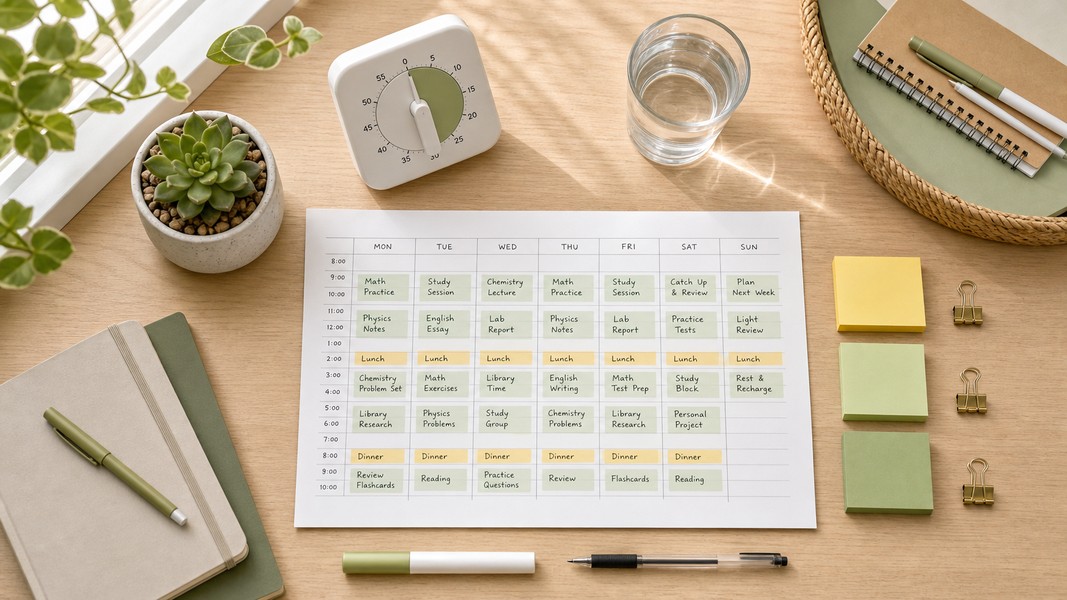
Struggling to manage your time as a student? These 7 evidence-backed tactics fix the real reasons students fall behind and waste hours.
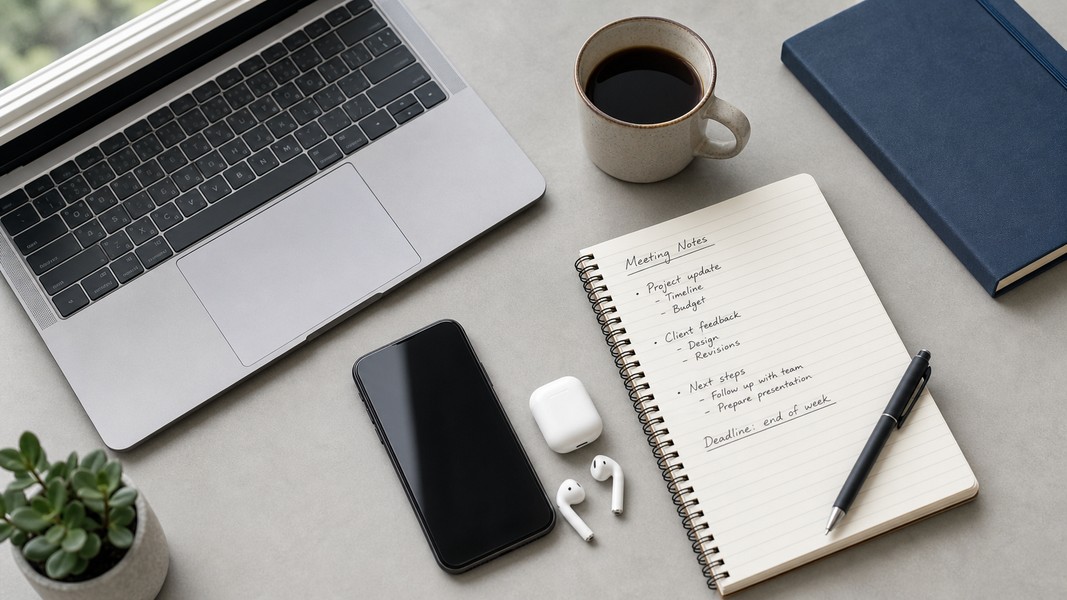
Fathom AI is great for free Zoom notes, but it has real limits. Here are the best fathom ai alternatives for meetings, students, and multi-format capture.