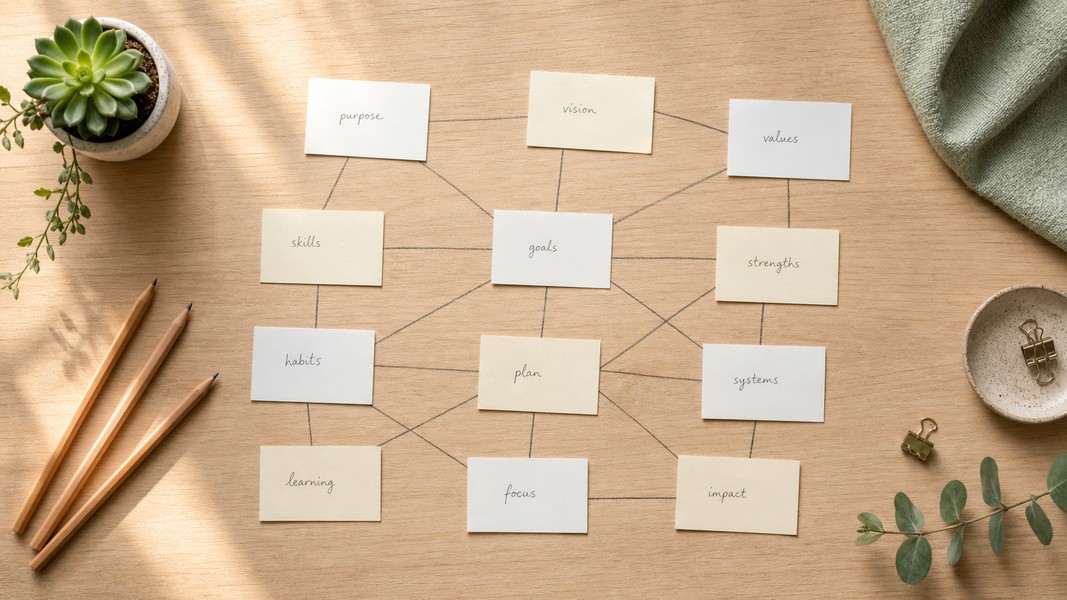
Zettelkasten: How to Build a Knowledge System
July 24, 2026
Learn how the Zettelkasten method works, why linked notes beat linear notebooks, and how to build your own knowledge system from scratch.


May 7, 2026
An AI flashcard generator is a tool that converts your study materials into ready-to-use flashcards automatically. You give it notes, a PDF, a voice recording, or a YouTube link, and within seconds it extracts key concepts, builds question-answer pairs, and hands you a deck you can start reviewing right away.
The old method involves reading through your notes, deciding what matters, and writing each card by hand. That process takes hours. An AI flashcard generator cuts it to minutes: recent surveys find that 85% or more of college students now use AI tools for study preparation and report spending more time on actual understanding rather than content organization.
This guide covers what AI flashcard generators do, how they work under the hood, and four practical workflows for creating them from the sources you already have: typed notes, PDFs, lecture recordings, and YouTube videos. It also covers what separates good AI-generated cards from mediocre ones.
An AI flashcard generator is software that uses natural language processing and large language models to scan study content, identify the most important ideas, and format them as flashcards. The output is typically question-answer pairs, term-definition pairs, or cloze deletions (fill-in-the-blank prompts designed for active recall).
The difference from manual creation is not just speed. AI analyzes the full document to spot which concepts appear repeatedly, which phrases signal key relationships, and which information is likely to appear on an assessment. You get cards built on pattern recognition across the whole document, not just whatever you happened to underline.
Most tools also connect to spaced repetition scheduling, which determines when you see each card again based on how well you knew it last time. This pairing of AI generation plus spaced repetition is where the significant retention gains happen compared to reviewing a static list.
When you upload content, the AI runs it through two phases: extraction and generation.
In the extraction phase, the model identifies high-salience chunks: named terms, causal relationships, repeated concepts, and definitions. For audio and video, a speech-to-text layer converts spoken words to a transcript first, and then the model processes that transcript the same way it would written text.
In the generation phase, a large language model classifies each extracted chunk as a candidate for a Q&A pair, a term-definition card, or a cloze deletion. It rephrases for clarity and adjusts for context. A sentence like "Myelin increases conduction velocity in neurons" becomes a flashcard asking "What effect does myelin have on neuron conduction velocity?" This forces active recall rather than passive recognition of a phrase you already read.
The quality gap between older rule-based tools and modern LLM-based generators is substantial. Rule-based tools copy terms and surrounding text into card fields. LLM-based tools understand what the term means in context and generate questions that test comprehension rather than surface-level memory.
You do not need to install anything special for most AI flashcard generators. Before you start, gather:
The review step is non-optional. AI-generated cards are a first draft, not a final product.
Typed or pasted notes are the cleanest input. The AI has the clearest possible text to work with, and the output quality is typically higher than from audio or scanned documents.
The biggest factor in output quality is the quality of your notes. Stream-of-consciousness notes with typos and tangents produce weaker cards. Structured notes with clear headings, bullet points, and complete sentences give the AI better signal, and you will see a noticeable improvement in the cards you receive.
If your notes are rough, spend five minutes tidying before generating. Writing out abbreviations, removing filler sentences, and adding brief context for jargon all translate directly into sharper cards.
PDFs add a text-extraction step, but most modern tools handle this transparently. The process is:
Dense, text-heavy PDFs produce the best results. If your PDF contains complex tables, graphs, or handwritten annotations, the AI will work around those elements rather than through them. This is a known limitation: visual information in a PDF often does not appear in the flashcards.
For long documents like a full textbook chapter, consider uploading in sections. Processing one section at a time produces tighter, more focused cards than processing 80 pages at once. You also avoid the issue of the AI spreading attention evenly across a long document when the exam will test only certain sections.
Lecture recordings require transcription before flashcard generation. The full workflow:
Voice Memos handles this as a single, continuous flow. You record in the app or upload an audio file, and the AI transcribes, organizes the content, and makes it available for flashcard generation without switching between different tools. The app supports transcription in 40+ languages, which is useful if you attend lectures in a second language or study from international source material.
A practical tip: record deliberately. Speak clearly, reduce background noise, and avoid holding the microphone near sources of interference. Transcription accuracy drops with poor audio, and lower accuracy compounds into a weaker deck: cards with misheard terminology or incomplete sentences.
YouTube workflows follow the same general pattern as audio, with captions substituting for a dedicated transcription step in many tools.
The primary limitation is visual content. If a lecture video relies on diagrams, equations shown on screen, or physical demonstrations, those elements do not appear in the transcript and will not make it into your flashcards. For highly visual courses, supplement video-generated cards with cards from your written notes or the accompanying PDF slides.
Voice Memos supports YouTube URLs as direct input. You paste the link, the app processes the video transcript into organized notes, and you can generate flashcards from those notes using the built-in study mode. This removes the step of manually extracting text from a video before your flashcard tool can work with it.
Give the AI specific instructions when your tool supports it. Prompts like "focus on definitions and causal relationships" or "generate cloze deletions for named processes" produce more targeted results than default settings. Specificity in your instructions directly shapes the quality and focus of the output.
Keep each card focused on a single idea. A card that asks you to explain an entire process, including all steps and exceptions, tests too many things at once and is difficult to review efficiently. A card that targets one specific mechanism, like "What is the role of helicase in DNA replication?", tests one fact and makes it easy to know whether you got it right or not. This is a core principle backed by research on the testing effect, which consistently shows that focused, frequent testing outperforms reviewing broader summaries.
Limit how many cards you generate in a session. AI will produce 200 cards from a long chapter if you let it, but reviewing 200 cards is not a single study session; it is a sequence of fatigue and shallow processing. Generating 20 to 50 cards per topic and prioritizing quality over quantity leads to better retention outcomes.
Review before you study. Catching and removing vague, redundant, or low-importance cards before your first review session saves time and prevents you from drilling information that will not help you on a test. AI makes generating fast; you still own the curation step.
If you want to compare tools for this workflow, this overview of AI flashcard apps covers the main options and what each one handles best.
If the generated cards feel too vague, your input likely lacks structure. Reformat your notes with clear headings and distinct sentences before regenerating.
If you get too many irrelevant cards, your source material may include conversational or off-topic content. This is common with lecture recordings and unscripted videos. Clean the transcript before generating, or use a tool that lets you select which sections to process.
If cards duplicate each other, the source content is repetitive or the AI is treating synonyms as separate concepts. Merge duplicates manually and reduce the total card count before adding to your deck.
AI flashcard generators work best when you treat them as a fast first draft, not a finished study deck. They are reliable at processing text quickly, extracting what matters, and formatting it for retrieval practice. They need your input to be clean and your review to be thorough.
The four workflows here (notes, PDFs, lecture recordings, and YouTube videos) each have a small preparation step, but they all end in the same place: a deck you can start reviewing. Combine that deck with spaced repetition, keep your cards focused on single ideas, and cap generation at a manageable number per session.
Discover more insights and tips to enhance your productivity
Learn how the Zettelkasten method works, why linked notes beat linear notebooks, and how to build your own knowledge system from scratch.
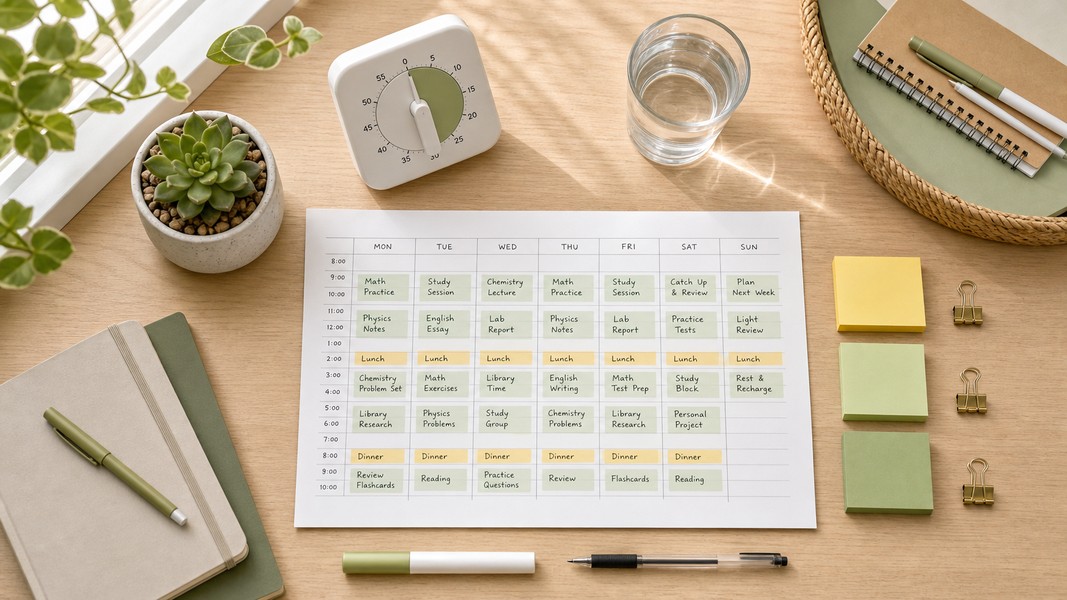
Struggling to manage your time as a student? These 7 evidence-backed tactics fix the real reasons students fall behind and waste hours.

Fathom AI is great for free Zoom notes, but it has real limits. Here are the best fathom ai alternatives for meetings, students, and multi-format capture.