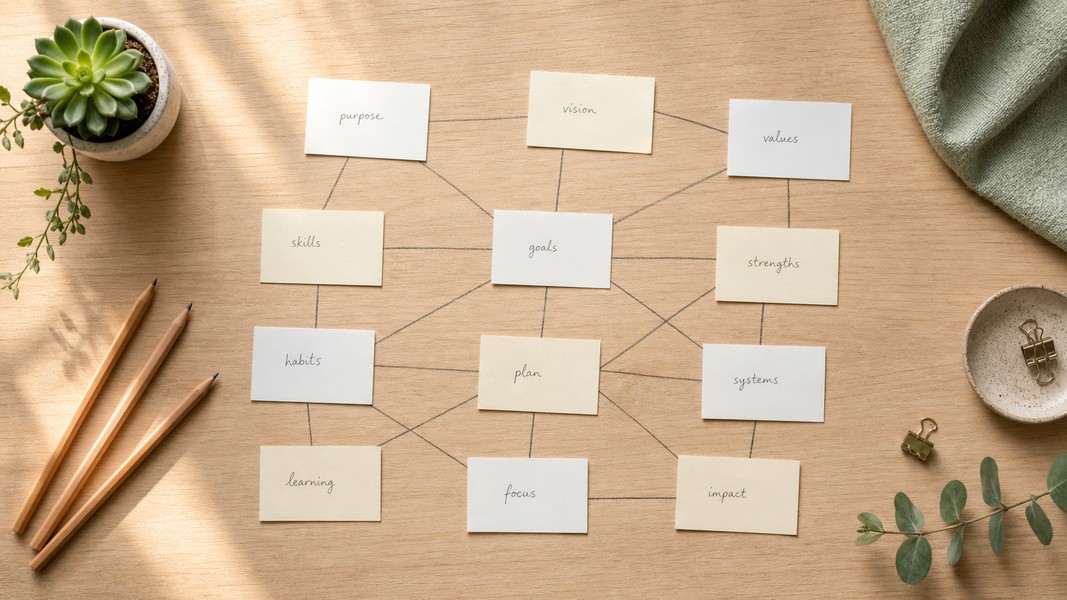
Zettelkasten: How to Build a Knowledge System
July 24, 2026
Learn how the Zettelkasten method works, why linked notes beat linear notebooks, and how to build your own knowledge system from scratch.


March 18, 2026
The best AI flashcard maker for students does more than let you type questions and answers. It reads your notes, processes your lecture PDFs, and generates a study-ready deck in seconds, so you can spend your time reviewing instead of creating. Whether you need cards from a voice recording, a textbook chapter, or a YouTube lecture, the right tool can cut your prep time dramatically.
This guide covers eight of the best AI flashcard makers available today, evaluated across the criteria that matter most for students: input flexibility, AI generation quality, spaced repetition scheduling, and ease of use. Each pick has a distinct angle, so you can choose based on how you actually study.
| Rank | Tool | Best For | AI Input Types | Free Option |
|---|---|---|---|---|
| 1 | Voice Memos | Multi-modal input + study suite | Voice, PDF, YouTube, image, text | Yes |
| 2 | Anki | Rigorous spaced repetition | Manual + community decks | Yes |
| 3 | Quizlet | Largest card library | Text, limited PDF | Yes |
| 4 | Knowt | Free AI generation | Notes, PDF | Yes |
| 5 | Wisdolia | YouTube and web content | YouTube, web articles, PDF | Yes |
| 6 | Cramberry | All-in-one study sets | PDF, PowerPoint, YouTube | Yes |
| 7 | StudyGlen | Multi-format + live quizzes | PDF, text, image (OCR) | Yes |
| 8 | StudyFetch | Long lecture documents | Slides, long-form documents | Limited |
Every tool in this list was assessed against five criteria that directly affect your study outcomes.
Input flexibility was the first filter. If a tool only accepts typed text, it forces you to do manual work before the AI can help. The strongest picks here handle PDFs, images, recordings, and video links natively.
Spaced repetition quality was the second factor. Not all scheduling algorithms are equal. Some tools use a basic interval system, while others implement mature algorithms that adapt to your performance over individual cards. If long-term retention is your goal, the algorithm matters.
Third, we looked at AI accuracy. An AI that generates vague or incorrect flashcards from your lecture notes creates more problems than it solves. The tools ranked highest are consistent at identifying key concepts and forming clear question-answer pairs.
Fourth, onboarding friction. Some tools require significant setup before they become useful. Students who need to study today, not configure plugins tomorrow, will favor tools with shorter ramps.
Finally, platform coverage. A flashcard app that works on your laptop but not your phone is only half useful. All top picks here run on at least two platforms.
Voice Memos sits at the top because of how many ways it can turn raw content into flashcards. You can record a lecture, upload a PDF, paste a YouTube URL, or photograph a whiteboard, and the AI processes whichever format you choose into structured flashcards with spaced repetition scheduling.
That breadth of input is genuinely unusual. Most AI flashcard tools handle one or two formats. Voice Memos handles five, with support for 40 languages and automatic translation built in. For international students, or anyone studying content in a second language, that combination removes a step that would otherwise require a separate tool.
The study suite goes beyond flashcards. Once your content is processed, you can also switch to an interactive quiz mode, explore a mind map of key concepts, or use the deep research mode to expand on a topic. This makes Voice Memos more of an all-in-one study system than a pure flashcard tool, which is either a strength or more than you need depending on how you prefer to work.
The AI also detects six types of information inside your content automatically: tasks, events, reminders, locations, contacts, and general notes. For students who record study sessions or meetings, that extraction runs in the background without any prompting.
Voice Memos includes a dyslexia-friendly formatting option, which restructures output into a layout shown to improve readability for dyslexic readers. No other AI flashcard tool in this list offers a comparable accessibility feature.
If you want to go deeper on the memory science behind why these tools work, the techniques explored in active recall research are directly relevant to how AI-generated flashcards should be used in a study schedule.
Voice Memos is available on web, iOS, and Android with real-time sync across platforms.
Voice Memos is the right pick if your study material comes in multiple formats, you're studying content in more than one language, or you want a single app that handles flashcards, quizzes, and mind maps without switching between tools.
Anki has been the reference standard for spaced repetition software for over a decade. It's free, open-source, and built around the SM-2 algorithm, which schedules each card review based on your actual performance history. When you rate a card as hard, Anki shows it again sooner. When you rate it as easy, it pushes the next review further out.
That precision matters most in fields where retention is non-negotiable. Medical students preparing for licensing exams and law students drilling rule statements often cite Anki's scheduling as the reason they stay with it despite the steeper learning curve compared to newer tools.
The biggest limitation is that Anki has no native AI flashcard generation. You create cards yourself, or you download pre-made community decks. There are third-party add-ons and external workflows that connect AI generation to Anki, but they require setup. If you want AI to handle card creation from your notes or PDFs, Anki is not the right starting point.
Where Anki excels is data ownership. Your cards live as local files, not locked in a company's cloud. The AnkiWeb sync service provides optional cross-device access, but your data remains yours regardless.
Anki makes sense if you're committed to a long-term memorization practice, want the most rigorous spaced repetition algorithm available, and are willing to either build cards yourself or adapt an AI workflow to feed into it.
Quizlet has a decade of user-created flashcard sets covering nearly every subject and course. If someone has studied what you're studying, there's a reasonable chance a relevant deck already exists. That library is Quizlet's main advantage.
The AI features have expanded significantly. Magic Notes converts your typed or pasted notes into a flashcard set, and the Q-Chat AI tutor can walk you through material conversationally. The spaced repetition implementation is functional but less sophisticated than Anki's algorithm.
The free tier includes ads and limits some AI features. The paid plan unlocks the full Magic Notes experience and removes ads. As far as input types go, Quizlet handles text and some PDF content, but it doesn't process voice recordings, images, or YouTube links.
For students who prefer studying from established, peer-reviewed decks rather than generating their own, the Quizlet library is hard to beat. For students who need AI to create cards from their own notes in multiple formats, newer tools do it with less friction.
Quizlet is a strong choice if you want access to a large library of pre-existing decks, or if you're comfortable typing notes directly into the tool and having AI convert them into cards.
Knowt positions itself as an upgrade path for students aging out of Quizlet or looking for a genuinely free alternative. The AI converts PDFs and typed notes into flashcard sets quickly, and there's no cost attached to the core feature set.
The spaced repetition system works, though it's simpler than Anki's algorithm. The scheduling is more basic, relying on interval repetition rather than granular performance tracking per card. For most students, the difference won't be noticeable in day-to-day use. For high-stakes memorization over months, the gap with Anki becomes more significant.
Knowt's strongest feature is speed. Upload a PDF, and the AI generates a complete deck in seconds with no configuration required. The teacher and student community focus means the tool is structured around classroom workflows, with options to share decks and organize sets by course.
The trade-off is the monetization model. The free version is ad-supported, and some users report performance issues on the mobile app. The ad experience is more intrusive than on Quizlet's free tier.
For students who want AI-generated flashcards without paying anything, Knowt is the most capable free option available.
Knowt is ideal for students on a budget who want AI-powered flashcard generation from their existing notes and PDFs, without dealing with complex setup or a learning curve.
Wisdolia solves a specific problem: you're watching a YouTube lecture or reading a web article, and you want to create flashcards without leaving your browser. The Wisdolia Chrome extension sits in your browser and generates flashcards from whatever content is on screen, including YouTube transcripts, web articles, and uploaded PDFs.
The workflow is faster than any other tool in this list for that particular use case. You watch the lecture, click the extension, and a deck appears. Spaced repetition is included.
The limitations are real though. Wisdolia generates flashcards only. There are no quizzes, no note-taking features, no mind maps. The tool is English-focused, and there's no mobile app. If most of your study material comes from YouTube or web-based readings, Wisdolia covers that lane well. If your study materials are varied, you'll hit its ceiling quickly.
For students looking at the broader landscape of Quizlet alternatives, Wisdolia fits a niche that most general-purpose flashcard tools don't serve directly.
Wisdolia is the right pick for students whose primary study material comes from YouTube lectures and web-based readings, and who want a lightweight browser-based tool with minimal setup.
Cramberry takes a different structural approach. When you upload a PDF, PowerPoint, or YouTube link, it generates a unified "Study Set" that includes notes, flashcards, and practice questions in a single package. You don't have to choose between formats; the AI creates all three at once.
An AI tutor is included on the free plan, which is more generous than most competitors. The free tier is ad-free, and the study set approach works well for students who want all their material organized by topic rather than spread across different modes.
Cramberry also converts your study materials into an AI-generated audio podcast, which lets you review content while commuting or doing other tasks. That audio feature is unique among the tools in this list.
The platform is newer, which means the community is smaller and there's no established library of shared decks to draw from. If you're starting from your own materials, that limitation won't matter. If you rely on shared decks for subjects like anatomy or contract law, the gap compared to Quizlet is significant.
Cramberry suits students who want one upload to generate multiple study formats simultaneously, or who want audio-based review in addition to traditional flashcard study.
StudyGlen accepts PDFs, typed text, and image files with OCR support, then generates quizzes, flashcards, and educational comics from the same upload. The comics format is unusual in this category and works surprisingly well for visual learners who find traditional flashcards too text-dense.
The platform supports 13 languages with automatic detection, and export options include PDF, Word, and CSV formats. Spaced repetition is built in. The free tier doesn't require an account to get started, which lowers the barrier to try it.
Where StudyGlen differentiates from the pack is the live quiz session feature, which lets multiple students quiz each other simultaneously from the same material. That's a genuinely different use case from solo flashcard review.
The tool is newer, and its community deck library is minimal compared to Quizlet. For generating cards from your own material, that doesn't matter. For finding ready-made sets in niche subjects, the library gap is noticeable.
StudyGlen works well for visual learners who want alternative formats beyond standard question-answer cards, and for study groups who want to quiz each other live from shared materials.
Most AI flashcard tools perform well with short to medium-length documents. StudyFetch is optimized for the kind of long lecture slide decks and dense documents that tend to overwhelm other tools. If your professor uploads 80-slide decks or you're working through long textbook chapters, StudyFetch handles that document length more reliably.
The AI tutor (called Spark.E) provides interactive study sessions alongside the flashcard generation, which adds a conversational review layer. Study sets can be organized by course, which helps if you're managing multiple subjects simultaneously.
The free tier is more limited than Knowt or Cramberry, and the platform skews toward US college course formats. Content in languages other than English may produce inconsistent results.
StudyFetch is a good fit for students dealing with very long course documents or slide decks who want an AI that doesn't lose coherence at high page counts.
Before committing to a tool, it's worth matching your study workflow to what the software actually does well.
Input format support is the first question. Think about where your study material comes from. If it's mostly PDFs, almost every tool in this list works. If it includes voice recordings, YouTube lectures, or handwritten notes photographed with your phone, only a few options handle all of those natively. Match the tool to your actual sources rather than the sources you wish you had.
Spaced repetition depth matters more as your study timeline extends. For a quick exam cram, any basic scheduling system is fine. For long-term subject mastery, the difference between a simple interval system and an adaptive algorithm like Anki's SM-2 compounds over months of review.
AI accuracy is harder to assess before you try a tool. The best way is to test each candidate with a small sample of your actual study material, not a demo document. An AI that works well on generic biology content may struggle with highly specialized terminology in your field.
Platform coverage matters if you switch between devices. A tool that only has a web version won't help you review flashcards on the subway. All of the top picks in this list run on at least two platforms, but the quality of mobile apps varies significantly.
Finally, consider what happens to your data. Some tools store everything in the cloud with no export option. Others, like Anki, keep your cards as local files you control. For students who've spent months building a deck, that distinction matters.
The best AI flashcard maker depends entirely on how your study material arrives and how you prefer to review it. If your content comes in multiple formats and you want a single tool that handles all of them, Voice Memos covers the widest range of inputs with a full study suite built in. For rigorous long-term spaced repetition with full data control, Anki remains the most reliable option despite the steeper learning curve. For students who want free AI generation with minimal setup, Knowt is the most capable zero-cost option.
Each tool in this list solves a slightly different problem. The clearest path to the right pick is to identify your actual study sources first, then match those formats to the tool designed around them.
Discover more insights and tips to enhance your productivity
Learn how the Zettelkasten method works, why linked notes beat linear notebooks, and how to build your own knowledge system from scratch.
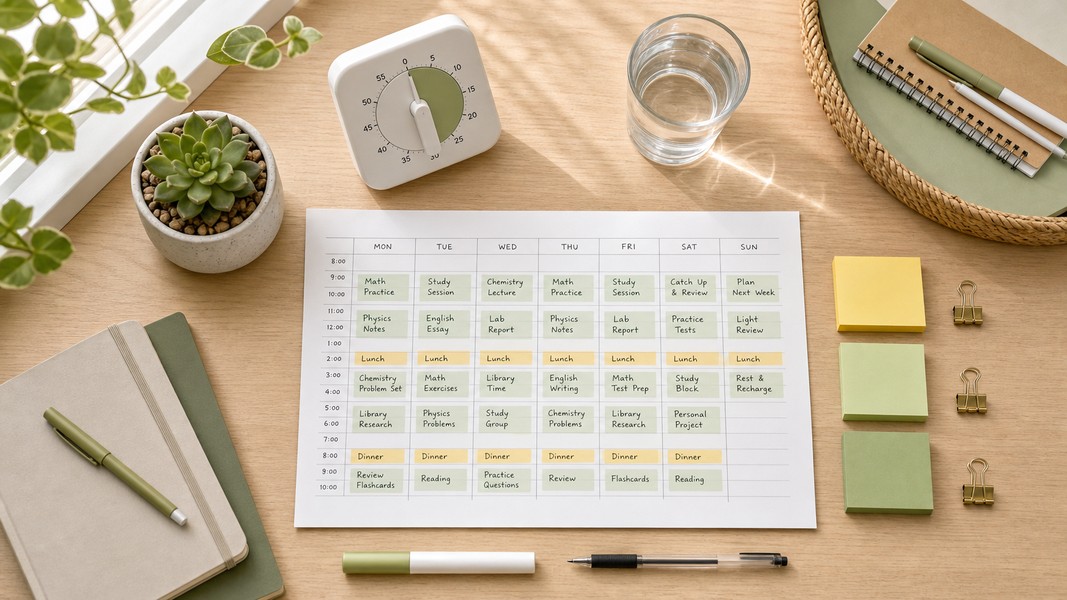
Struggling to manage your time as a student? These 7 evidence-backed tactics fix the real reasons students fall behind and waste hours.

Fathom AI is great for free Zoom notes, but it has real limits. Here are the best fathom ai alternatives for meetings, students, and multi-format capture.