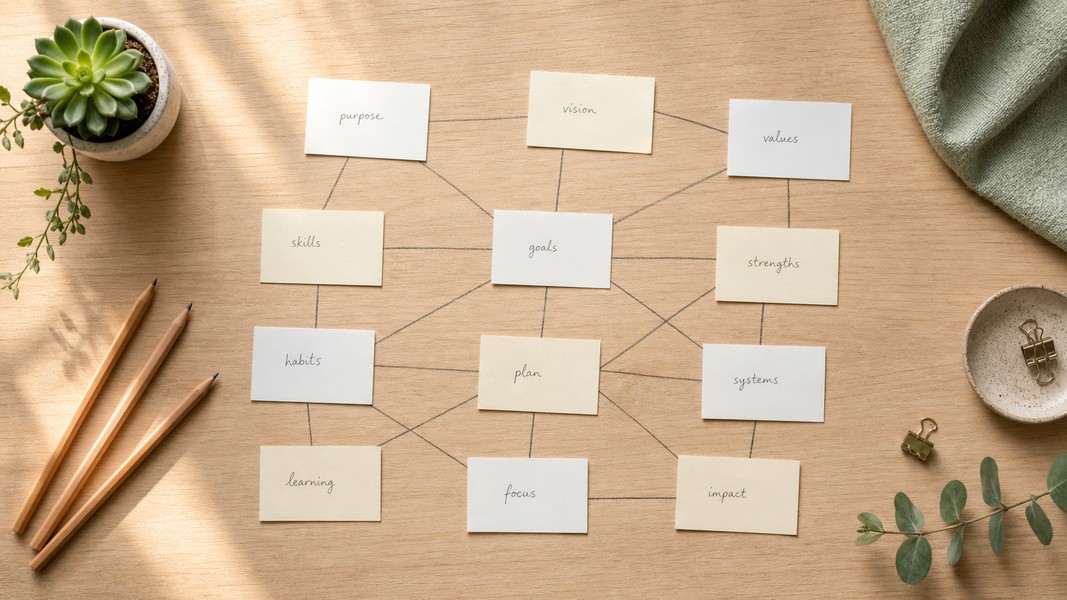
Zettelkasten: How to Build a Knowledge System
July 24, 2026
Learn how the Zettelkasten method works, why linked notes beat linear notebooks, and how to build your own knowledge system from scratch.


April 6, 2026
Most studying fails not because students lack effort, but because they use ineffective methods. Rereading notes or highlighting textbooks feels productive yet produces shallow encoding. Memory palace techniques and other evidence-based methods produce dramatically better results. Research found that beginners who trained with memory palace methods for six weeks more than doubled their word recall, with gains lasting four months as their brains reorganized to match the patterns of trained memory athletes.
This guide breaks down seven techniques, how each works neurologically, and how to put them into practice starting today.
Your brain does not store memories like a filing cabinet. It encodes information through patterns of neural activation, and the strength of those patterns determines how well you can retrieve what you learned.
Effective memory techniques create richer, more distinctive encodings. When you pair a fact with a vivid image, a spatial location, or an emotional story, you give your brain more retrieval cues. More cues mean more pathways back to the original memory, which means better recall under pressure: on exams, in meetings, and years later.
One long-running meta-analysis confirmed that distributed practice produces substantially better long-term retention than cramming. Another consistent finding: retrieval practice, the act of actively pulling information out of memory rather than re-reading it, builds stronger memories than passive review. The techniques below apply these principles in different ways.
The method of loci is among the oldest documented memory techniques, used by Greek and Roman orators including Cicero. It works by associating information with specific locations along a familiar route: your home, your commute, a well-known building. Bizarre, vivid encodings are more memorable than plain ones.
To use it, pick a route you know well and identify ten to fifteen distinct stopping points. At each point, place a vivid mental image representing what you want to remember. To recall the information, mentally walk the route and observe what you left at each location.
The technique activates the brain's spatial navigation systems, which are optimized for encoding sequences. fMRI data shows that beginners who practiced this for six weeks began showing hippocampal activation patterns similar to those of trained memory athletes. Best use cases include memorizing ordered lists, anatomy structures, legal case sequences, and any content where sequence matters. The main limitation is setup time: building a strong palace requires deliberate practice before the payoff arrives.
Mnemonic techniques encode information by linking it to something already familiar: a word, phrase, pattern, or sound. They reduce cognitive load by compressing multiple items into one retrievable anchor.
Three main forms each serve different needs. Acronyms collapse a list into a single word: PEMDAS for math order of operations, HOMES for the Great Lakes. Create custom acronyms for any ordered list you need to hold. Rhymes and rhythms encode information phonetically in a pattern the brain processes as a single unit. "Thirty days hath September" outlasts most consciously memorized facts. Chunking breaks a long sequence into smaller meaningful groups: phone numbers use three segments, not ten individual digits. Breaking a 12-item anatomy list into three groups of four cuts the cognitive load significantly.
Studies show that mnemonics combined with elaborative rehearsal, connecting them to existing knowledge, produce stronger recall than passive memorization. The catch: mnemonics work best for discrete facts, not complex conceptual reasoning.
The link method connects items in a sequence by building a chain of vivid associations. Each item links to the next through an exaggerated, often absurd mental image that is hard to forget.
For a grocery list of milk, bread, eggs, and butter, visualize a cow drowning in a flood of milk, with a surfboard made of bread, a nest of eggs balanced on top, and a stick of butter melting in the sun. The absurdity is intentional: strange images are harder for the brain to filter out as unimportant.
The link method is especially effective for sequential information where order matters as much as content. Medical students use it to memorize procedural steps under exam pressure. Sales professionals use story chains to remember client details and follow-up commitments before entering a meeting. The limitation is fragility: one broken link breaks the chain. For longer sequences, combining the link method with a memory palace gives each association a spatial anchor and makes the chain much more durable.
Dual coding theory, developed by psychologist Allan Paivio, holds that the brain processes verbal and visual information through separate but connected channels. Encoding information in both channels simultaneously creates two independent retrieval paths instead of one.
In practice, this means pairing notes with diagrams, sketches, or color-coded layouts. A chemistry student who draws out reaction pathways encodes the content visually and verbally at the same time. A law student who maps cases onto a color-coded timeline creates a visual memory anchor that plain text notes would miss entirely.
Mind maps are one of the most effective dual-coding tools for complex subjects. They organize information spatially while preserving the verbal content, engaging both encoding channels at once. Voice Memos generates mind maps directly from your notes, recordings, or PDFs, so you can convert dense material into a visual structure without drawing by hand.
Hermann Ebbinghaus documented the forgetting curve in the 1880s: without review, roughly 80% of new information is lost within 24 hours. The good news is that strategic review sessions at increasing intervals interrupt the decay before it takes hold.
Spaced repetition schedules your reviews to happen just before you would naturally forget. Review once after a day, then after three days, then a week, then three weeks. Each successful retrieval strengthens the memory trace and pushes the next review further out.
This is the core principle behind spaced repetition flashcard systems. Voice Memos uses this scheduling automatically when you generate flashcard decks from notes or recordings. Instead of re-reading your study material, you get tested on it at the right intervals, and the app tracks which cards need more reinforcement.
Teaching what you have learned to someone else, or even to an imaginary audience, forces elaborative processing that passive study skips entirely. When you explain a concept out loud, you quickly surface every gap in your understanding.
This is sometimes called the Protégé Effect: the act of preparing to teach something changes how you engage with the material. You search for analogies, organize your thoughts logically, and anticipate questions. Research shows that even ten minutes of post-study explanation or discussion raises exam scores measurably.
The simplest version: record a brief voice explanation of what you just studied, then listen back. Where you stumble or go vague is exactly where your understanding is weakest. For medical students reviewing diagnoses or law students rehearsing legal reasoning, this surfaces knowledge gaps that flashcard review alone often misses.
No single technique works equally well for every type of content. The most effective approach is to match the technique to the material and layer techniques for high-stakes content.
A practical stack for exam preparation starts with a memory palace for major chapter sections, using locations as anchors. Place mnemonic acronyms or vivid link-method images at each location. Then use active recall sessions and spaced repetition to test yourself at intervals. Teach back weak areas using voice recordings or peer explanation.
Voice Memos supports this layered approach: record lectures or study sessions, generate flashcards and quizzes from the content, then switch to mind map view to build the spatial structure that memory palace work benefits from. The study modes complement each technique rather than replacing it.
One important constraint: cognitive overload is real. Starting with two techniques instead of five produces better results than attempting all of them at once. Master the memory palace and spaced repetition first. Add mnemonics and dual coding once those feel natural.
Memory techniques work because they align with how the brain encodes and retrieves information. The memory palace uses spatial navigation systems. Mnemonics compress information into existing patterns. Dual coding creates multiple retrieval paths. Spaced repetition fights the forgetting curve before it takes hold. The teach-back method forces genuine understanding over surface recall.
The most common mistake is treating studying as passive exposure: reading, highlighting, watching. Effective retention requires active encoding. Pick one technique that fits your current material, apply it consistently, and add a second once the first feels automatic.
Discover more insights and tips to enhance your productivity
Learn how the Zettelkasten method works, why linked notes beat linear notebooks, and how to build your own knowledge system from scratch.
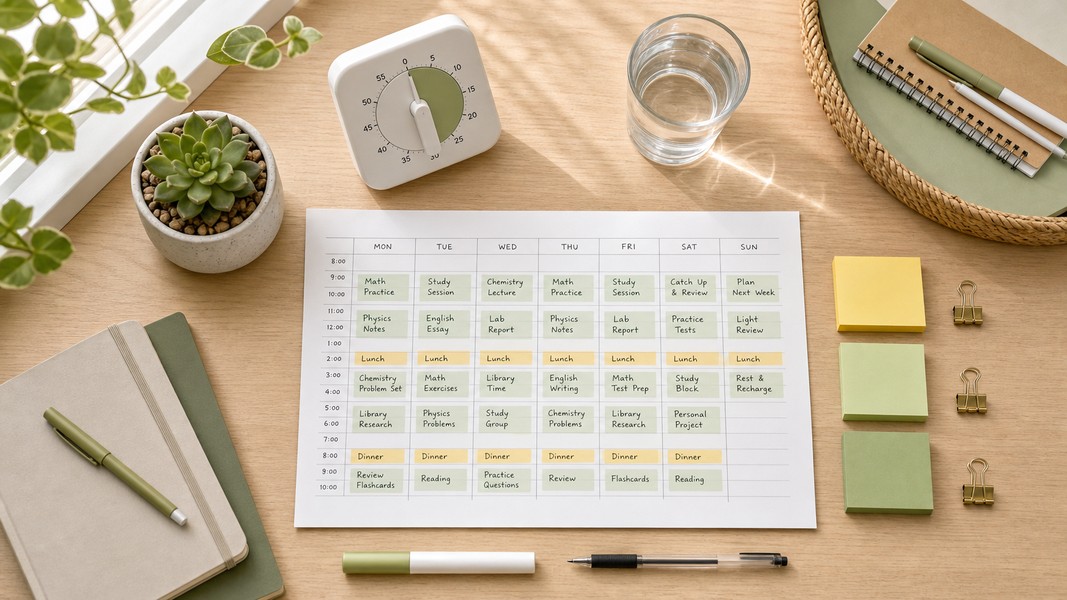
Struggling to manage your time as a student? These 7 evidence-backed tactics fix the real reasons students fall behind and waste hours.

Fathom AI is great for free Zoom notes, but it has real limits. Here are the best fathom ai alternatives for meetings, students, and multi-format capture.