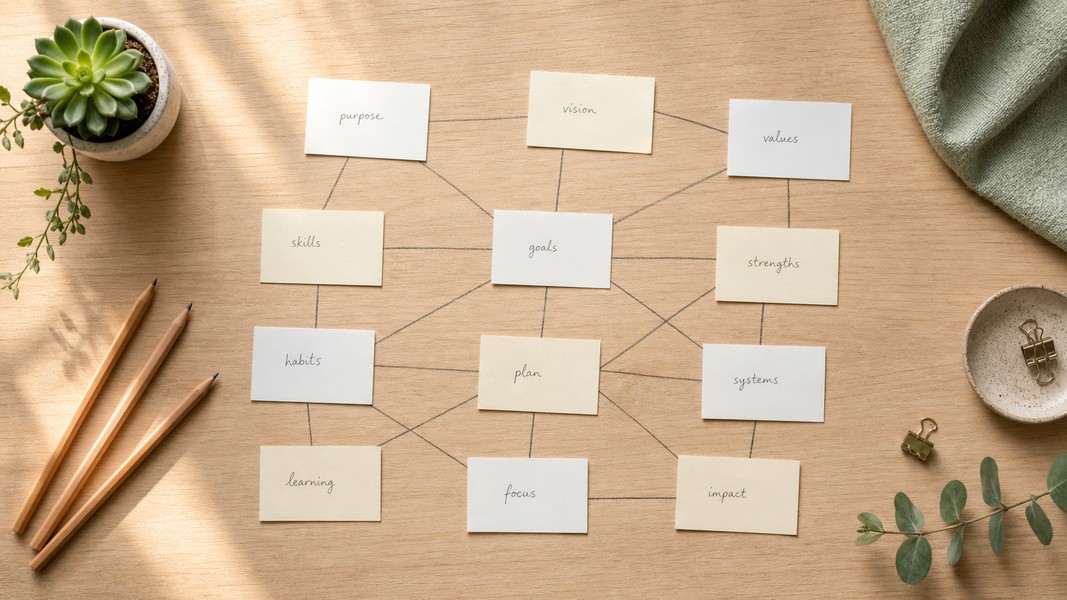
Zettelkasten: How to Build a Knowledge System
July 24, 2026
Learn how the Zettelkasten method works, why linked notes beat linear notebooks, and how to build your own knowledge system from scratch.


March 14, 2026
Short answer: Use Notion if you work in study groups or need a quick start. Use Obsidian if you study alone and want full control over your notes. If your main goal is actual exam prep rather than organization, consider whether either app gives you the study tools you need.
This guide breaks down the real differences between Obsidian and Notion for students across the areas that matter: learning curve, organization, collaboration, and study tools. Each section ends with a clear verdict so you can skip to the parts relevant to your situation.
| Category | Obsidian | Notion |
|---|---|---|
| Best for | Solo study, long-term notes, privacy | Group projects, structured databases, quick start |
| Free plan | Free for personal use | Free (with student plan available) |
| Learning curve | Medium-high | Low-medium |
| Offline access | Full (local files) | Limited (cached pages) |
| Collaboration | No real-time collab | Real-time editing and sharing |
| AI features | Via plugins only | Native AI (paid add-on) |
| Study tools | Plugins (spaced repetition, flashcards) | Databases and AI summaries |
Obsidian is a local-first knowledge base. Every note you create is a plain Markdown file saved directly on your device. Nothing is stored in the cloud unless you pay for the Sync add-on. This makes Obsidian fast, private, and fully functional without internet access.
The core idea is bidirectional linking. You connect notes to each other, and Obsidian builds a visual graph showing how your ideas relate. Over time, your notes form a network rather than a folder tree.
The biggest strength for students is that the core app is completely free. There is no feature-locked free tier, no storage limit, and no ads. Optional paid features include Sync for cross-device access and Publish for making notes public online.
The trade-off is setup time. Getting Obsidian to work the way you want requires learning Markdown, choosing a folder structure, and configuring plugins. Many students find the initial learning curve frustrating before it clicks. Real-time collaboration is not possible without third-party workarounds, which makes Obsidian a solo tool by default.
Students gravitate toward Obsidian for long-term personal knowledge management, thesis research, and study systems like Zettelkasten. The plugin library, with over 2,700 community-built extensions, lets you add spaced repetition flashcards, query your notes like a database, and even run local AI models.
Notion is a cloud-based workspace where everything is built from blocks: text, databases, tables, Kanban boards, calendars, and more. You can turn a note into a database, filter it by tag, and link it to another database, all within the same tool.
For students, the main draw is the free Education plan, which gives verified students access to a more capable tier at no cost. The onboarding is considerably smoother than Obsidian's. Notion's template gallery includes hundreds of pre-built setups for course trackers, reading lists, assignment planners, and study dashboards.
Notion's real-time collaboration is one of its strongest features. You can share a workspace with classmates, leave comments on specific blocks, and edit together simultaneously. This makes Notion practical for group projects and shared study guides in a way Obsidian simply is not.
The downsides are less obvious at first. Notion depends heavily on internet access. Offline access is limited to cached pages, which can be unreliable. Large databases can feel slow. Notion AI, which adds summaries and Q&A, is a paid add-on and not included in the free plan.
Verdict: Notion is significantly easier to start.
This is where Notion has a clear edge for most students. You can create an account, pick a template, and be taking notes within minutes. The block editor is intuitive, and the slash command menu makes it easy to insert any type of content without knowing any syntax.
Obsidian takes longer. You need to understand Markdown formatting, decide how you want to organize your vault, and install plugins for features that Notion includes out of the box. Students who have never used a plain-text editor before will likely find the first week uncomfortable.
That said, once you are past the initial friction, Obsidian tends to feel faster for note-taking. There are no loading spinners, no syncing delays, and no blank-screen moments when your internet drops. If you do not mind a learning period, the payoff in speed and control is real.
If you are starting university and need a note-taking system immediately, Notion is the easier choice. If you have time to invest and prefer owning your data, Obsidian rewards the effort.
Verdict: Depends entirely on how you think.
The two apps take opposite approaches to organization. Notion is built around databases. You create a note, attach properties to it (subject, date, status, tags), and then filter, sort, or group those notes by any property. This works especially well if you have a structured workflow: tracking assignments, organizing research by source type, or building a reading list with completion status.
Obsidian relies on links, tags, folders, and the graph view. Instead of filtering a database, you navigate by following connections between notes. A note on photosynthesis might link to your lecture notes, a textbook chapter summary, and your biology flashcards. The graph view makes these relationships visible.
Neither approach is objectively better. Students who like structured, database-style organization tend to prefer Notion. Students who prefer to build connections between ideas and think in networks tend to prefer Obsidian. Many serious users run both: Obsidian for personal research, Notion for shared or structured projects.
Verdict: Notion wins clearly.
If you study with others, this section may settle the debate. Notion is built for collaboration. You can invite classmates to a shared workspace, set permissions for who can view or edit, and work together in real time. Comments, @-mentions, and version history are all available even on the free plan.
Obsidian has no real-time collaboration. Your vault lives on your device. Sharing notes requires either paying for the Publish feature, using a workaround like Syncthing, or exporting files manually. For group projects or shared class notes, this is a significant limitation.
If your coursework involves a lot of group work, shared study guides, or peer editing, Notion is the clear choice for those needs. You can always keep a personal Obsidian vault alongside it for your own notes.
Verdict: Neither is a dedicated study app: plugins help Obsidian, native AI helps Notion.
Neither app was originally designed as a study tool, but both have developed in this direction.
Obsidian's study capabilities come entirely from the plugin ecosystem. The Spaced Repetition plugin turns linked notes into flashcard decks with scheduling based on how well you remember each card. The Dataview plugin lets you query your notes to surface overdue reviews or flag topics you have not studied recently. These plugins require setup, but the results can be quite powerful for students who invest the time.
Notion's native AI can summarize pages, answer questions about your workspace, and help you rewrite notes for clarity. It does not include true flashcard or quiz modes. Notion AI is a paid add-on, so students on the free plan do not get access to it by default.
If you want a tool purpose-built for study, neither Obsidian nor Notion fully covers that ground. Apps like Voice Memos are designed specifically for the capture-to-study pipeline: you record a lecture or upload a PDF, and the app generates quiz questions, spaced repetition flashcards, and mind maps from that content automatically. That workflow does not exist natively in either Obsidian or Notion.
For students looking at note-taking apps specifically for studying rather than organizing, it is worth considering whether a general-purpose workspace tool will actually serve your academic needs, or whether a study-focused app would do the job better.
Obsidian is the better fit if you:
Students writing theses, doing independent research, or building a knowledge system they plan to maintain for years tend to get the most out of Obsidian. The graph view becomes increasingly valuable as your note collection grows.
Notion is the better fit if you:
If your primary use is organizing coursework, tracking deadlines, and collaborating with classmates, Notion handles those tasks better than almost anything else in the free tier.
If active studying is your main goal rather than organization or collaboration, both apps have gaps. Voice Memos is built around the specific workflow of capturing content in any form (voice recordings, PDFs, YouTube videos, photos of handwritten notes) and converting it into study materials automatically. The quiz mode, spaced repetition flashcards, and mind maps are generated from your content without any manual setup.
For students who want a tool that handles both note-taking and exam prep in one place, it is worth comparing your options. The Notion alternatives post covers several apps built around different workflows if you are still exploring.
Obsidian and Notion are genuinely good tools, but they serve different students. Obsidian rewards patience with a fast, private, highly customizable system that works best for solo, long-term note-taking. Notion offers a smoother start, better collaboration, and a structured workspace that suits course management and group work.
The simplest way to decide: if you work in study groups or need a shared system, start with Notion. If you are building a personal knowledge base and want full control over your notes, try Obsidian. And if your main goal is to actually study the content you capture, consider whether either app gives you the study tools you actually need.
Discover more insights and tips to enhance your productivity
Learn how the Zettelkasten method works, why linked notes beat linear notebooks, and how to build your own knowledge system from scratch.

Struggling to manage your time as a student? These 7 evidence-backed tactics fix the real reasons students fall behind and waste hours.

Fathom AI is great for free Zoom notes, but it has real limits. Here are the best fathom ai alternatives for meetings, students, and multi-format capture.