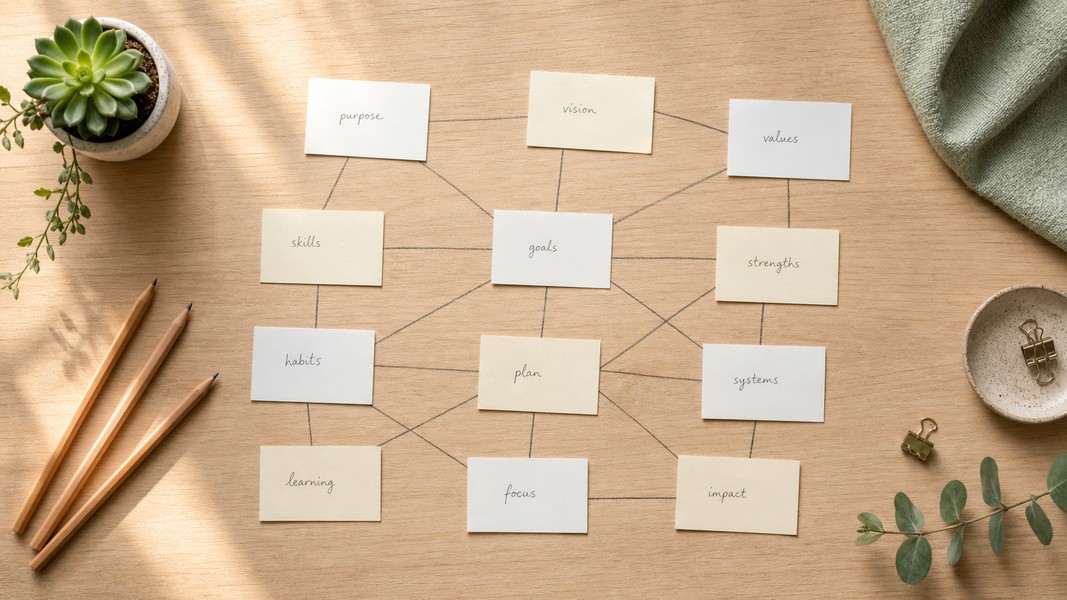
Zettelkasten: How to Build a Knowledge System
July 24, 2026
Learn how the Zettelkasten method works, why linked notes beat linear notebooks, and how to build your own knowledge system from scratch.


May 17, 2026
Recording Zoom meetings is table stakes for most modern teams. Hit record, let the platform save the file, and you have a timestamped archive of everything that was said. The problem is that a video file in your cloud drive is not a workflow. It is something you mean to review later but rarely do, and the action items from the call quietly disappear into a backlog of unread notifications.
The real goal of recording a meeting is not the recording itself. It is the decisions, commitments, and follow-ups that come out of it.
Knowledge workers average 15.8 hours per week in meetings, according to Reclaim.ai research. At that volume, relying on memory or manual notes to capture every commitment is a formula for missed deadlines. This guide walks through a four-stage workflow that turns every Zoom recording into something your team can actually act on: record, transcribe, extract, and organize.
Recording is a step forward, but it closes only one gap. A Zoom cloud recording stores a video file. Getting value out of it requires someone to watch it, locate the relevant segments, identify the decisions, find the action items, assign owners, and distribute the notes. For most teams, that last part rarely happens consistently.
Survey data consistently finds that 71% of meetings are considered unproductive by senior managers. The time is there. The information is captured. The gap is that without a structured process to extract and distribute key outcomes, meetings produce activity without accountability.
Recording gives you an archive. A workflow gives you results.
Getting from a Zoom recording to a list of tracked action items involves four stages. Each one builds on the previous, and skipping any of them puts you back in the familiar cycle of incomplete follow-ups and clarification meetings.
The stages themselves are not complicated. What most teams lack is the habit and tooling to run them consistently on every call.
Zoom offers two recording modes: local and cloud. Local recording saves the file directly to your computer. Cloud recording stores it on Zoom's servers, which makes it easier to share links and connect with AI transcription tools that need file access. Cloud recording is typically a paid feature; if your organization has not activated it, check with your admin.
Google Meet and Microsoft Teams follow similar patterns. Google Meet recordings go to the organizer's Google Drive, and recording is available on paid Workspace plans. Microsoft Teams stores recordings in OneDrive or SharePoint depending on whether the meeting is in a channel. Both platforms restrict who can start a recording, so verify your permissions before a call matters.
Recording meetings on iPhone or Android via Zoom is possible on paid plans. Recordings typically go to the cloud rather than the device itself. For situations where you are joining as a participant and not the host, some teams use dedicated AI note-taking apps that join the call independently, capture the audio, and handle transcription on their own.
A few audio basics that improve everything downstream: use a headset rather than laptop speakers, enable noise suppression in Zoom's audio settings, and ask remote participants to mute when they are not speaking. Better audio means fewer errors in the transcription stage. For a broader comparison of tools that extend Zoom's built-in recording options, see our rundown of meeting recorder apps for teams.
A recording without a transcript is still difficult to search. Transcription converts meeting audio into text you can scan, copy, and feed into extraction tools.
Modern AI transcription achieves word error rates between 5 and 15 percent under good audio conditions, which translates to roughly 90-95 percent accuracy in clean, single-accent speech. Real multi-speaker meetings with some crosstalk tend to land closer to 85-90 percent in practice. That is not perfect, but it is accurate enough to anchor action item extraction and structured note generation.
Speaker diarization is the feature that makes transcripts useful for follow-up. Diarization segments the transcript by who spoke, labeling chunks as "Speaker 1," "Speaker 2," and similar labels, or mapping them to participant names when the system has that information. Without it, you have a wall of text with no attribution, which makes it impossible to know who said "I'll have that to you by Thursday."
Voice Memos handles transcription and speaker separation automatically. You record the meeting audio, upload the file, and get a labeled transcript as the output. The app supports over 40 languages, which matters for teams where not all participants speak the same primary language.
Once you have a transcript with speaker labels, the extraction stage identifies what needs to happen next.
AI systems look for specific linguistic patterns. Phrases like "I'll send..." or "Can you take care of..." followed by a verb and object signal tasks. Time expressions like "by end of day Friday" or "before the launch" flag deadlines. Ownership cues like "Sarah will draft..." or "the product team should follow up on..." assign responsibility to a person or group.
More capable systems use the full conversational context rather than scanning sentence by sentence. This matters because speculative statements need to be separated from commitments: "We could add this to the roadmap" is not a task, but "We are adding this to the roadmap before Q3" is. Context-aware models handle that distinction reliably.
The output is a structured record: a task description, the owner's name, a due date, and a timestamp pointing to the moment in the recording where the commitment was made. That timestamp gives anyone who was not on the call a way to verify what was said, without watching the entire video.
Voice Memos automatically classifies six types of information from any processed content: tasks, events, reminders, locations, contacts, and general notes. In a meeting context, this means action items and calendar events are detected and separated without manual tagging. You review the output, correct any misattributions, and the categorized list is ready to share.
Extracted action items have value only if they reach the right people and land in the right system.
A meeting note structure that works in practice covers six things: the meeting date and participants, a one-to-three sentence objective, key decisions with brief rationale, action items with owner and deadline, open questions or risks, and a short summary. That is enough to orient anyone who needs context later. More than this tends to become noise that people skip.
Send notes within 24 hours of the meeting, ideally within a few hours while context is still fresh. Faster distribution makes it easier to catch mistakes and keeps momentum from the call alive. If a participant disagreed with a decision or remembers a deadline differently, early distribution gives them a chance to correct the record before anyone acts on it.
The best way to ensure action items get completed is to push them into the system your team already uses to track work. Notes in a shared document are better than no notes at all. Notes that automatically create tasks in a project tracker are better than notes in a document. If your workflow connects to Asana, Jira, Notion, or another tool, route the action items there.
For recurring meetings, keeping notes in a consistent, searchable location builds a useful record over time. The structured notes from last month's project syncs become the context for this month's decisions. You stop spending the first ten minutes of every meeting reconstructing what was agreed previously.
Before the meeting: Enable cloud recording, confirm your transcription or AI note-taking tool is connected, and decide in advance where notes and tasks will live after the call.
During the meeting: Announce at the start that recording is on. Encourage explicit commitments by asking "Who's owning this?" and "What's the deadline?" Let the AI tool capture the transcript in the background without disrupting the conversation.
Immediately after the meeting: Review the AI-generated summary and action items. Correct any owner misattributions or missing deadlines. Publish notes to your shared workspace and confirm that tasks exist in your system of record.
Within 24 hours: Share the notes with all attendees and relevant stakeholders. Ask for corrections: a short message like "Reply if we missed any commitments" catches gaps before they compound.
Before the next related meeting: Start by reviewing the previous notes. Use the open action items as your opening agenda. This alone eliminates most of the time teams spend rehashing old ground.
Here is what the workflow looks like in a real situation. You are running a 30-minute product launch kickoff on Zoom with five stakeholders: a product manager, a marketer, a sales lead, a legal contact, and a customer success rep. Cloud recording is on. Your AI note-taking tool is connected.
The conversation flows naturally. No one pauses to dictate notes or ask for clarification on who said what. Within a few minutes of the call ending, the AI has produced a three-bullet summary, a list of key decisions, and five action items. Each action item has an owner, a due date, and a link to the timestamp in the recording where the commitment was made. The notes go out as a shared link. Tasks are created in the project tracker.
What would have taken 20-30 minutes of manual review after the call is complete before anyone has opened their next email. One call is a small efficiency gain. Ten calls a week across a team starts to look like a meaningful shift in how much work actually gets done.
For teams that want to understand the landscape of tools that handle this kind of workflow, our overview of AI meeting notes tools covers how the category works and what to look for when evaluating options.
Recording Zoom meetings is where the process starts, not where it ends. A raw recording in cloud storage is an archive, not a workflow. The value is in what comes out of it: clear decisions, assigned tasks, and distributed notes that people can actually act on.
The four-stage workflow described here, record, transcribe, extract, and organize, converts meeting time into accountable follow-through. None of the steps require significant changes to how your team runs calls. What changes is the habit of treating recording as one stage in a system rather than the end goal.
Discover more insights and tips to enhance your productivity
Learn how the Zettelkasten method works, why linked notes beat linear notebooks, and how to build your own knowledge system from scratch.
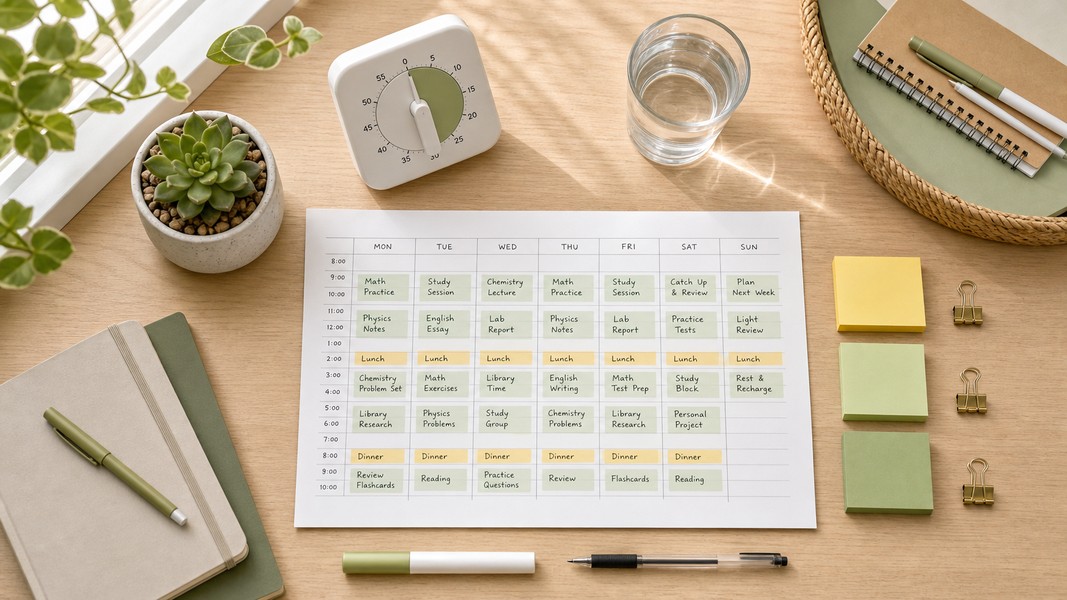
Struggling to manage your time as a student? These 7 evidence-backed tactics fix the real reasons students fall behind and waste hours.
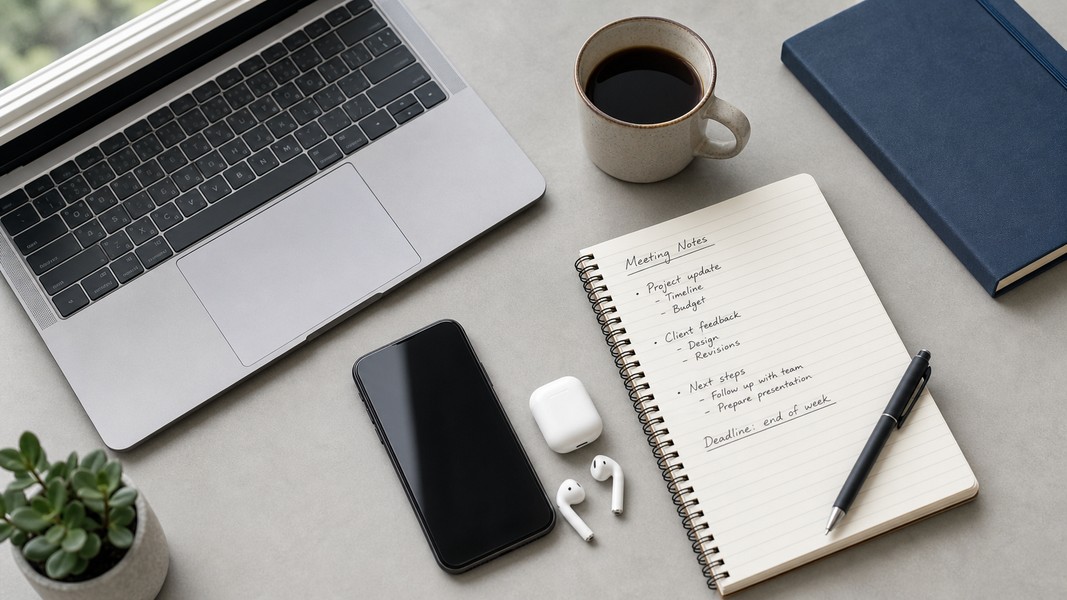
Fathom AI is great for free Zoom notes, but it has real limits. Here are the best fathom ai alternatives for meetings, students, and multi-format capture.