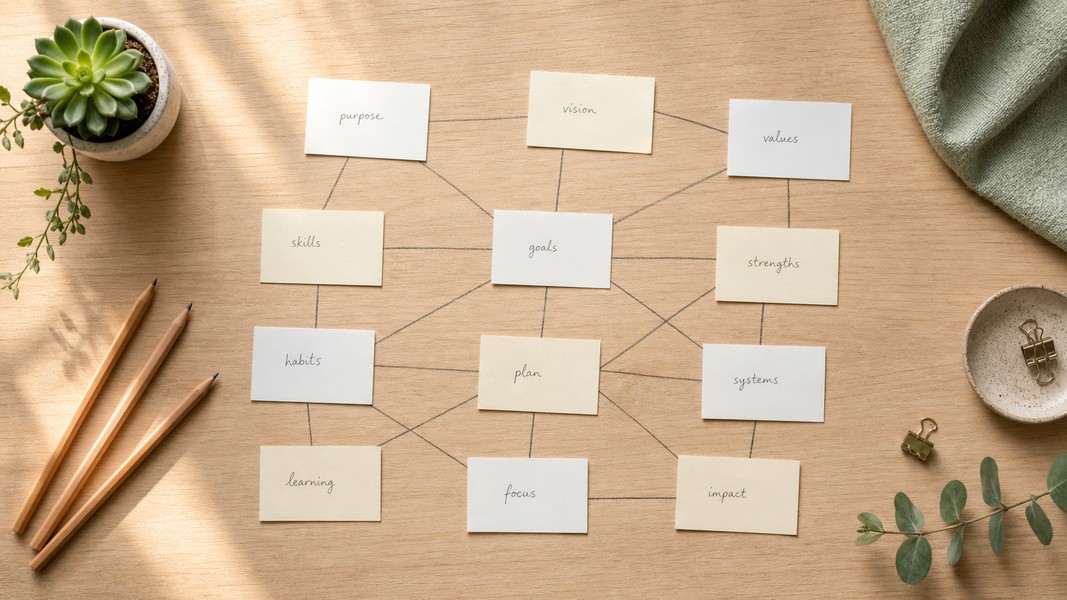
Zettelkasten: How to Build a Knowledge System
July 24, 2026
Learn how the Zettelkasten method works, why linked notes beat linear notebooks, and how to build your own knowledge system from scratch.


May 16, 2026
Most professionals leave meetings with scattered notes, vague memory of who agreed to what, and a growing list of things they meant to follow up on but didn't. The right meeting recorder app changes that outcome by capturing conversations automatically and converting them into something you can actually act on.
The best meeting recorder app in 2026 goes well beyond saving audio. It transcribes in real time, identifies who said what, extracts action items, and pushes notes into the tools your team already uses. This guide compares six options that cover every professional scenario: virtual calls, in-person sessions, sales conversations, user research, and noisy field work.
| Tool | Best For | Free Plan | Standout Feature |
|---|---|---|---|
| Voice Memos | In-person + AI-structured outputs | Yes | Auto-extracts tasks, events, and contacts from any recording |
| Fathom | Free Zoom/Meet/Teams recording | Yes (unlimited) | No cap on recordings or transcriptions |
| Otter.ai | Team collaboration + live notes | Yes (limited minutes) | Real-time shared notes with team channels |
| Fireflies AI | Sales teams + conversation analytics | Yes (limited minutes) | Talk-time analytics and CRM sync |
| tl;dv | Product and UX research calls | Yes (limited meetings) | Video highlight clips and shareable moments |
| Krisp | Recording in noisy environments | 7-day trial | Bidirectional noise cancellation across 800+ apps |
Choosing the right tool comes down to five practical factors that separate genuinely useful apps from expensive transcription storage.
Transcription quality and language support matters first. Many top tools now reach 95% accuracy in clear audio conditions, but for global teams, language breadth is the real differentiator: some tools cover 28 languages, others 40 or more. Second is speaker identification: correctly attributing who said what is the difference between a useful record and a 60-minute wall of text. Third is post-meeting workflow depth, which covers whether the tool extracts action items and decisions or just dumps a transcript. Fourth is integration fit with your calendar, CRM, and project tools. Fifth is recording flexibility: whether a tool captures in-person sessions and uploaded audio, or only joins live video calls as a bot.
Voice Memos is an AI-powered recorder built on a straightforward idea: everything said in a meeting should become structured, actionable output without any manual sorting afterward.
Instead of handing you a raw transcript, Voice Memos automatically classifies captured content into six output categories: tasks, events, reminders, locations, contacts, and notes. Record a client call, and it extracts the prospect's name and email as a contact, flags the follow-up demo as an event, and creates a task for the quote you promised to send. Nothing gets lost in a block of text because the AI has already separated and labeled it.
The app supports transcription in 40+ languages with automatic translation into your preferred language. That coverage is particularly valuable for teams managing international accounts or working across time zones. Voice Memos also processes input from multiple sources beyond live recording: you can upload existing audio files, PDFs, images, and YouTube URLs. If your sales calls are recorded in Zoom and stored as MP4 files, you can feed those directly into Voice Memos for the same structured processing.
For professionals who work in mixed environments, the in-person recording capability matters. Unlike bot-based tools that only join Zoom or Google Meet calls, Voice Memos captures any audio you record directly from your phone or browser. That makes it practical for client meetings in conference rooms, on-site workshops, field interviews, and any session that doesn't happen over a video link.
Where some tools stop at "here is your transcript plus a summary," Voice Memos also offers four study modes for users who want to go deeper: flashcards, quizzes, mind maps, and deep research mode. For students this is core functionality; for professionals it's an optional layer when you need to internalize complex content from recorded briefings or training sessions.
To see how Voice Memos fits alongside broader AI meeting tools, the AI meeting notes overview covers how these tools work across the full meeting lifecycle.
Best for: Consultants, coaches, sales reps, and field professionals who move between in-person and virtual meetings and need action-ready structured output rather than raw transcripts.
Fathom has established itself as the most accessible free meeting recorder app in the market, and the reason is straightforward: there is no monthly cap on recordings or transcriptions, even on the free tier.
When Fathom joins your meeting as a participant, it records the call and produces a searchable transcript alongside an AI summary with key points, decisions, and action items. Summaries are generated within roughly 30 seconds of the meeting ending, which is useful when you need to send a follow-up immediately after a call ends. A "Perfect Recall" feature indexes every past meeting so you can search for specific commitments or topics across months of recordings.
Fathom works natively with Zoom, Google Meet, and Microsoft Teams. It supports 28 languages, making it a reasonable fit for multilingual teams, though coverage is narrower than some alternatives. CRM integrations (HubSpot and Salesforce) and team management capabilities come on paid plans.
The free tier's unlimited recording is genuinely a differentiator. Most competitors cap free users at a few hundred minutes per month, which runs out quickly for meeting-heavy professionals. Fathom removes that friction entirely, which is why it has seen strong adoption among individual contributors and small teams who want capable meeting notes without a budget conversation.
The primary constraint is format: Fathom only records live virtual meetings via bot. It cannot process uploaded recordings, in-person audio, or offline sessions. If your work spans both virtual and physical meetings, you will need a second tool for the in-person side.
Best for: Individual professionals and small teams heavily reliant on Zoom, Google Meet, or Teams who want a capable, zero-cost meeting recorder app with no recording limits.
Otter.ai's core strength is team-level meeting knowledge, not just individual note capture. OtterPilot joins your scheduled calls automatically from your Google or Outlook calendar, transcribes the conversation as it happens, and syncs notes into shared team channels where colleagues can read, highlight, and comment together.
The live transcription view is useful in large calls or all-hands meetings: someone who misses a comment can follow along in real time without interrupting, and key points can be marked during the meeting rather than during a post-processing pass. Otter Chat extends that further by letting you query any transcript after the fact, whether you want a summary of a specific discussion thread or a comparison of commitments made across several meetings.
Otter's team channels turn individual meeting records into a searchable, shared knowledge base, which separates it from tools focused on personal note-taking. Integration partners include Zoom, Google Meet, Teams, Slack, Salesforce, and HubSpot on higher tiers. For regulated industries, Otter has earned SOC 2 and HIPAA certification, detailed on its security page, which matters for healthcare, legal, and financial teams where meeting records have data sensitivity requirements.
The clearest limitation is language support: Otter covers English, French, and Spanish. For teams that work primarily in other languages, this is a significant gap. Video recording is also restricted to higher-tier plans; the core free and base paid plans focus on audio and text.
Best for: Remote teams and knowledge workers who want shared, searchable meeting records and whose conversations happen primarily in English, French, or Spanish.
Fireflies is designed with a specific professional persona in mind: sales leaders and revenue team managers who need more than notes from customer calls. Beyond transcription and summaries, Fireflies analyzes each recorded meeting for talk-time ratios, sentiment patterns, and keyword frequency.
The practical application is sales coaching at scale. Instead of reviewing hours of call recordings manually, a manager can filter by keyword, pull calls where a competitor was mentioned, or check whether reps are hitting the conversation milestones in their playbook. Fireflies processes this across Zoom, Google Meet, Teams, Webex, and other conferencing platforms via calendar auto-join, with a searchable library that spans the team's full call history.
The platform also offers a library of pre-built AI skills at Fireflies AI, including coaching scorecards, objection tracking, and follow-up generation for sales workflows. CRM integration with Salesforce and HubSpot routes notes, action items, and contact data directly into your pipeline after each call.
For professionals outside sales, Fireflies has more configuration than most users need. The analytics layer is genuinely powerful, but if you want clean notes and action items from internal team meetings, simpler tools will serve you better. Advanced analytics and integrations are also gated behind higher pricing tiers.
Best for: Sales teams, customer success managers, and revenue-focused organizations that want conversation intelligence and CRM routing on top of standard meeting transcription.
tl;dv takes a fundamentally different approach to meeting recording: it treats the video itself as the deliverable, not the text that comes out of it. Where other tools in this list prioritize transcripts and structured summaries, tl;dv lets you tag, clip, and share specific moments from a recorded call.
A 60-minute user interview becomes five shareable video clips that capture the most useful insights. A two-hour product workshop becomes a set of timestamped highlights with AI-generated chapter markers. Rather than writing a research summary for a stakeholder, you send them a curated highlight reel. The tool works natively with Zoom and Google Meet, produces AI summaries alongside the video, and integrates with Notion and Slack for embedding clips directly in project spaces.
This highlight-driven workflow resonates with product managers, UX researchers, and designers who regularly conduct user interviews, usability tests, and customer discovery sessions. Video evidence of a user struggling with a specific flow carries more weight in a product review than a summarized quote from a transcript.
The free plan limits the number of meetings per month. Paid plans increase those limits, unlock more advanced AI features, and add team administration capabilities. tl;dv is not designed for in-person sessions or for teams whose primary need is efficient internal meeting notes. For those use cases, the other tools in this list are better fits.
Best for: Product teams, UX researchers, and marketers who run customer interviews, usability sessions, and demos and need shareable video moments for stakeholder communication.
Krisp started as an audio tool and remains the most focused solution on this list for one specific problem: recording and communicating clearly from environments where background noise is a consistent issue.
Operating at the system level, Krisp applies bidirectional noise cancellation across over 800 apps, meaning it filters both your outgoing audio and incoming audio across Zoom, Teams, Google Meet, and virtually any other platform your device uses. For remote workers in open offices, shared homes, or cafes, this covers the situations where standard tools fall short.
The meeting notes feature layers AI summaries, key topics, and basic action items on top of the cleaned audio. These outputs are functional but less structured than what dedicated meeting recorders like Voice Memos or Fireflies provide. The main value of Krisp is audio quality: a cleaner recording also tends to produce more accurate transcripts in any tool you run alongside it.
For professionals who work from consistently noisy environments, Krisp addresses a problem that better transcription software alone cannot solve. Trying to transcribe a call with construction noise in the background will produce errors that even 95%+ accuracy tools cannot recover from. Krisp prevents that from happening at the source.
Krisp's meeting notes functionality is on paid plans. The free experience focuses on noise cancellation.
Best for: Remote workers, field professionals, and anyone who joins meetings regularly from noisy environments and needs clean audio as a baseline.
Before choosing, match the tool to your actual workflow rather than the feature list.
The most important question is where your meetings take place. If your work is entirely in Zoom, Google Meet, or Teams, any bot-based tool works from the moment you connect your calendar. If you have in-person client meetings, workshops, or sessions that don't happen over video, you need a tool that captures local audio directly or processes uploaded recordings. Voice Memos handles both; most other tools on this list do not.
The second question is what you need from the output. A plain transcript is only useful if you are willing to extract action items yourself. Tools like Voice Memos automatically classify content into tasks, events, contacts, and notes, eliminating the manual step entirely. Fireflies adds analytics for sales coaching. tl;dv turns recordings into video clips. Fathom and Otter produce clean summaries and searchable archives. Know which output type your actual workflow requires before signing up for anything.
For teams, integration depth matters more than the feature checklist. A meeting recorder app that connects to your CRM, project management tool, and messaging platform will become a real part of your workflow. One that exports a PDF to your email will be abandoned within a few weeks. Check native integrations, not just whether a Zapier connection exists.
Language coverage is increasingly relevant for distributed and international teams. Tools with limited language support (three to five languages) will start creating gaps as your team or client base spans more regions. Choosing a tool with broad language coverage early saves a migration later.
Finally, consider the bot visibility question. Most recorder apps join meetings as a visible participant. Some clients and external participants are uncomfortable with this. Bot-free recording options, which capture audio at the device level without a visible participant, can matter in sensitive client conversations or regulated contexts.
For teams evaluating the full range of AI tools in this category, the AI note takers comparison covers the broader market in more detail.
The right meeting recorder app depends on where your meetings happen and what structured output you need from them.
Fathom is the natural starting point for Zoom-heavy professionals who want unlimited free recording with no friction. Otter.ai fits teams that need collaborative notes and a shared knowledge base across calls. Fireflies suits sales and customer success organizations that want conversation analytics alongside transcripts. tl;dv is the clear choice for product and UX teams who communicate through video clips rather than written summaries.
Voice Memos is the strongest option when you need coverage across both in-person and virtual meetings, and when the output that matters is structured: tasks assigned, events calendar-ready, contacts captured. Krisp belongs in the setup of anyone working from a consistently noisy environment, either independently or paired with one of the other tools above.
The decision comes down to where your meetings happen, what you need from them afterward, and how the output needs to connect with everything else your team already uses.
Discover more insights and tips to enhance your productivity
Learn how the Zettelkasten method works, why linked notes beat linear notebooks, and how to build your own knowledge system from scratch.
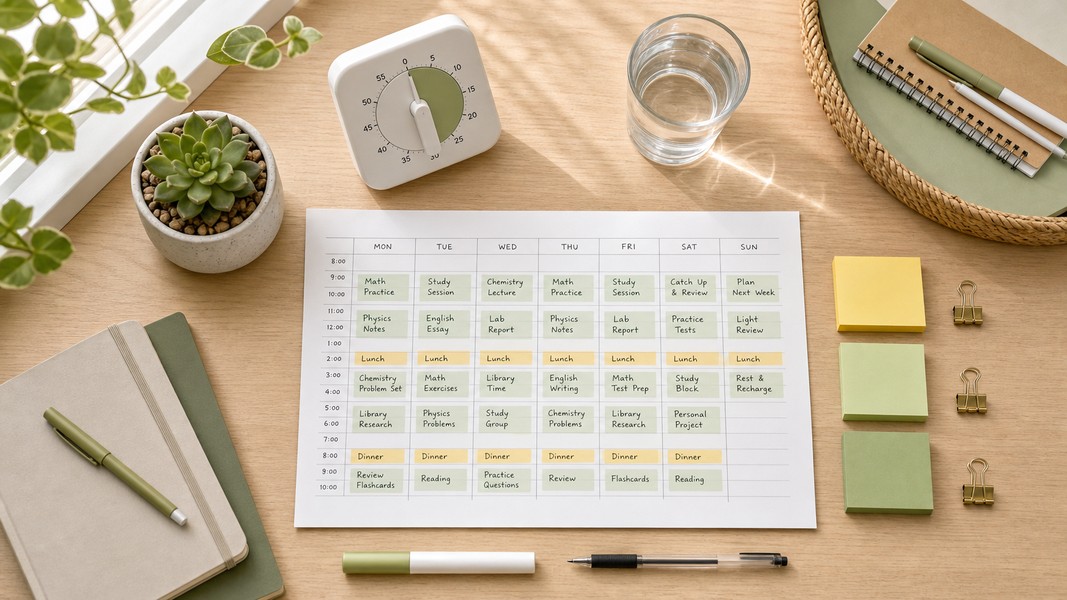
Struggling to manage your time as a student? These 7 evidence-backed tactics fix the real reasons students fall behind and waste hours.

Fathom AI is great for free Zoom notes, but it has real limits. Here are the best fathom ai alternatives for meetings, students, and multi-format capture.