
Zettelkasten: How to Build a Knowledge System
July 24, 2026
Learn how the Zettelkasten method works, why linked notes beat linear notebooks, and how to build your own knowledge system from scratch.


March 19, 2026
AI meeting notes are automated summaries generated by AI from your meeting audio, pulling out decisions, action items, and key discussion points without any manual effort. Instead of raw transcripts or selective hand-written notes, the AI processes what was said and delivers structured, searchable output your whole team can act on.
If you leave most meetings scrambling to remember what was decided or who owns what, you are not alone. Research shows that up to 70% of meetings fail to produce effective follow-through, often because documentation gaps leave action items unclear or unassigned. For professionals running five to ten calls a day, manually capturing that information accurately is nearly impossible.
The core value of AI meeting notes is not just convenience. It is consistency. Every meeting produces the same level of documentation regardless of who attended, how long it ran, or how complex the discussion was. That consistency is what makes follow-through reliable across teams and time zones.
This guide explains how ai meeting notes work under the hood, what they capture, and which tools are worth your time.
The process behind AI meeting notes follows a consistent pipeline, even if different tools package it differently.
It starts with automatic speech recognition (ASR), which converts spoken audio to text in real time or after the call ends. The transcript is then processed by natural language processing or large language models that analyze the content, detect speaker intent, and classify what was said: is this a decision? A task assigned to someone? A deadline to flag?
Speaker diarization runs alongside transcription, attributing statements to individuals so the output shows who committed to what. From there, the model organizes extracted data into structured output: a summary, a list of action items with owners, flagged decisions, and key points grouped by topic.
Some tools deliver this in real time as the meeting runs. Others process the recording post-meeting, typically within a few minutes. The result in both cases is a structured document rather than a wall of raw text you have to dig through yourself. The difference between real-time and post-meeting processing matters most when participants need notes during the call itself, such as a sales rep confirming commitments before the conversation ends.
The specific data AI meeting notes extract goes well beyond a general summary. At minimum, most tools identify action items with owners and deadlines, key decisions made during the call, main discussion points and topic clusters, attendee names and contact details, and dates, follow-up timelines, and commitments.
Accuracy is strong for clean audio but degrades with crosstalk, heavy accents, or industry-specific jargon. Fireflies.ai supports transcription across over 100 languages and lets users add custom vocabulary to improve accuracy for technical contexts. Even the best tools recommend reviewing summaries before distributing them, since LLMs can occasionally misrepresent nuance in complex discussions.
Voice Memos takes extraction further by automatically categorizing meeting content into six distinct action types: tasks, events, reminders, locations, contacts, and notes. Record a meeting in the app and the AI surfaces your to-do list, calendar items, and contact list in a single step, without sorting through the transcript manually. For a closer look at how to structure meeting output, the meeting notes template guide walks through common frameworks worth adopting.
Manual note-taking during a meeting creates a real cognitive problem. Writing requires active attention, which competes directly with listening and contributing. Research confirms that this split attention increases cognitive load and leads to selective, incomplete records, even for careful note-takers.
The productivity cost shows up in follow-through. Professionals who rely on manual notes often spend significant time after calls consolidating what they wrote, chasing context they missed, or reconstructing decisions from memory hours later. AI meeting notes shift all of that work to the software.
| Aspect | Manual Note-Taking | AI Meeting Notes |
|---|---|---|
| Cognitive Load | High - multitasking | Low - fully offloaded |
| Completeness | Selective | Full transcript + extraction |
| Processing Time | Hours post-meeting | Minutes |
| Task Tracking | Manual review | Automated extraction |
The difference shows up most clearly in meeting-heavy roles. Sales reps, project managers, and consultants often run back-to-back calls. With manual notes, something always falls through. With AI, every call produces the same structured output regardless of how rushed or distracted you are.
There is also the problem of bias in manual notes. Note-takers unconsciously prioritize what feels important to them rather than what the group agreed to. AI extracts based on language patterns and decision signals, producing a more objective record. That matters when accountability is at stake, such as after a client commitment or a performance conversation.
The market for AI note takers has grown fast, and the main tools differ meaningfully in focus and workflow fit.
Otter.ai is one of the most established options, with strong Zoom and Teams integration, real-time transcription, and automated action item extraction. It suits teams that want a low-friction setup and broad platform support without customization.
Fireflies.ai stands out for multilingual teams and analytics. Beyond transcription, it tracks conversation metrics like talk time, sentiment, and question frequency. Its CRM integrations make it a solid choice for sales teams who want meeting data feeding directly into their pipeline without manual entry.
Fathom AI is a lightweight option with a strong free tier, popular with professionals who want clean, readable summaries without complex setup. It handles Zoom calls particularly well and requires minimal configuration to get started.
Zoom AI Companion is built directly into Zoom and requires no additional setup for Zoom users. The 2026 version of Zoom AI Companion expanded cross-platform support to Google Meet and Microsoft Teams, along with improved action item detection. By default, summaries are available to meeting hosts only.
Microsoft Teams AI Recap integrates natively into the Teams workflow and generates post-meeting recaps with extracted action items. It is the most practical option for organizations already running on the Microsoft 365 stack and want meeting documentation without a third-party tool.
Voice Memos handles AI meeting notes through voice recording with automatic action detection. Record a meeting on your phone or desktop, and the AI categorizes what it hears into tasks, events, reminders, locations, contacts, and notes in separate organized views. It also supports input beyond audio: PDF uploads, camera scans, and YouTube links, making it useful for professionals who want one tool across multiple content types.
Notion AI offers meeting note generation within Notion workspaces. If your team already stores project documentation in Notion, the integration keeps meeting outputs in context with related tasks and project files.
The quality of your AI meeting notes depends significantly on the quality of your audio. A USB microphone or headset eliminates most transcription errors. Open laptop microphones in noisy environments produce inconsistent results regardless of which tool you use.
Most platforms support calendar integration, which lets them join meetings automatically and generate pre-meeting briefs with attendee details and agenda context. Enabling this removes the friction of manually starting recordings and ensures you never miss a session.
Privacy and consent deserve attention before you roll this out broadly. Recording a meeting without informing participants is a legal issue in many jurisdictions. Announcing at the start of each call that it is being recorded and transcribed is standard practice. Most enterprise tools include built-in consent features for this.
After the meeting, treat the AI output as a first draft rather than a final record. Check action items for accuracy, confirm who owns what, and push the output to your project management tool or CRM before your next call. A five-minute review is far faster than reconstructing context from memory two days later.
One workflow worth building: review the AI summary immediately after a call ends, make any edits while the meeting is fresh, then send the cleaned version to attendees within the hour. Teams that do this consistently report better follow-through on action items and shorter follow-up meetings.
Consider how AI meeting notes fit into your broader documentation system as well. Many teams connect their meeting note tool directly to a shared workspace, so every call's output lands where the work actually happens: in a project channel, a CRM record, or a task manager. That connection turns meeting notes from a passive record into an active part of the workflow. The tools that support direct integrations with Slack, Asana, Notion, and HubSpot make that handoff automatic, so nothing requires manual copying between systems.
AI meeting notes solve a specific problem: the gap between what happens in a meeting and what actually gets done afterward. The technology works by transcribing audio, processing it through NLP and large language models, and extracting structured output that any team member can act on.
The best tool depends on your workflow. Zoom-heavy teams benefit most from Zoom AI Companion or Otter.ai. Sales teams with CRM requirements fit Fireflies.ai well. Professionals who need flexible, multi-modal capture across different meeting formats benefit from tools that handle more than just audio input.
Consistent use matters more than which tool you choose. A structured output from every meeting, reviewed and shared promptly, closes the follow-through gap that makes most meetings feel like a poor use of time.
Discover more insights and tips to enhance your productivity
Learn how the Zettelkasten method works, why linked notes beat linear notebooks, and how to build your own knowledge system from scratch.
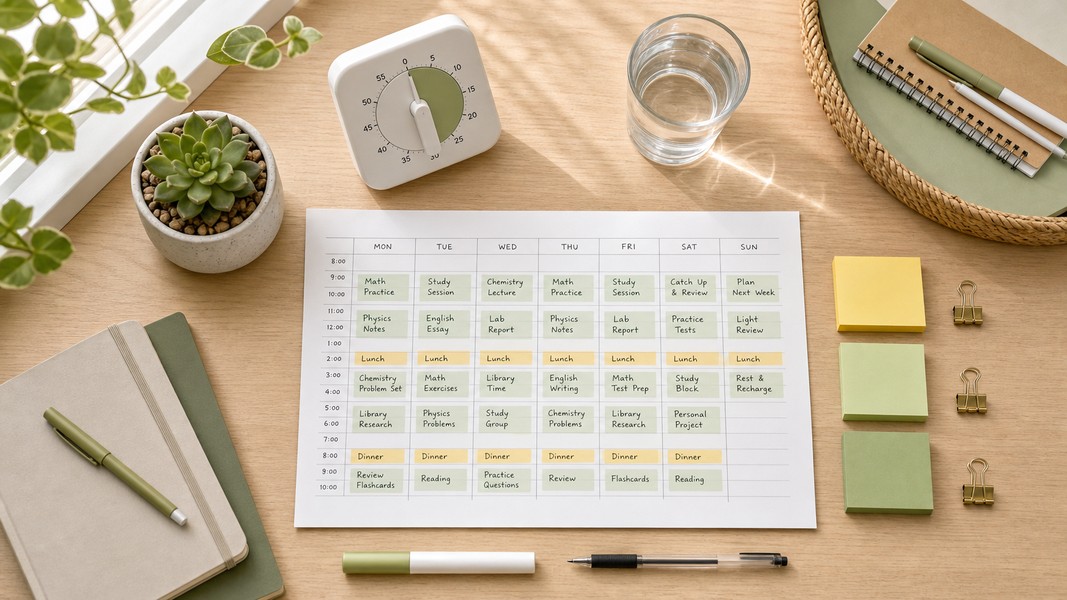
Struggling to manage your time as a student? These 7 evidence-backed tactics fix the real reasons students fall behind and waste hours.

Fathom AI is great for free Zoom notes, but it has real limits. Here are the best fathom ai alternatives for meetings, students, and multi-format capture.