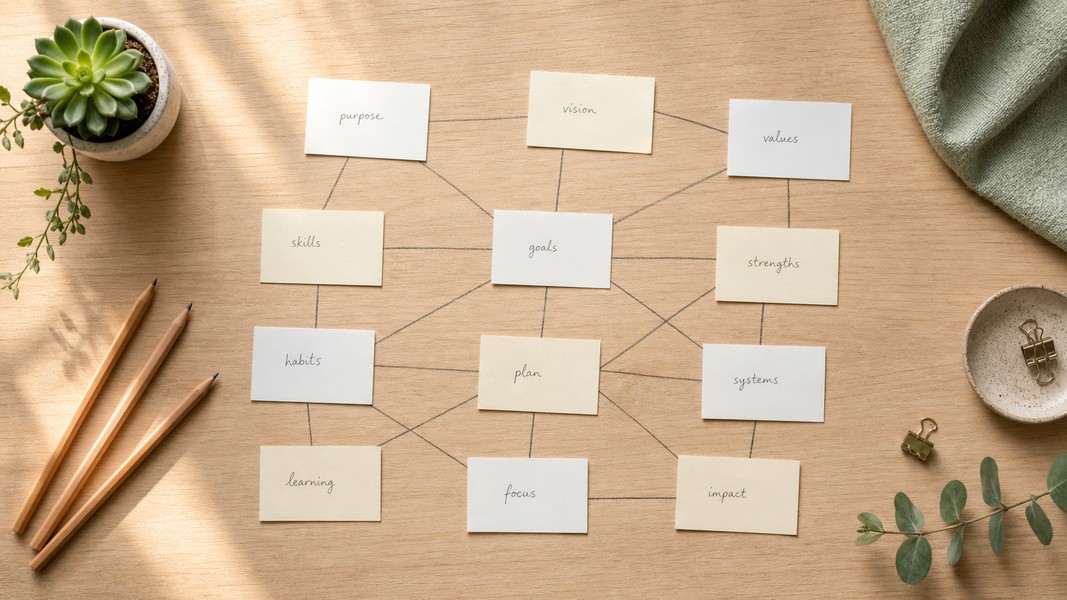
Zettelkasten: How to Build a Knowledge System
July 24, 2026
Learn how the Zettelkasten method works, why linked notes beat linear notebooks, and how to build your own knowledge system from scratch.


April 30, 2026
A solid SAT study plan is the difference between steady score gains and wasted prep time. Whether you have three months or just four weeks before test day, what matters most is working from a diagnostic baseline, targeting your weakest sections, and reviewing errors systematically rather than just logging hours.
This guide gives you two complete timelines, a section-by-section strategy, and advice on the tools worth your time.
Research consistently points to 10-12 weeks as the minimum prep window for meaningful improvement. Students who start at least three months out score measurably higher than those who cram in the final weeks. Cramming forces you to rush through material without the spacing needed to retain vocabulary, formulas, or grammar rules.
That said, your baseline score matters more than a fixed timeline. If you're starting from around 900 and targeting 1200, you need more foundational work than someone scoring 1200 aiming for 1400. A 100-200 point improvement generally requires 40-80 hours of focused practice, with consistent weekly sessions outperforming intense last-minute study bursts.
A good target range for competitive college applicants is 1200-1400. Scores above 1500 are considered excellent at most selective schools. The current average hovers around 1050-1060, so hitting 1200 already puts you solidly above the midpoint.
Before you write a single study schedule, take a full-length official practice test. The College Board's Bluebook app offers tests 4 through 11, with the newer ones mirroring the actual adaptive format most closely.
That first test gives you three things: your real baseline score, a breakdown of which question types are costing you the most points, and experience with the digital interface. The adaptive format of the Digital SAT means Module 2 difficulty adjusts based on your Module 1 performance, so practicing on paper tests alone leaves you unprepared for how the real test escalates.
Block out four hours, take the test without interruptions, and spend at least another hour reviewing every wrong answer before you build your plan. Most students are surprised to find their weaknesses are in specific question types rather than entire sections.
Three months is enough time to address foundational gaps, build consistent habits, and take multiple full practice tests. Divide the window into three phases.
Weeks 1-4: Foundation
Use this phase to diagnose and fill gaps. After your baseline test, identify your three weakest skill areas and focus your first four weeks there. On the Reading/Writing side, the College Board's Question Bank lets you filter by skill, such as rhetorical synthesis, transitions, or command of evidence. Work through 20-30 targeted questions per session rather than doing mixed practice without purpose.
For Math, build fluency with algebra and advanced math, which together account for the majority of math questions. The Desmos graphing calculator is built into the digital test, so practice using it for systems of equations and data analysis questions rather than reaching for a separate calculator.
Keep sessions to 45-60 minutes, five days per week. Khan Academy's SAT prep, built in partnership with College Board, has a schedule generator that ties recommendations to your practice test results. Students in districts using Khan Academy were 14 times more likely to meet benchmarks than those who didn't, making it a strong free anchor for your study plan.
Weeks 5-8: Skill Building
Shift toward integrated practice. Take a full practice test every 10-14 days and spend equal time reviewing errors as you spent taking the test. Develop a simple error tracker: log the question number, the skill tested, whether you understood it after review, and a note on what tripped you up. Patterns will emerge within two to three tests.
Use spaced repetition to lock in SAT vocabulary. Rather than cramming word lists, review a set of 15-20 words each day, cycling back to earlier sets every few days. This matches the research on how vocabulary is actually retained, which your spaced repetition guide covers in depth.
Weeks 9-12: Mock Test and Refinement
Shift to test simulation. Take a full-length test under real conditions every week. After each one, identify your top two error patterns and spend mid-week sessions drilling those specific question types. Reduce new material; the goal is to reinforce what's already in place and build confidence with timing.
Reserve the final week before your test date for light review only. Go through your error tracker notes, take one short practice session on your weakest area, and stop full-length testing five days out.
Four weeks is tight but workable if you already have some prep or a stronger baseline. The priority is triage: identify the highest-impact areas to fix and ignore the rest.
Week 1: Take your diagnostic test in the first two days. Based on the results, pick one Reading/Writing skill and one Math domain that have the most unanswered questions. Study those exclusively for the rest of the week.
Week 2: Take a second practice test, then drill errors from both tests. Add a second Reading/Writing skill to your focus list if the first is improving. Continue daily Desmos practice for Math.
Week 3: Full-length test on the weekend. Mid-week sessions focused on error patterns from all tests so far. Add one more Math topic if timing.
Week 4: One final practice test at the start of the week. Review errors only, no new material. Rest the final two days before test day.
Aim for 30-60 minutes per session, five to six days per week. If you can find 90 minutes on weekends for full sections, even better.
Reading and Writing
The Reading/Writing section tests grammar, rhetoric, and comprehension across short, passage-based questions. The most effective preparation method is drilling specific skills rather than reading broadly. Common high-yield areas include transitions (choosing the word that logically connects two ideas), text structure and purpose (why a sentence or paragraph is placed where it is), and rhetorical synthesis (combining information from two sources into a complete claim).
Filter the College Board Question Bank by skill and difficulty, and work through sets in timed conditions. Grammar rules tested on the SAT are finite and predictable; most students can cover the full set within three to four weeks.
Math
The Math section covers algebra, advanced math (functions, quadratics, exponentials), problem-solving, and geometry. Roughly 35% of math questions involve advanced math, making it the heaviest weight. Build fluency with function notation and solving systems before anything else.
Desmos is available throughout, so learn to use it actively. For word problems involving linear relationships or data tables, plotting the values can save time and reduce calculation errors. Practice at least 20-30 Math questions per day during your main study phase.
Most students underuse their practice tests by not reviewing errors carefully. The review phase is where actual learning happens.
After each test, categorize every wrong answer into one of three buckets: content gap (you didn't know the rule or concept), careless error (you knew it but made a mistake), or strategy problem (you ran out of time or misread the question). Each bucket requires a different fix, and conflating them leads to studying the wrong things.
Prioritize tests 7 through 11 in Bluebook over older tests. The Digital SAT's adaptive scoring model makes newer tests more representative of what you'll face on test day.
The best free resources for most students are Khan Academy, Bluebook, and the College Board Question Bank. Khan Academy provides structured lessons, drills, and a personalized schedule based on your practice test data. Bluebook gives you official adaptive tests in the real test environment. The Question Bank lets you drill specific skills by type and difficulty.
These three resources together cover content, adaptive practice, and targeted drilling without cost. Paid courses and books add value mainly through strategy tips and structured pacing, but students who use free resources consistently can reach 1500+ without spending anything.
One underused prep method is turning your study materials into active review tools. If you've been taking notes from prep books, recorded verbal explanations of concepts, or saved practice test explanations to PDF, you can use Voice Memos to upload those files and automatically generate flashcard decks and quiz questions from them.
Rather than re-reading passive notes, Voice Memos converts the content into question-and-answer format, so you can test yourself on vocabulary in context, grammar rules, and math concepts. The spaced repetition flashcard mode in the app schedules review automatically so you revisit material at the right intervals rather than having to plan it manually.
Building your own quiz bank from study materials also works well for Reading/Writing, where understanding why an answer is correct matters more than memorizing rules in isolation.
A good SAT study plan pairs well with tools that support your study schedule, so you can track sessions, balance subjects, and stay consistent without having to rebuild your plan from scratch each week.
Starting too late is the most common. Under 10-12 weeks, you're likely cramming content without spacing for retention. The SAT tests skills that need time to develop, particularly vocabulary, grammar fluency, and math automaticity.
Skipping error review is the second biggest mistake. Students who take practice tests without analyzing wrong answers are essentially practicing bad habits. Every test is only valuable if you understand what went wrong and why.
Ignoring the digital format is a problem many students don't anticipate. The Bluebook adaptive system is meaningfully different from paper SAT tests. If you've only practiced on print materials, the experience of seeing Module 2 questions escalate based on Module 1 performance can be disorienting on test day.
Relying on one resource without covering strategy is also worth avoiding. Khan Academy is excellent for concepts but lighter on test-taking strategy. Pairing it with official Bluebook tests and a structured error tracker fills those gaps.
A strong SAT study plan comes down to a few fundamentals: start with a diagnostic test, focus on your weakest skill areas, review errors systematically, and build in enough time to let practice compound. Three months gives you room for all three prep phases; one month is workable with aggressive prioritization. Use free tools like Bluebook and Khan Academy as your foundation, practice under real test conditions, and treat each review session as the most valuable part of your prep.
Discover more insights and tips to enhance your productivity
Learn how the Zettelkasten method works, why linked notes beat linear notebooks, and how to build your own knowledge system from scratch.
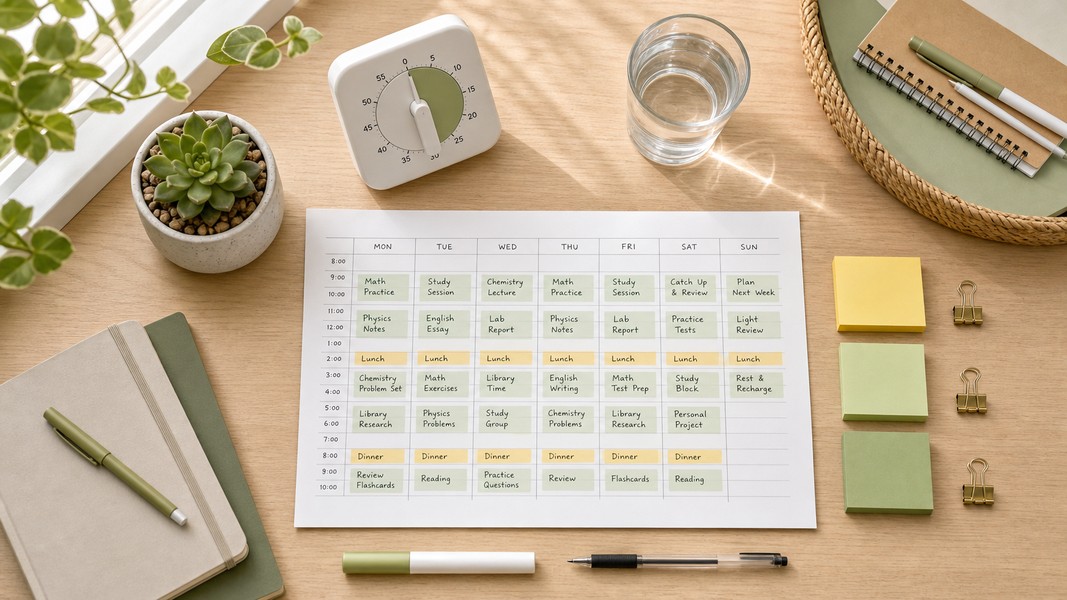
Struggling to manage your time as a student? These 7 evidence-backed tactics fix the real reasons students fall behind and waste hours.

Fathom AI is great for free Zoom notes, but it has real limits. Here are the best fathom ai alternatives for meetings, students, and multi-format capture.