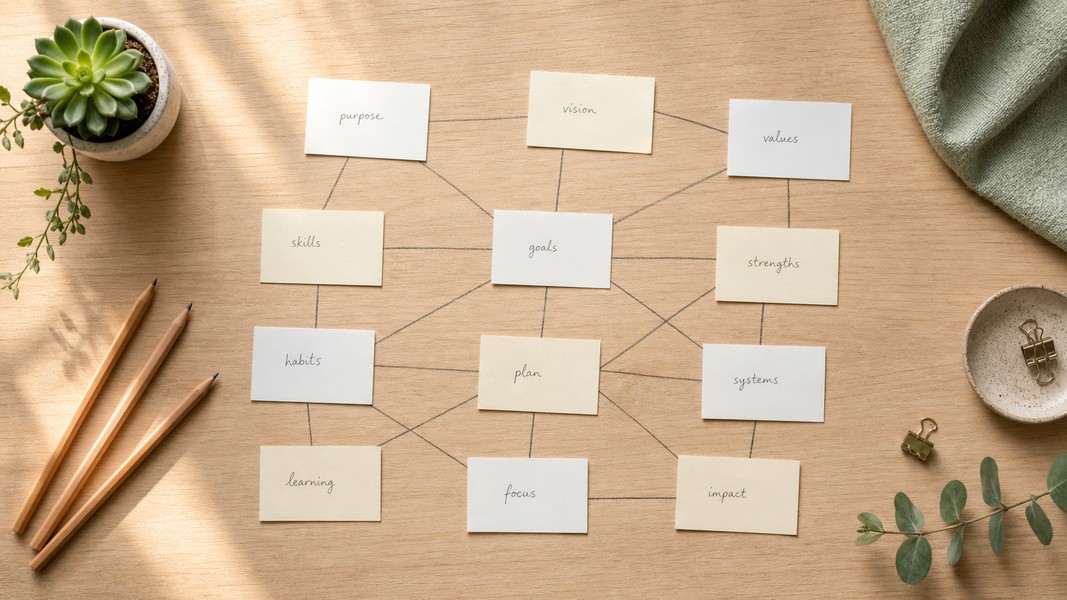
Zettelkasten: How to Build a Knowledge System
July 24, 2026
Learn how the Zettelkasten method works, why linked notes beat linear notebooks, and how to build your own knowledge system from scratch.


May 4, 2026
Spaced repetition is a learning technique that schedules review sessions at increasing intervals to combat forgetting. Instead of reviewing information once and hoping it sticks, you revisit it right before you would naturally forget it, which strengthens the memory trace each time. The result is long-term retention with far less total study time than cramming.
The science has been solid for over a century. Hermann Ebbinghaus documented the mechanism in 1885 through self-experiments that showed memory fades rapidly after initial encoding, then more slowly over time, following what he called the forgetting curve. Reviewing at the right moment interrupts that decay and resets the curve at a higher baseline.
This guide explains how spaced repetition works, what the research shows about its effectiveness compared to conventional study, and how to build a system you'll actually stick with.
Spaced repetition is built on a cognitive phenomenon called the spacing effect: information reviewed across multiple sessions with gaps between them is retained far better than information reviewed in a single concentrated block. The gaps are not wasted time. They're essential to the process.
The mechanism works through retrieval practice. When you recall a piece of information, you're not just testing yourself; you're actively strengthening the neural pathway associated with that memory. The harder the retrieval, the stronger the consolidation. Spacing creates desirable difficulty by forcing recall when memories have partially faded, which produces stronger reinforcement than reviewing material you still know well.
Active recall is the engine. Spacing is the schedule that makes active recall maximally effective over time. Together, they form one of the most well-validated combinations in learning science.
Ebbinghaus's forgetting curve shows that without any review, retention drops roughly 50-80% within 24 hours of learning something new. After that initial drop, the rate of forgetting slows, but without intervention, most information is lost within days.
The key insight is that every review resets this curve at a higher starting point. After one well-timed review, you forget more slowly. After a second, more slowly still. After several spaced repetitions, the memory becomes stable enough to persist for weeks or months without reinforcement.
This is why the timing of reviews matters more than the quantity. A review session that happens when you still remember the material perfectly contributes little to long-term retention. A review that forces genuine retrieval effort, right at the edge of forgetting, contributes the most. That's the core principle every spaced repetition system is built around.
The practical question is: how long should you wait between reviews?
A typical interval schedule for a new piece of information looks like this: review after 1 day, then 3 days, then 7 days, then 3 weeks, then 2 months. Each successful recall extends the next interval. Struggling to recall the material shortens it. The schedule adapts to your actual performance rather than following a fixed calendar.
Piotr Woźniak formalized this into the SM-2 algorithm in the late 1980s, which became the foundation for most modern spaced repetition software. SM-2 assigns each card an "ease factor" that adjusts based on how confidently you recalled it. Correct answers with high confidence extend the interval significantly; hesitant or incorrect answers reset it.
The FSRS algorithm, released as version 6 in 2025, improved on SM-2 using data from over 700 million review sessions across 20,000 users. FSRS models three properties for each card: stability (how long the memory will last before needing review), difficulty (how hard the card consistently is for that learner), and retrievability (the probability of successful recall at any given moment). The result is more precise scheduling, especially for easy cards that SM-2 tends to review too frequently and hard cards it sometimes spaces too aggressively.
The Leitner System offers a manual alternative if you prefer physical flashcards. Cards in box 1 get reviewed daily, box 2 every few days, box 3 weekly, and so on. Correct recall moves a card forward; incorrect recall sends it back to box 1. It's less precise than algorithm-driven software but captures the core spacing logic without any technology.
The research comparing spaced repetition and massed practice (cramming) is unusually consistent for cognitive psychology.
A 2006 study by Roediger and Karpicke found that students using spaced retrieval retained 60% of material after one week, compared to 40% for students who used repeated study sessions without spacing. A 2026 meta-analysis covering 14 studies and more than 21,000 learners found large, statistically significant effects favoring spaced practice over standard study methods. An earlier meta-analysis by Cepeda et al. drew on 317 experiments and confirmed the advantage held across ages, subjects, and time scales.
The core problem with cramming is consolidation. Long-term memory formation requires time between exposures for neural consolidation to occur. Cramming compresses everything into a single session, bypassing that process. You can temporarily hold information in working memory, perform acceptably on an exam the next morning, then lose most of it within a week. Spaced repetition forces multiple consolidation cycles, which is what makes memories genuinely durable.
A secondary problem with cramming is stress. Trying to absorb everything the night before creates anxiety, degrades sleep quality, and leaves you dependent on short-term recall during exams. Distributing study across weeks is more manageable and produces dramatically better outcomes at test time.
The quality of your flashcards determines how much you get out of the system. A few principles make a significant difference.
One fact per card is the most important rule. Cards that cover multiple concepts force you to guess which piece of information is actually being tested, which disrupts the retrieval process. If you're learning pharmacology, "What is the mechanism of action of metformin?" is a good card. "Explain metformin including mechanism, side effects, contraindications, and dosing" is not.
Phrase cards as questions, not statements. You want to practice retrieval, not recognition. "The capital of France is ___" forces active recall. A card that just displays "Paris - capital of France" is closer to re-reading, which produces weaker consolidation.
Adding context and images where possible strengthens recall through dual-coding. A card that includes a structural diagram alongside a question about a molecule's function is more memorable than text alone. You're giving your memory multiple pathways to the same answer.
Avoid making cards from material you don't yet understand. Spaced repetition builds retention of things you've already learned; it doesn't replace initial comprehension. If you don't understand why a concept is true, no amount of reviewing it will produce durable knowledge.
Voice Memos can generate spaced repetition flashcard decks automatically from your lecture recordings, PDFs, or typed notes. The AI identifies the key concepts and phrases them as testable questions, so you're not spending an hour creating cards after a long lecture. The generated decks integrate with spaced repetition scheduling so the system tracks review history and determines when each card is due.
Spaced repetition works best for content that requires reliable, long-term recall of discrete facts, definitions, relationships, or formulas. It's less suited to developing procedural skills or analytical reasoning, though it supports those indirectly by building the knowledge base they require.
Medical students are among the most intensive users of spaced repetition. The volume of information required for medicine, across pharmacology, anatomy, pathology, and biochemistry, is too large for any other approach to handle reliably. Mature card decks for medical school often contain thousands of cards, with students completing 80-200 daily reviews to stay current. Research on Anki use in medical education consistently shows better retention on assessments compared to students using conventional review methods.
Language learners benefit enormously, particularly for vocabulary acquisition. Spaced repetition removes the most common failure mode in language learning: forgetting words you studied weeks ago. By scheduling vocabulary reviews at optimal intervals, learners can build large working vocabularies without constant re-exposure.
Law students use spaced repetition for case holdings, statutory rules, and doctrines that must be recalled under exam pressure. History students apply it to dates, names, and sequences. STEM students use it for formulas, definitions, and reaction mechanisms. Any domain with a substantial factual base is a strong candidate.
The biggest barrier to starting is setup. Many students know they should use spaced repetition but don't because creating flashcards from scratch feels like too much work on top of existing coursework.
The practical solution is to reduce card-creation overhead as much as possible. Voice Memos lets you feed in a lecture recording, PDF, or set of typed notes and generates a ready-to-review flashcard deck automatically. You don't need to write cards from scratch after every study session.
Ten to twenty new cards per day is a reasonable target for most learners. Going beyond that creates a backlog of due cards that can feel overwhelming within weeks and causes many people to abandon the system. Sustainable volume matters more than ambitious starts.
Review sessions take about 15-30 minutes daily for a typical active deck. Morning is generally the best time: working memory is fresh and not yet loaded with the day's information, and completing reviews early prevents them from being skipped when the evening gets busy.
Building reviews into your study schedule as a fixed daily block, not a flexible optional session, is the single most reliable predictor of whether you'll stick with the system. Missing even a few days creates a compound backlog that disrupts your interval schedule and costs more total time to clear than the missed sessions saved.
Start with one subject and one deck. Once that becomes a consistent habit, add a second. The system compounds over months, and students who stick with it across a semester find that the material from week one is still accessible at finals time, not just material from the last few weeks of cramming.
Spaced repetition is one of the most reliable techniques in learning science, supported by decades of research across disciplines, age groups, and academic subjects. The mechanism is straightforward: reviewing information right before you would forget it makes each review more effective, building memories that last weeks or months rather than days.
The practical difference from cramming is not just in test performance; it's in how long knowledge persists. Spaced repetition builds a foundation that accumulates over a semester or a degree, rather than evaporating after each exam. For students facing large volumes of material over extended time periods, that durability is what separates genuine mastery from repeated relearning.
Start small, keep new cards to twenty per day, and make reviews a non-negotiable daily habit. The benefits become visible within a few weeks.
Discover more insights and tips to enhance your productivity
Learn how the Zettelkasten method works, why linked notes beat linear notebooks, and how to build your own knowledge system from scratch.
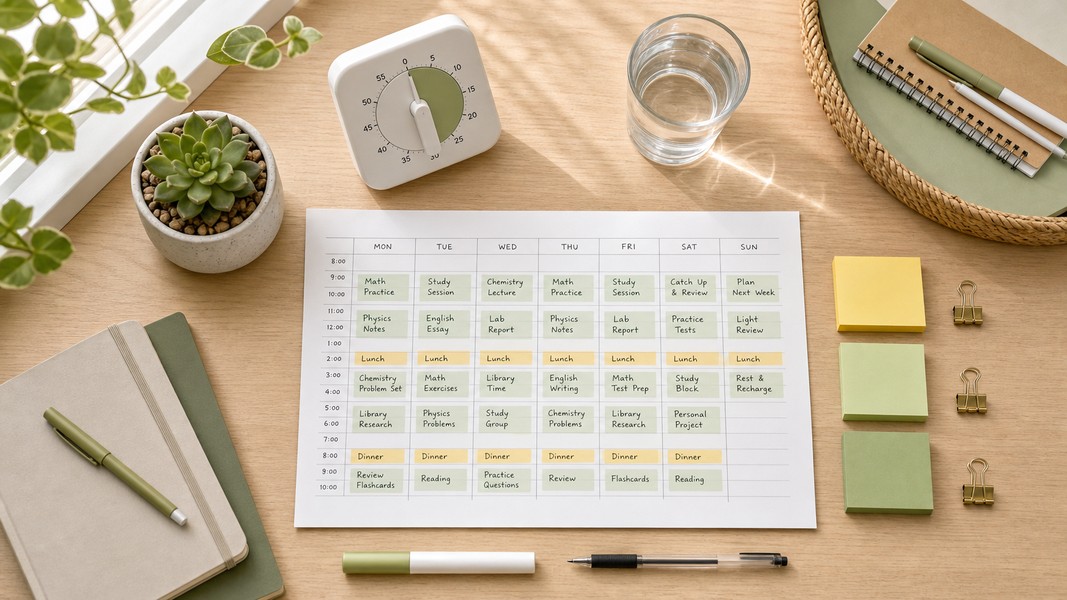
Struggling to manage your time as a student? These 7 evidence-backed tactics fix the real reasons students fall behind and waste hours.

Fathom AI is great for free Zoom notes, but it has real limits. Here are the best fathom ai alternatives for meetings, students, and multi-format capture.