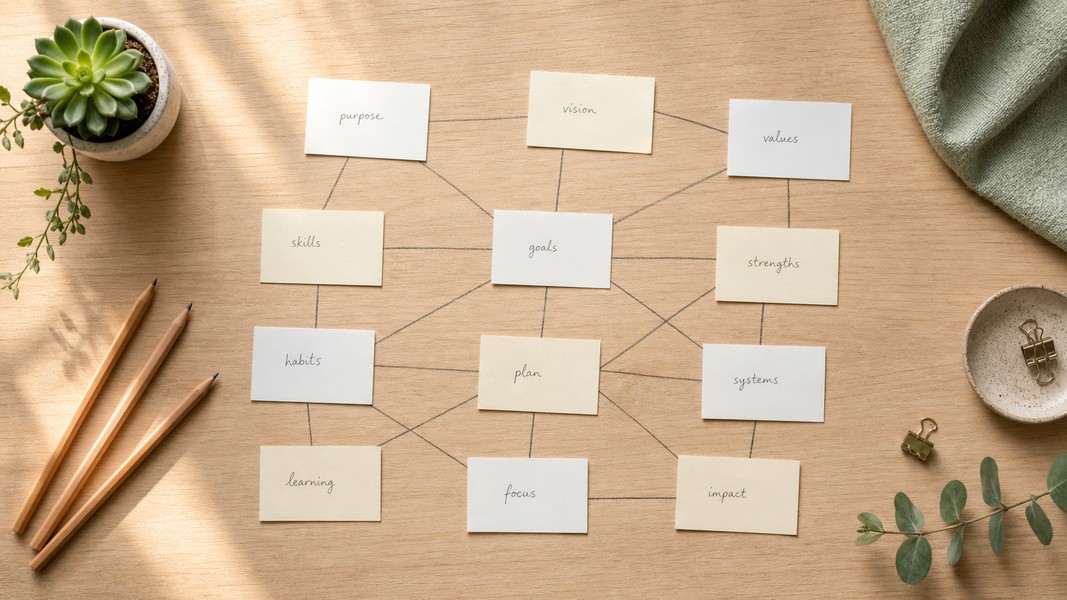
Zettelkasten: How to Build a Knowledge System
July 24, 2026
Learn how the Zettelkasten method works, why linked notes beat linear notebooks, and how to build your own knowledge system from scratch.

May 1, 2026
Recording a lecture is the easy part. Taking a 90-minute audio file and turning it into organized, reviewable study material is where the real time cost lives.
AI now handles that conversion: turning a lecture recording into structured notes, flashcards, and quiz questions in minutes rather than hours. If you're still re-listening to recordings or manually transcribing audio, this guide explains exactly how lecture recording to notes works and what the output actually looks like.
Lecture recording to notes is the process of converting raw audio or video from a class into organized study material. The "to notes" part is where most people misunderstand the value. The goal is not a transcript. A transcript is a word-for-word text version of what was said, formatted as a long wall of text. Notes, by contrast, are structured, summarized, and grouped by topic.
AI handles both: it transcribes the audio and then applies structure to that raw text, producing something that reads like a set of study notes rather than a verbatim record. This distinction matters because the usefulness of the output depends on it. A 90-minute transcript takes nearly as long to read as the original recording. A set of organized notes covering the same lecture can be reviewed in 15 minutes.
The process runs automatically once you provide the audio. No manual editing is required before the notes are usable. The distinction between a transcript and actual notes is worth keeping in mind when evaluating any lecture-to-notes tool: if the output requires significant cleanup or manual organization before it's useful, it isn't replacing the note-taking work, just shifting it.
Re-listening to a lecture recording is one of the least efficient study methods available. You're moving at the speed of the original lecture, re-engaging passively with content rather than actively processing it. Cognitive load research shows that passive review produces far weaker retention than active recall and retrieval practice. Hearing information a second time at the same pace doesn't force your brain to reconstruct or apply it, which is what produces durable memory.
The problem compounds when you try to take notes while listening. Splitting attention between comprehension and transcription means you either miss content or write shallow notes that lose context. Dense material, technical terminology, and fast speakers make this particularly difficult for medical and law students, where every concept matters.
There's also the time cost to consider. A 90-minute lecture recording takes 90 minutes to re-listen to at 1x speed. Even at 1.5x, students often need to pause and rewind for complex sections, making total review time longer than it seems. Research on spaced retrieval practice consistently shows that time spent in active review, such as answering questions or building recall, produces better outcomes than the same time spent in passive re-exposure.
Students who skip note-taking entirely and rely on re-listening are spending time on an activity with low return. Those who manually transcribe recordings are spending hours on work that AI can complete in minutes. Neither approach scales across a full semester of courses.
The value of AI lecture-to-notes conversion is not just speed. It's that the output is more useful than what manual note-taking produces under time pressure, because the AI isn't constrained by typing speed or divided attention.
The conversion process moves through three stages: transcription, speaker identification, and structural organization. Each stage builds on the previous one.
Transcription converts audio to text. Modern AI transcription achieves high accuracy for clean recordings, with accuracy dropping in noisy environments like crowded lecture halls. The raw output is a timestamped text file, each spoken segment paired with its time position in the audio. Timestamps matter for study: if a note references a confusing concept, you can jump directly to that moment in the recording to hear it in context.
Speaker diarization separates who said what. In a seminar with back-and-forth between professor and students, diarization labels each segment by speaker. You can filter notes to show only the instructor's content or see the full exchange. This is especially useful for classes where student questions often prompt the clearest explanations from a professor.
Structural organization is where the lecture recording to notes conversion produces its real value. The AI applies natural language processing to group the transcript content by topic, generate headers, summarize key points, and flag important definitions or concepts. A two-hour biology lecture transcript becomes a document organized by topic, with each section containing the relevant content in a condensed, readable format.
The output is not edited or touched manually. It arrives as organized notes ready for review.
Organized notes are a better starting point than a raw transcript, but they're still a starting point. The real efficiency gain for students comes from the study materials generated from those notes.
Voice Memos processes lecture recordings and automatically detects six categories of information: tasks, events, reminders, locations, contacts, and notes. In a lecture context, this means action items like "review Chapter 4 before Thursday" or "submit lab report by Friday 5pm" are extracted and listed separately from the main note content. You don't need to scan the notes looking for commitments you might have missed.
Study material generation goes further. From the structured notes, the AI creates quiz questions, spaced repetition flashcards, and mind maps showing how concepts relate to each other. These are generated automatically, not assembled by hand. You record a lecture, and when you return to the notes, the study tools are already there.
This collapses a significant part of the study workflow. Students who currently take notes, then build flashcards from those notes, then organize those flashcards into review sessions, are doing three separate tasks. The lecture-to-notes-to-study-materials pipeline handles all three. If you're already using AI flashcard makers as separate tools, integrating this into your recording workflow removes an extra step.
Lecture content doesn't always arrive as a live recording you make yourself. AI tools support multiple input types, and each suits different situations.
Live recording works for in-person lectures where you have permission to record. You start the app, attend class, and stop recording when the lecture ends. Notes are ready shortly after. This is the most seamless version of the workflow: nothing to upload, no files to manage, no re-listening. Voice Memos transcribes in 40+ languages during live recording, which helps international students capture lectures in the course language and review notes in their own.
Uploaded audio and video files suit content you download from your institution's learning management system. Most universities post lecture recordings as MP4 or audio files after class. Uploading these produces the same organized output as a live recording. This method works well for students who prefer to attend class without a device recording and who want to process content on their own schedule.
YouTube URLs cover online courses, supplementary lecture series, and educational content. Paste the URL and the AI processes the video's transcript directly. This is most useful for online learners and for students looking for alternative explanations of topics they're struggling with in class. A full course on a difficult concept can be processed into notes and study materials the same way a recorded in-person lecture would be.
All three methods produce the same structured output. The input format determines only how content enters the system, not what comes out.
Audio quality is the biggest variable in transcription accuracy. A few consistent habits will produce noticeably better notes throughout a semester.
Get closer to the source. Sitting in the front rows of a lecture hall and placing your phone on the desk, rather than keeping it in a bag, reduces background noise and increases the clarity the AI has to work with. Even a small improvement in audio quality compounds over a full semester of recordings.
Minimize background noise. Open environments with ambient noise, HVAC systems, or other students moving around reduce transcription accuracy. If you're using the upload method and reviewing content later, choosing a quiet location for audio review matters less. If you're recording live, positioning and room choice matter more.
Annotate immediately after class. AI captures everything that was spoken but not what was written on a board or shown as a diagram. Two minutes of annotation after class, adding a brief description of any visual content the AI couldn't access, makes the notes significantly more complete and useful at exam time.
Set the output language before starting. If your course is delivered in a language that isn't your first, configuring your preferred language in advance means the AI transcribes and translates in one pass. For students transcribing audio across language barriers, reviewing notes in the language you think in rather than the language of the lecture reduces the cognitive effort required at every review session.
Quality output from lecture recording to notes conversion depends on the quality of the input. Consistent audio habits are worth establishing early in a course rather than troubleshooting midway through a semester.
Lecture recordings are more useful when you don't have to re-listen to them. AI converts the audio into organized notes, automatically extracts action items, and generates flashcards and quizzes from the same material, all without manual editing.
The workflow is straightforward: record or upload, receive structured notes, use the generated study tools for active review. Audio quality and quick post-class annotation are the two variables that most affect the quality of the output. Once those habits are in place, lecture recordings stop being time sinks and start functioning as the first step in a complete study pipeline.
Discover more insights and tips to enhance your productivity
Learn how the Zettelkasten method works, why linked notes beat linear notebooks, and how to build your own knowledge system from scratch.
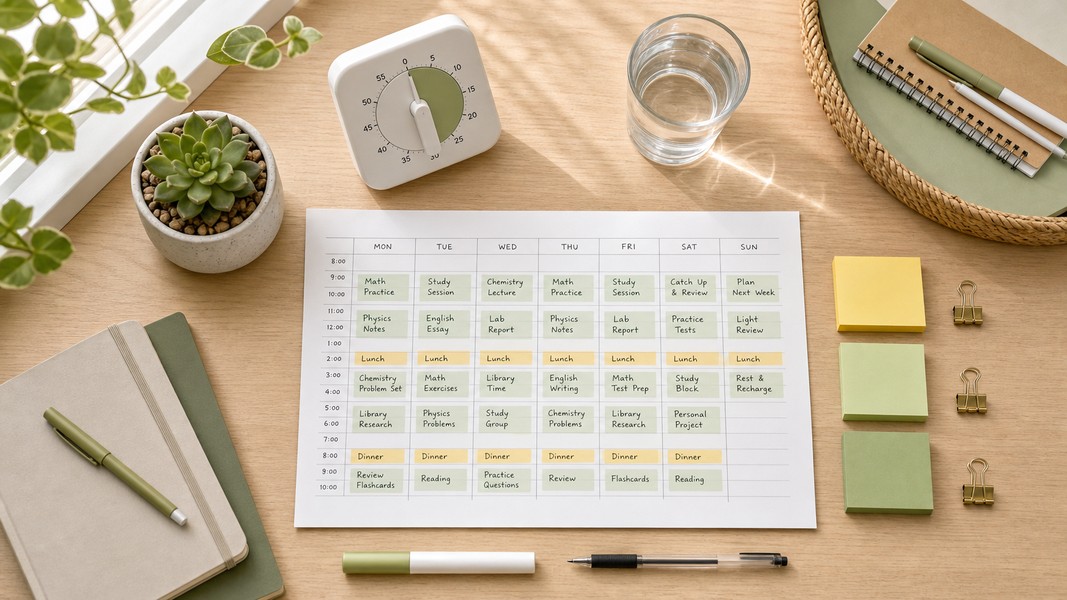
Struggling to manage your time as a student? These 7 evidence-backed tactics fix the real reasons students fall behind and waste hours.
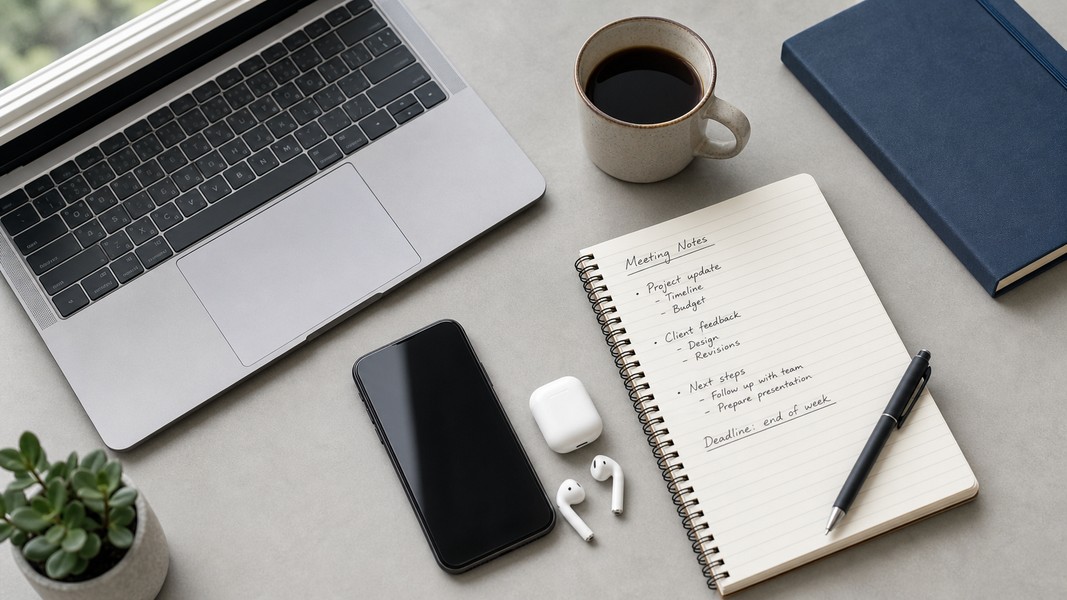
Fathom AI is great for free Zoom notes, but it has real limits. Here are the best fathom ai alternatives for meetings, students, and multi-format capture.