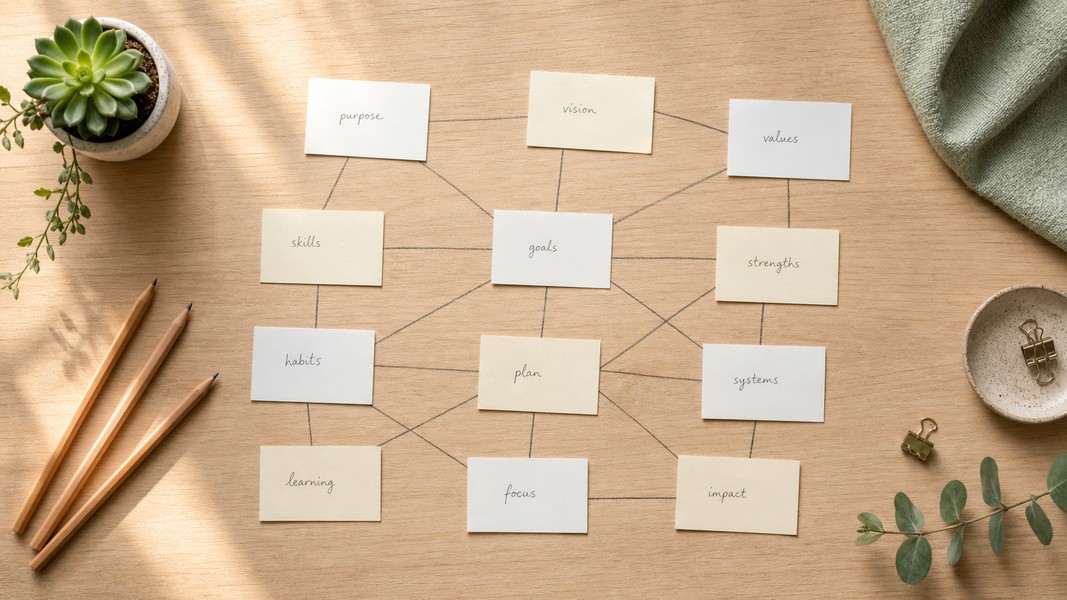
Zettelkasten: How to Build a Knowledge System
July 24, 2026
Learn how the Zettelkasten method works, why linked notes beat linear notebooks, and how to build your own knowledge system from scratch.

June 16, 2026
Test anxiety is a form of performance anxiety that triggers intense worry, racing thoughts, and physical tension before or during exams. It affects a significant number of students: in one large university sample, over 60% reported elevated exam anxiety, with roughly a third experiencing moderate to severe levels. According to anxiety research, about one in five young people in the U.S. report anxiety symptoms, making it one of the most common obstacles students face.
The strategies below address the two main levers: building genuine preparation so your brain has less to fear, and having reliable techniques to calm your body and mind when anxiety spikes anyway.
Test anxiety isn't just nervousness before a big exam. When you perceive an exam as a serious threat, your brain's fight-or-flight system activates. The amygdala signals danger, stress hormones flood your system, and your heart rate climbs. Short bursts of this response can sharpen focus, but sustained anxiety actively interferes with performance.
The most damaging effect is on working memory. Anxious thoughts compete for the same limited mental resources you need to reason through problems. That's why students sometimes describe knowing the material the night before, then drawing a blank under test conditions. The material is there; the anxiety is blocking access to it.
Test anxiety isn't a character flaw or a sign of low ability. It's a predictable physiological response that gets better with the right combination of preparation and coping skills.
Cramming doesn't just hurt retention, it feeds anxiety. When you study everything the night before an exam, you're implicitly signaling to your brain that you aren't prepared, and that signal intensifies in high-stakes moments.
Spaced practice, studying the same material across multiple shorter sessions spread over days or weeks, produces significantly better long-term retention than massed review. The cognitive science behind this is the spacing effect, one of the most consistently replicated findings in learning research.
The anxiety benefit is just as significant. Each time you return to material and recall it successfully, you build evidence that your knowledge is stable. You're not telling yourself "I studied this last night"; you're telling yourself "I've recalled this accurately four times over two weeks." That's a much more confidence-building relationship with the material.
A practical starting point: break your exam content into daily learning goals two to three weeks out. Use a study schedule that maps specific topics to specific days, with built-in review sessions every three to four days to revisit older material. Short, focused blocks of 25 to 40 minutes tend to be more effective, and more sustainable, than marathon sessions.
Voice Memos can support this workflow directly: upload lecture recordings or PDFs once, and the AI generates organized notes you can return to across multiple spaced sessions without hunting through raw files each time.
Exam anxiety is partly a response to unfamiliarity. The formal setting, the time pressure, the silence: these cues can trigger a stress response even when you know the content. Repeated exposure to similar conditions reduces that response over time.
This is why practice testing under realistic conditions matters beyond reviewing material. Set up a desk, put your phone away, start a timer, and work through past exams or practice questions as if it's the real test. No looking things up, no pausing.
For major exams, aim for at least one full-length simulation one to two weeks before test day. This does two things: it surfaces content gaps while you still have time to address them, and it makes the exam environment feel familiar rather than threatening. When the real test begins, your brain recognizes the situation rather than treating it as a novel danger.
You can also deliberately introduce mild pressure during practice: start a timed block a few minutes late, or work through questions you've flagged as hard first. Training yourself to stay composed under slightly elevated stress builds exactly the skill you'll need on exam day.
There's an important difference between recognition confidence and production confidence. Reviewing notes feels productive because it all looks familiar by the end. But exams require production: generating answers from scratch, without notes in front of you.
Active recall, trying to retrieve information before looking it up, builds production confidence because it mirrors actual exam conditions. You're not recognizing what you studied; you're demonstrating you can recall it independently.
The research supporting this is strong. Retrieval practice consistently outperforms re-reading and highlighting for long-term retention, especially when combined with spaced sessions. Students who use active recall regularly also tend to feel less anxious going into exams, because they have accumulated evidence that they can retrieve material when it counts, not just recognize it.
Practical techniques include closed-note brain dumps at the start of each study session, starting with practice questions before reading explanations, and using flashcards with genuine active recall rather than just flipping through them passively. Voice Memos' quiz and flashcard modes are built around this principle: capture content from lectures or PDFs, and the app generates retrieval questions so you're actively testing yourself rather than passively reviewing.
Sleep directly affects working memory, attention, and emotional regulation. These are exactly the resources that exam anxiety compromises. Pulling an all-nighter raises cortisol levels and reduces your ability to manage anxious thoughts, even if the caffeine keeps you feeling alert.
The night before an exam should be focused on protecting your sleep, not cramming in more content. According to sleep research, most teens and young adults need eight to ten hours for optimal cognitive performance, and irregular or shortened sleep amplifies stress reactivity the following day.
In the final 24 hours, shift from new learning to light review: flashcards, summary notes, a quick scan of key formulas. Two to three hours before bed, pack everything you'll need (ID, pens, calculator, permitted materials) so you're not mentally rehearsing logistics at midnight. A short walk or light exercise releases physical tension without raising arousal enough to disrupt sleep.
The morning of the exam, build in enough time to avoid rushing. Rushing spikes cortisol before the test even begins. Eat something with protein and complex carbohydrates. Do a brief review of your most important formulas or concepts, then switch to calming activities rather than frantic last-minute review.
Even with solid preparation, anxiety can spike mid-exam. A hard question might trigger a wave of doubt, or you might hit a section that's tougher than expected. Having a ready technique to reduce physiological arousal in under a minute is a practical skill.
Deep breathing activates the parasympathetic nervous system, your body's calming counterpart to fight-or-flight, and it's discreet enough to use at your desk. Three options worth knowing:
When you get stuck on a question, look away from the page, run 3 to 5 breath cycles, then relax your shoulders and jaw. Mark the question and move on to the next one. Returning with a calmer state is far better than spiraling on one item and letting it destabilize the rest of your exam.
The thoughts running through your head during an exam can either amplify anxiety or reduce it. Catastrophic self-talk ("I'm going to fail," "my mind has gone blank," "everyone else finds this easier") activates the same stress response as an external threat.
Cognitive restructuring, a core component of cognitive-behavioral therapy, works by intercepting automatic thoughts and replacing them with more accurate ones. The process has three steps.
First, catch the thought. Notice when you're making a catastrophic or all-or-nothing statement: "I always blank on tests" or "if I don't ace this, everything is ruined."
Second, question it. Ask whether the statement is literally true in all cases, and what evidence you have for and against it. Most catastrophic exam thoughts don't hold up to scrutiny.
Third, replace it with something balanced. "I always blank" becomes "I've struggled before, and I also have strategies now that I didn't have then." "This question is impossible" becomes "this one is hard right now, so I'll mark it and come back." The replacement doesn't have to be falsely positive; it just needs to be accurate.
Preparing two or three of these reframes in advance helps. You don't want to build the argument from scratch while you're already anxious during the test.
Without deliberate reflection, most students encode a simple narrative after a difficult exam: "I'm just not good at tests." That belief then feeds anxiety before the next exam, which leads to avoidance and cramming, which makes the next exam harder. The cycle reinforces itself.
A structured debrief turns each exam into data rather than a verdict.
Within 24 to 72 hours after the test, once emotions have settled, review three things. First, your process: when did you start studying, how much was spaced versus crammed, how much active recall did you use? Second, your performance during the test: which question types felt hardest, did you notice anxiety spikes, which coping strategies helped? Third, your results once available: what portion of errors came from genuine knowledge gaps versus rushed or anxious mistakes?
Each piece of that analysis points to a specific, actionable change for next time. Starting spaced practice earlier. Adding one full simulation run. Using box breathing when you notice the first signs of panic. Seeing these changes work in subsequent exams is what gradually reduces test anxiety at its source.
Voice Memos works well for this kind of debrief. Record a quick voice note right after the exam while the experience is fresh, capturing what felt hardest, what strategies helped, and what you'd do differently. Before the next test, replay it as a concrete reminder of your lessons from last time.
Test anxiety is a well-understood response with well-understood solutions. The strategies that reduce it most durably are preparation-based: spaced practice, realistic simulations, and active recall lower the perceived threat before the exam begins. In-the-moment techniques like breathing and cognitive restructuring give you tools to handle spikes when they happen anyway. And a regular post-exam debrief keeps the anxiety cycle from reinforcing itself over time.
None of these strategies require willpower in the moment. They require building systems before the moment arrives. That shift, from reactive coping to proactive preparation, is what turns test anxiety from something that controls your performance into something you manage with confidence.
Discover more insights and tips to enhance your productivity
Learn how the Zettelkasten method works, why linked notes beat linear notebooks, and how to build your own knowledge system from scratch.
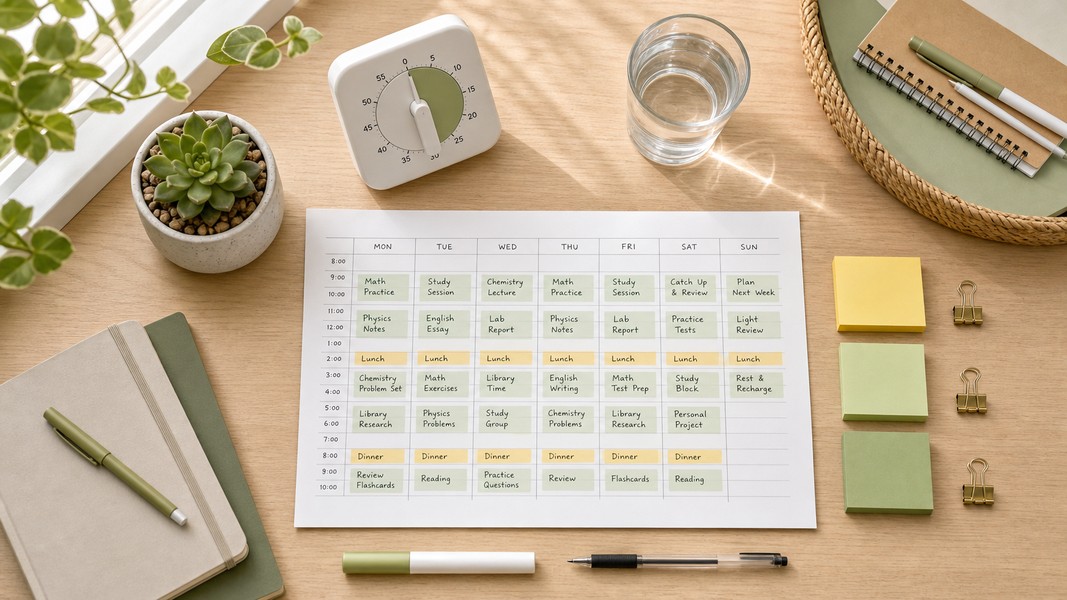
Struggling to manage your time as a student? These 7 evidence-backed tactics fix the real reasons students fall behind and waste hours.
Fathom AI is great for free Zoom notes, but it has real limits. Here are the best fathom ai alternatives for meetings, students, and multi-format capture.