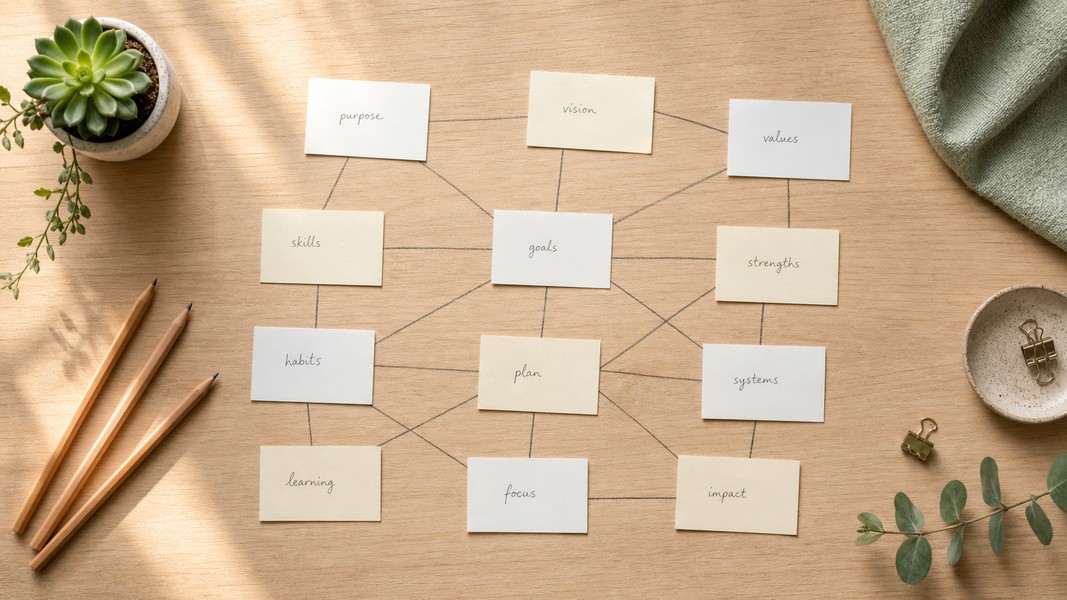
Zettelkasten: How to Build a Knowledge System
July 24, 2026
Learn how the Zettelkasten method works, why linked notes beat linear notebooks, and how to build your own knowledge system from scratch.

May 10, 2026
The best voice recorder apps for Android in 2026 do far more than capture audio. If you record lectures or meetings, the real value is in what happens after you press stop: automatic transcription, speaker identification, AI summaries, and in some cases, study materials generated directly from the recording. A basic recorder leaves all of that work to you. An AI-powered one handles it automatically.
This roundup covers seven of the strongest Android voice recorder apps available today, with a close look at where each one earns its place and where its limits show. Whether you're a student trying to keep up with dense lectures or a professional managing back-to-back meetings, the right app makes a real difference in how useful a recording actually becomes.
| Rank | App | Best For | Free Tier |
|---|---|---|---|
| 1 | Voice Memos | Students and professionals | Yes |
| 2 | Notta | Transcription accuracy | Yes |
| 3 | Easy Voice Recorder | Simplicity and reliability | Yes |
| 4 | Otter.ai | Real-time lecture transcription | Yes |
| 5 | Wave | Professional call capture | No |
| 6 | Audionotes | Multi-format note collection | Yes |
| 7 | Smart Voice Recorder | Lightweight casual use | Yes |
Each app was assessed on four criteria: transcription accuracy under real-world conditions, ease of starting and managing recordings, depth of AI features including summaries, speaker identification, and action detection, and how well the overall experience fits different user types. An app that performs well in a quiet studio but stumbles in a noisy classroom has limited value for most students. We also considered what happens after the recording ends, because that is where most of the practical value sits.
Voice Memos is the most complete AI voice recorder app on Android for users who want recordings to become something actionable. When you capture audio, the app's AI processes the recording and automatically detects six types of information: tasks, events, reminders, locations, contacts, and general notes. You receive a structured summary without any manual input.
For students, the four built-in study modes are what set Voice Memos apart from every other option in this list. After recording a lecture, you can launch an interactive quiz generated from the audio, a flashcard deck with spaced repetition scheduling, a mind map of key concepts, or a deep research mode that expands on the material with additional context. The transition from captured lecture to active study material happens in seconds, not the hours it would take to create those tools manually.
The multi-modal input is another practical advantage that most voice recorders do not offer. In addition to voice recording, Voice Memos accepts PDF uploads, camera scans of handwritten notes, and YouTube URLs. Everything is processed through the same AI pipeline and organized in a single library, so a week's worth of content from different sources ends up searchable in one place.
Transcription supports 40 languages with automatic translation, which matters for international students and multilingual teams. The app also includes a dyslexic-friendly formatting feature that restructures content using patterns shown to improve readability for dyslexic readers. No other app in this roundup offers a purpose-built accessibility tool at this level of specificity.
Voice Memos syncs across platforms in real time, keeping your recordings consistent between Android and iOS. If you use both or share content with colleagues on iPhones, see our guide to the best voice memo apps for iPhone for how the experience compares across platforms.
The app is available as a native Android app, an iOS app, and a full-featured web application, so you can access your library from any device.
Best for: Students converting lectures into study materials; professionals managing action items from meetings; anyone capturing content across multiple formats who wants it organized in one place.
If transcription quality is your primary metric, Notta sets the standard in this category. According to Notta's published benchmarks, the app achieves 98.86% accuracy across standard recording conditions, with speaker identification that reliably distinguishes individual voices in multi-person recordings.
Language coverage is exceptionally broad: transcription in 58 languages, translation in 42, and bilingual transcription across 23 language pairs. For students attending lectures in a second language or for global teams whose members work across different languages, that range goes well beyond what most other apps in this category support.
After recording, Notta's AI summarization extracts key points and action items from the transcript automatically. The text output is searchable, so you can locate a specific concept or decision from a long recording without replaying the audio. The library organizes recordings by date and source, which helps when you need to find material from several weeks back.
A free tier is available, but the full feature set including AI summaries and speaker identification requires a paid plan. For users whose primary need is transcription quality and language support, the upgrade is clearly worth evaluating.
Best for: International students; multilingual teams; professionals who prioritize the highest available transcription accuracy and need a searchable, organized archive of recordings.
Easy Voice Recorder prioritizes getting out of the way. Open the app, press the button, and you are recording. There is no account required, no configuration on first launch, and no cap on recording length. The unlimited recording duration is particularly useful for students who need to capture full two-hour lectures without worrying about a time limit cutting them off.
The app supports MP3, WAV, PCM, and AAC formats, which covers most practical needs for sharing or editing recordings. Playback speed control lets you review at 1.5x or 2x, which cuts review time significantly during exam preparation. Background recording keeps audio running when the screen turns off, extending battery life through long sessions.
Cloud sync integrates with Google Drive and Dropbox automatically after the initial setup. Recordings are backed up and accessible from other devices without any manual steps.
What Easy Voice Recorder does not offer is any form of AI processing. There is no transcription, no summary, and no action item detection. If you need the audio file to become a useful note or review document, you will need to handle that step yourself or export to a separate tool. For anyone who wants AI processing built into the recording workflow, this app is the wrong starting point.
For occasional voice memos, for students who prefer to take manual notes and only record as a backup reference, or for professionals who only need the audio file, Easy Voice Recorder is one of the most polished and reliable options available.
Best for: Casual users who want simple, reliable recording; students who prefer manual note-taking with audio as a reference; anyone who only needs the audio file itself and nothing more.
Otter.ai's defining strength is live transcription. As someone speaks, the text appears on your screen in near-real time, which lets you follow along with a lecture while it is still happening rather than reviewing a cold transcript after the fact. For students who process information better through reading than listening, that live transcript changes the experience of attending a class.
Speaker identification labels who said what during multi-person recordings, which is useful for seminar discussions, group project meetings, or any setting where more than one person is speaking. Post-session summaries pull out key points automatically.
The app integrates with Zoom, Google Meet, and Microsoft Teams, allowing it to join and transcribe video calls without you needing to manage the recording manually. For professionals who spend most of their workday in remote meetings, that automation removes a friction point from the daily workflow.
The free tier includes a limited number of transcription minutes per month. For students recording a full schedule of lectures, those limits are likely to be reached before the end of a typical week. The paid upgrade removes that constraint, though it is worth checking the current free allocation against your expected recording volume before committing.
For a broader look at how Otter.ai compares to other platforms in this space, our guide to AI note-taking apps covers the underlying technology in more depth.
Best for: Students who benefit from a live transcript during lectures; professionals who use Zoom, Meet, or Teams daily; anyone who wants transcription to happen during the recording rather than after it ends.
Wave focuses on professionals who need to capture and summarize high volumes of calls and meetings. The app records audio in the background, so you can lock your screen during a meeting without interrupting the capture. AI summaries run automatically after each session with customizable settings that let you adjust how the output is structured.
A notable feature is phone call recording, which captures conversations in addition to in-person meetings. Whether this works in your region depends on local regulations, so it is worth confirming before building a workflow around it.
Wave operates on a subscription model with no permanent free tier. The value proposition is clearest for professionals who record and review multiple meetings every day, where the time saved on manual note-taking and transcription compounds quickly. For students or casual users, other options on this list provide comparable AI features with more accessible entry points.
Best for: Sales professionals managing high call volume; consultants who need accurate records of client conversations; anyone who requires automatic summaries of phone calls without manual effort.
Audionotes stands out for offering a free unlimited tier with full AI features. Most AI transcription apps restrict the free tier to a fixed number of minutes per month. Audionotes gives you unlimited recordings without that cap, which makes it the most accessible starting point for anyone testing AI-powered recording.
The app accepts voice recordings, uploaded audio and video files, images, and YouTube URLs, all processed through the same AI pipeline. Output is auto-formatted into clean paragraphs and bullet points rather than raw transcript text, which reduces the editing step after the fact. In testing reported by Audionotes, the transcription accuracy rated 9.5 out of 10 under real-world conditions, which places it near the top of this category.
The multi-format input is particularly useful for students who pull notes from multiple sources across a week. A recorded lecture, a photographed textbook page, a YouTube video from a course playlist, and an uploaded PDF reading can all be processed through the same system and organized in the same searchable library. For a student without a budget for subscription apps, that combination of features at no cost is unusual in this category.
Best for: Budget-conscious students; researchers who collect notes from multiple source types; anyone who wants AI-powered note processing without a recurring subscription.
Smart Voice Recorder takes the stripped-down approach. The app launches quickly, records reliably, and manages storage efficiently through audio compression. The interface is minimal, which suits users who find feature-heavy apps unnecessarily complex for simple recording tasks.
There is no AI processing, no transcription, no cloud sync, and no multi-format input. Recordings stay on the device unless moved manually. For short personal voice memos or quick audio notes where you plan to listen back once and delete, that simplicity covers the need without added complexity.
For students recording lectures they need to review, study from, or share with classmates later, Smart Voice Recorder does not have the features to support that workflow. The app is a good fit for one-off recordings, not for a sustained study or work system.
Best for: Users who need a lightweight, zero-configuration recorder; anyone capturing short personal audio notes without plans for further processing.
Picking the right app depends on understanding which features matter for your specific situation.
Transcription quality in your environment varies more than headline accuracy rates suggest. Apps that achieve 98-99% accuracy in controlled conditions can drop significantly in noisy classrooms or open-plan offices. If you plan to record in challenging audio environments, test the free tier before committing to a workflow that depends on transcription quality. According to WhisperTranscribe's testing, the best AI transcription tools cluster around 98-99% accuracy for clean audio, but performance varies noticeably when background noise is present.
Workflow integration is where AI-powered apps separate themselves from basic recorders. A raw audio file or plain transcript is a starting point. An app that turns a transcript into flashcards, generates meeting summaries with assigned action items, or builds a searchable note archive adds compounding value over time. If you are recording content in order to learn from it or act on it, integration depth matters more than raw recording quality.
Background recording support is worth confirming before your first lecture. Many apps pause or terminate recording when the screen locks, which is a significant problem for long sessions. On Android in particular, background process management varies across device manufacturers, so testing this behavior before relying on it for a full semester of lectures is a practical precaution.
Language support is directly relevant for international students and anyone working across languages. The range in this list spans from a handful of major languages to Notta's 58-language transcription and HappyScribe's support for over 150 languages. If you record in a language other than English or need built-in translation, confirm explicit support for your specific language before choosing.
Free tier limits are often more restrictive than initial impressions suggest. A plan that advertises 600 transcription minutes per month works out to roughly 20 minutes per day. For a student with a full lecture schedule, that budget runs out fast. Check the actual minute caps against your expected recording volume before building a daily habit around an app that will cut you off mid-semester.
Basic voice recorders handle audio capture, but they leave everything after that step to you. For students and professionals who need recordings to produce something useful, the question is what kind of output matters most. For transcription quality and language breadth, Notta is the strongest option. For real-time transcription during live lectures, Otter.ai fits that need well. For a recording that automatically generates study materials, detects action items, and accepts multiple input types in a single app, Voice Memos offers the most complete workflow in this category. Audionotes covers most of that ground without a subscription cost, which makes it the right starting point for students on a tight budget.
The difference between the best and worst apps on this list is not the quality of the recording itself. It is what you get at the end of it.
Discover more insights and tips to enhance your productivity
Learn how the Zettelkasten method works, why linked notes beat linear notebooks, and how to build your own knowledge system from scratch.
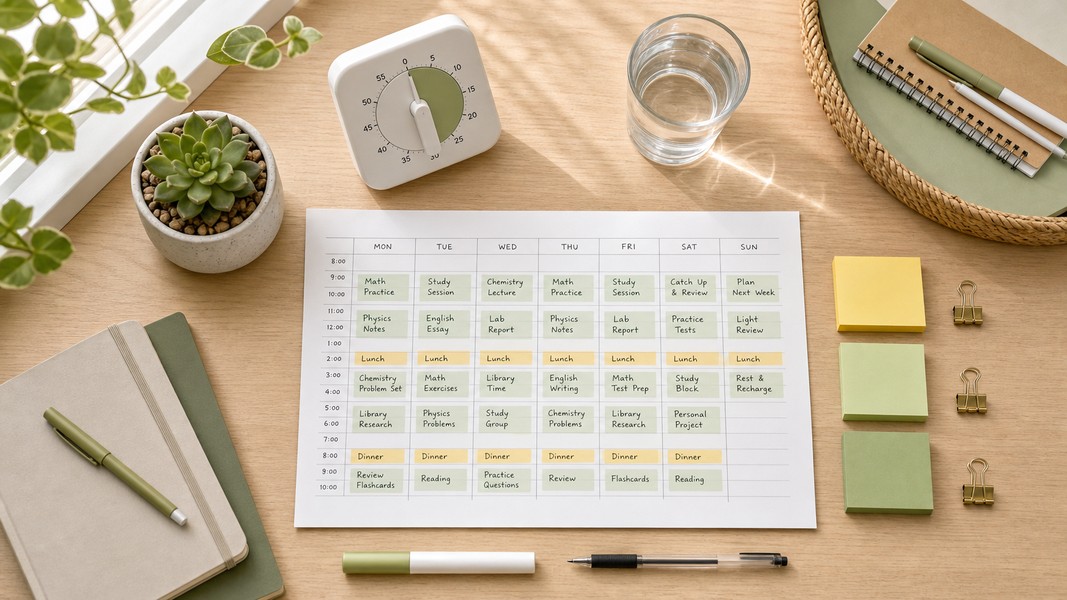
Struggling to manage your time as a student? These 7 evidence-backed tactics fix the real reasons students fall behind and waste hours.
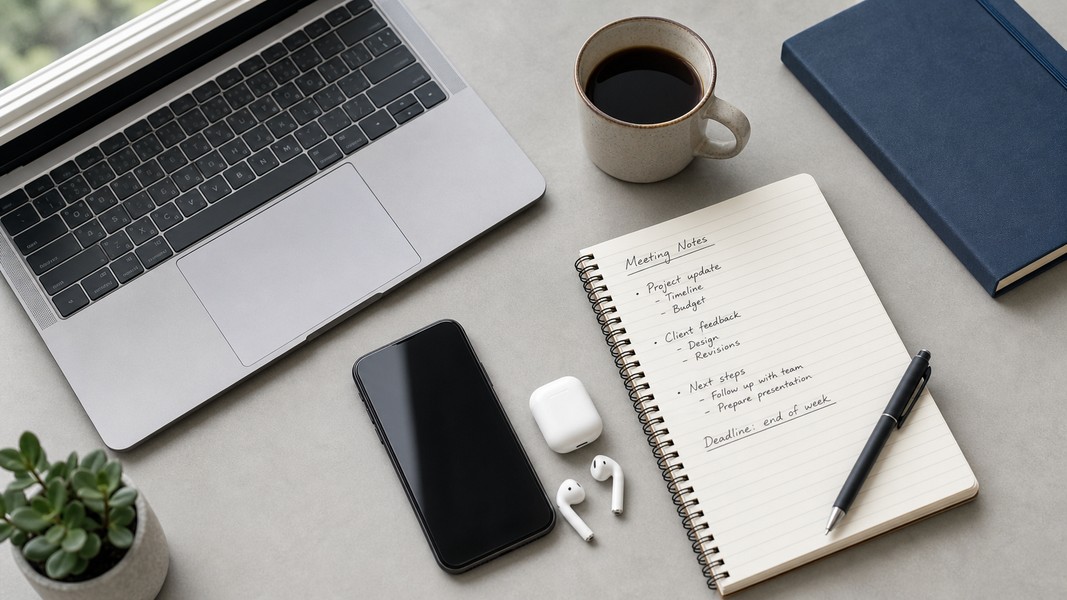
Fathom AI is great for free Zoom notes, but it has real limits. Here are the best fathom ai alternatives for meetings, students, and multi-format capture.