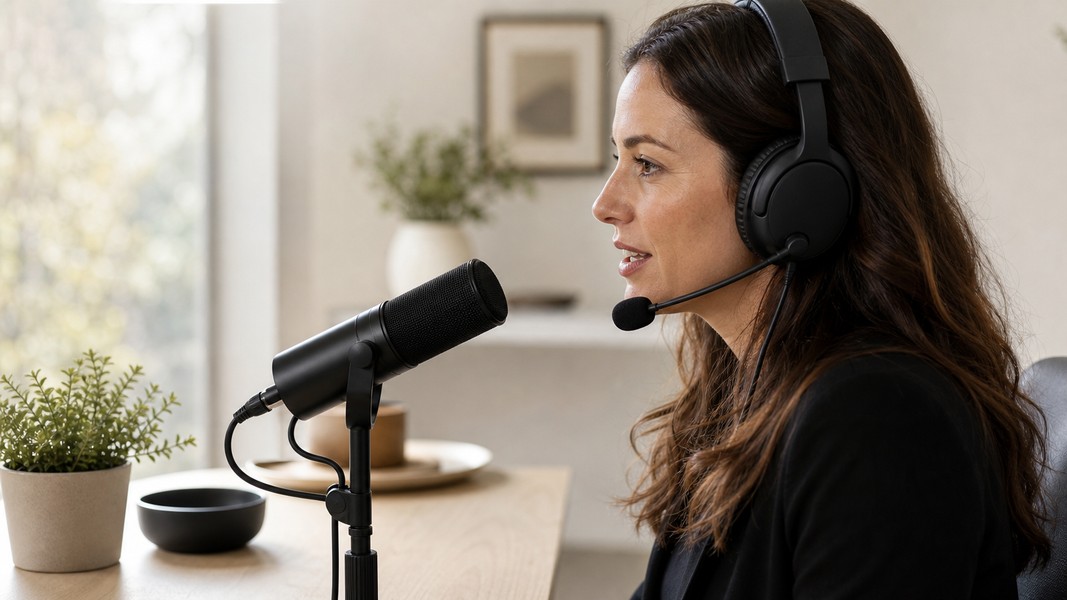
Dictation Software: Dragon vs Modern AI Alternatives
July 11, 2026
Dragon dictation software is powerful but Windows-only and expensive. Compare the best modern AI alternatives for medical, legal, and general professional use.


July 12, 2026
If you have ADHD, staying organized isn't just a matter of trying harder. Organization with ADHD is genuinely difficult at a neurological level: the brain systems responsible for keeping plans active, prioritizing tasks, and following through work differently. This isn't a personal shortcoming; it's a pattern that shows up predictably across millions of adults.
The good news is that the challenge is well-documented, and there are specific strategies and tools designed to address the actual bottlenecks, rather than just adding more things to remember. This post covers why organization is hard with ADHD, the four patterns that keep coming back, and what research and practical tools show actually reduces the load.
ADHD is primarily a disorder of executive function: the set of brain processes that handle planning, prioritizing, initiating, and following through on tasks. According to CHADD researchers, executive function works as the brain's management system, and when it functions differently, routine tasks that appear simple become genuinely costly.
Working memory sits at the center of this. Think of it as a mental whiteboard that holds your current plan while you execute it. In ADHD, that whiteboard erases faster. You can forget what you were about to do moments after deciding, not because you weren't paying attention, but because the mechanism that keeps intentions active is impaired. Research finds that 80.9% of adults with ADHD show global executive function difficulties, with measurable effects on daily task performance and time organization.
Dopamine processing compounds the issue. The ADHD brain doesn't reliably tag tasks by importance, which is why attention tends to organize around interest, novelty, or immediate urgency rather than actual priority. This isn't a motivation problem in the conventional sense; it's a signal-processing difference that makes it hard to start anything that doesn't already feel pressing.
Time blindness adds another layer. People with ADHD often perceive time as either "now" or "not now," with very little granularity in between. This affects scheduling, pacing work, and building realistic plans, even when the goal and the deadline are both clear.
Understanding these root causes matters because it reframes the problem. Organization with ADHD isn't about discipline; it's about designing systems that compensate for specific gaps in working memory, prioritization, and time perception.
Most ADHD organization struggles fall into one of four recurring patterns. Recognizing them makes it easier to address each one directly.
Task capture disappears fast. When working memory is impaired, thoughts decay before they can be acted on. You think of a follow-up during a meeting, intend to write it down, and by the time you're back at your desk, it's gone. This isn't ordinary forgetting. The cognitive mechanism that holds intentions active until they're recorded is the exact system that's affected by ADHD. If capture doesn't happen immediately and externally, it often doesn't happen at all.
Prioritization creates paralysis. Because the ADHD brain struggles to tag tasks by genuine importance, long to-do lists become overwhelming. Everything can feel equally urgent, equally non-urgent, or equally impossible to start. The result is decision paralysis: you bounce between tasks, default to whatever feels easiest or most interesting, or get stuck at the top of the list without making progress on any of it.
Context switching erases progress. Adults with ADHD commonly struggle to re-establish context after interruptions. Opening an email, getting pulled into a conversation, and then losing the thread of what you were doing is a familiar pattern. Research describes this as impaired cognitive flexibility: the ability to shift between tasks and pick them back up cleanly requires more effort when executive function is affected.
Meeting commitments get dropped. Follow-through depends on prospective memory, the ability to remember to do something in the future, and working memory, keeping that commitment accessible until it's completed. For many ADHD adults, verbal agreements made in meetings simply don't make it back to a task list unless something external captures them in the moment.
The most effective approaches for ADHD organization share a common principle: they reduce cognitive demand rather than adding to it.
Externalize everything. Clinical guidance consistently recommends moving information out of your head and into a visible, external system. When commitments, tasks, and plans are written down or captured somewhere reliable, you're no longer depending on working memory to hold them. The format matters less than the habit: a trusted task list, a voice recording, a whiteboard, or an app that surfaces your commitments automatically.
Lower the barrier to capture. If capture requires multiple steps before you can save something, it fails more often than it succeeds. Effective capture should take a single action. Voice works especially well because it has lower initiation cost than opening an app, choosing a project, and typing a note. It also works while moving, which can support regulation for people with ADHD.
Apps like Voice Memos are built around this principle. You record a thought, meeting, or brain dump in seconds, and AI handles the transcription and structure afterward, categorizing what you said into tasks, events, reminders, contacts, and notes without manual parsing. For the specific problem of losing action items after meetings, this addresses the bottleneck directly rather than asking you to work around it.
Reduce initiation friction. The hardest moment is often starting, not continuing. Strategies that break tasks into very small concrete steps, like "open the document" rather than "write the report," lower the activation energy required. Time structures that limit how long you commit to working, such as short sprints with defined breaks, reduce the perceived scale of what you're starting.
For students, ADHD focus strategies that use structured sessions and short-cycle reviews tend to fit better with how attention actually works, rather than relying on sustained effort across long blocks.
Build for recovery, not ideal conditions. Any system that depends on daily review, consistent tagging, or maintenance effort will collapse during hard periods. The right standard for an ADHD organization system is whether it works on your worst day, when working memory and motivation are both limited. Simpler is almost always more durable.
Most productivity apps assume you'll remember to check them, maintain them consistently, and manually organize your content. This works reasonably well for neurotypical users but breaks down quickly with ADHD. Apps that hold up tend to do more of the cognitive work passively.
Voice Memos is designed for this. When you record a meeting, lecture, or spoken brain dump, the AI automatically identifies and categorizes the content: tasks to follow up on, dates and events, people mentioned, reminders, and reference notes. You don't have to decide what's actionable. The system surfaces it. This is a direct response to the pattern of losing meeting commitments between the room and your desk: the recording captures everything, and the extracted items appear without a separate review step.
For students, the spaced repetition flashcard feature addresses the retention challenges that ADHD makes harder. Flashcards generated from lecture recordings or uploaded PDFs remove the manual step of creating study materials, and the scheduled review system means you don't have to track when to study what. Visual mind maps generated from notes can also help when a linear list creates overwhelm, since spatial layouts make relationships visible without requiring linear reading.
These AI note-taking apps work best when they reduce steps rather than add them. If using the app requires more decisions than not using it, the app won't stick.
For task management alongside a capture tool, simpler views outperform complex systems. A clear "Today" view with a short list works better than nested projects with multiple tags and filters. The goal is fewer decisions at the moment you're trying to work, not a more sophisticated system.
When evaluating tools for ADHD organization, a few criteria matter more than others.
One-action capture. The app should let you record something in one step, with no required fields, project selections, or tagging before saving. Capture first; organize later, or let AI organize automatically.
Passive structure. If the app requires you to manually categorize everything, it's adding cognitive load rather than reducing it. AI that extracts structure from recordings, detects action items, or surfaces stale tasks automatically reduces the organizational burden instead of shifting it.
Clean, low-noise views. Long scrolling lists without clear hierarchy create overwhelm and decision paralysis. Look for apps with a visible "Today" or "Next" view that limits what's showing at once. Visual formats like mind maps or boards can help when linear lists don't work.
Recovery without penalty. Missing days or falling behind shouldn't break the system. Apps that require daily upkeep or penalize gaps with lost streaks are likely to get abandoned. Look for systems that re-surface what you left off without requiring manual reconciliation.
According to ADDitude's guidance, ADHD organization systems must be usable on the hardest days, not only when you're functioning well. That's the standard worth applying to every app you evaluate.
Organization with ADHD is hard because the underlying systems for working memory, prioritization, and follow-through work differently. The patterns that result: lost tasks, decision paralysis, dropped commitments, aren't failures of effort. They're predictable outcomes of how the ADHD brain processes information.
Systems that work address the actual bottlenecks. Fast external capture that doesn't depend on memory. AI that categorizes and surfaces content passively. Simple views that reduce decisions rather than multiplying them. The goal isn't a perfect organization system. It's one that works consistently, including on the days when working memory and motivation aren't cooperating.
Discover more insights and tips to enhance your productivity
Dragon dictation software is powerful but Windows-only and expensive. Compare the best modern AI alternatives for medical, legal, and general professional use.

Build a second brain with these 7 proven techniques: capture ideas faster, organize with PARA, and use AI to retain and retrieve knowledge effortlessly.

A hands-on roundup of the best note-taking apps for Windows, covering AI features, free plans, and the right pick for students and professionals.