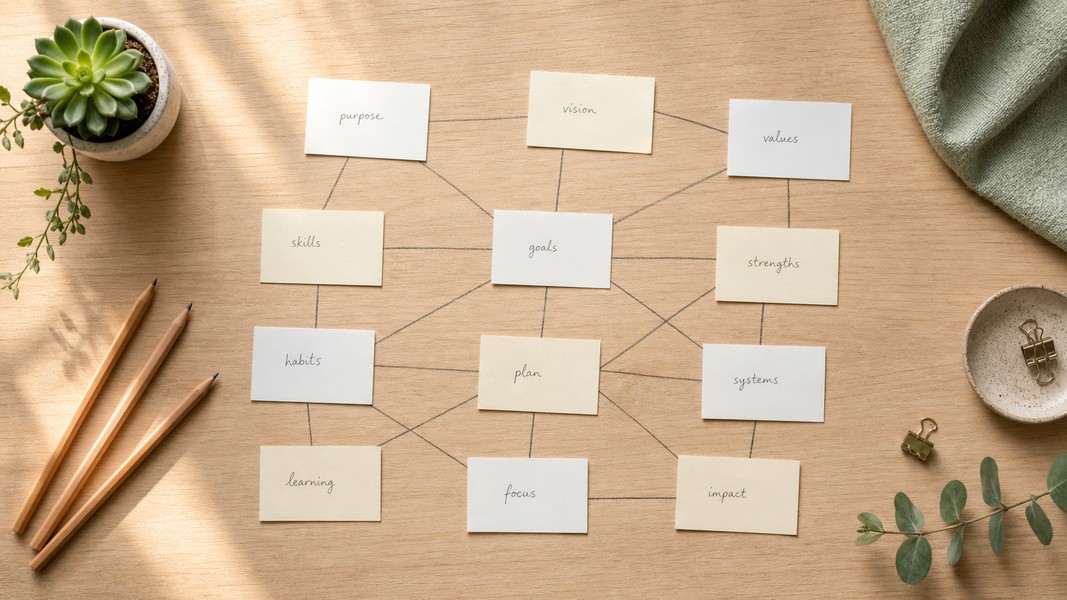
Zettelkasten: How to Build a Knowledge System
July 24, 2026
Learn how the Zettelkasten method works, why linked notes beat linear notebooks, and how to build your own knowledge system from scratch.


March 22, 2026
Standard study advice, including long blocks of reading, passive highlighting, and rereading chapters before exams, was designed for brains that work differently from ADHD brains. For the roughly 10% of college students with ADHD, following that advice often produces frustration and poor results without any clear explanation of why.
The good news: ADHD study tips that actually work exist, and they're grounded in what neuroscience knows about how ADHD brains process and retain information. According to CHADD, ADHD involves specific differences in working memory, executive function, and dopamine regulation that affect how studying should be structured.
The seven strategies below aren't workarounds or accommodations. They're direct applications of how your brain learns best when your neurology is factored in rather than ignored.
ADHD involves three neurological differences that affect studying: reduced working memory capacity (the mental workspace that holds information while you process it), executive function challenges (planning, initiating, and transitioning between tasks), and dopamine dysregulation that makes low-stimulation tasks feel subjectively harder to sustain.
Conventional study strategies assume a working memory capacity and motivation system that operates differently in ADHD. Long sessions exceed working memory limits before consolidation can happen. Quiet, low-stimulation environments reduce available dopamine rather than aiding focus. Delayed feedback from exams weeks away fails to activate reward circuits that depend on more immediate reinforcement.
Each of the seven strategies below addresses one or more of these specific gaps.
Writing notes while listening forces your brain to simultaneously listen, decode meaning, translate to written language, monitor your formatting, and hold your place in the lecture. For ADHD brains working with reduced working memory capacity, this creates a bottleneck where material enters and exits before it consolidates.
Voice recording removes the transcription task from the lecture itself. You attend to what's being said. After class, you listen back and build notes from a position of full attention, with the audio as a complete backup.
Cognitive load research supports this approach. When extraneous cognitive load (the effort of typing and formatting in real time) is reduced, the mental resources available for germane load, which is the work of actually making sense of material, increase. For ADHD brains, that trade-off is especially significant.
In practice: record lectures on your phone or through a study app. During class, capture only key terms or questions by hand. Within the same day, use the recording to build structured notes or a visual map. Voice Memos transcribes recordings automatically and organizes them into searchable notes, removing the second bottleneck of doing that work manually.
Standard 25-minute Pomodoro blocks often don't match ADHD attention windows, and the break structure creates a recurring initiation problem: after each break, getting started again is just as hard as the first time.
A modified approach works better. Study in 10-15 minute focused blocks with 2-3 minute physical breaks, clustered into groups of three or four per sitting. You start once per cluster rather than restarting after every break, which reduces total initiation events significantly.
Body doubling makes starting easier. Studying alongside another person, whether in person at a library or via a virtual co-working session, provides external accountability that supplements the brain's internal dopamine system. ADDitude Magazine consistently identifies body doubling as one of the most frequently reported effective strategies among ADHD students, with many describing it as transformative for task initiation.
You don't need to be doing the same work as your study partner. The external presence itself is what matters. Virtual co-working communities exist specifically for this purpose and are accessible whenever in-person options aren't available.
For more on timing study sessions effectively, the Pomodoro Technique post covers modifications that adapt the core method to different attention patterns.
This is the single most impactful change you can make to your study system.
Spacing your review across days is supported by solid research, but there's a prerequisite: the material has to make it into memory first. For ADHD brains, the critical vulnerability is same-day decay. Information that isn't actively engaged with shortly after exposure can disappear before the first scheduled review session arrives.
Same-day flashcard creation serves two functions. First, it forces active recall: deciding what goes on the front of a card and what goes on the back requires genuine processing, not passive reading. Second, it catches material while it's still accessible, building a foundation for spaced repetition to reinforce later.
Research by Dunlosky and colleagues rates retrieval practice as the highest-utility learning technique across an extensive review of the learning science literature. Creating flashcards is retrieval practice, but only when you generate them yourself. Using pre-made decks skips the encoding step that makes card creation effective in the first place.
Tools like Voice Memos can generate flashcard sets directly from your recorded and transcribed notes, which shortens the gap between capturing information and having usable study material. Pair AI-generated cards with your own additions and pair both with a spaced repetition schedule to build retention that lasts past the exam.
ADHD brains often process information associatively rather than in sequence. Linear note-taking, including numbered outlines and hierarchical structures, forces you to impose sequential order on ideas that are arriving simultaneously. That organizational demand competes with learning itself for limited working memory.
Mind mapping removes that competition. The central concept sits at the center, and related ideas branch outward based on association rather than predetermined structure. Connections between non-adjacent concepts can be added as they occur to you. The spatial arrangement creates retrieval cues: location on the map becomes a memory anchor in addition to the content itself.
Dual-coding theory explains why this works. When information is encoded both verbally and spatially, retrieval becomes more reliable because more retrieval pathways exist. For ADHD learners with reduced working memory, additional retrieval routes are especially useful.
Start with the lecture recording from tip 1. Build a mind map as you listen back, adding concepts as branches and drawing lines where connections exist across topics. Use colors to categorize related ideas. The creative element of this process: choosing colors, deciding how concepts relate, drawing the map, also engages the kind of intrinsic interest that helps ADHD brains stay present with the material.
Hyperfocus is one of the most misunderstood aspects of ADHD. The same neurological pattern that makes sustained attention difficult with uninteresting tasks can produce hours-long focus when a task has sufficient intrinsic interest, novelty, or time pressure.
This is not a contradiction. ADHD involves dopamine dysregulation, not dopamine deficiency. When a task activates dopamine systems through genuine interest or challenge, attention normalizes or exceeds typical levels. Standard academic tasks, including memorizing vocabulary and completing practice sets, rarely have these properties by default.
The practical application is engineering those properties into your study tasks. Connect abstract material to something you're genuinely curious about. Impose concrete near-term deadlines: "I'll complete these 30 flashcards by 4 PM" creates real time pressure even when the actual exam is weeks away. Change study environments regularly to add novelty. These aren't tricks; they're applications of what's known about ADHD dopamine dynamics.
CHADD describes interest-based attention as a defining feature of ADHD neurology rather than a character trait. Working with it consistently produces better outcomes than attempting to force sustained attention on low-interest material through willpower alone.
The ADHD study breakdown most often isn't capturing information. It's the organizational work that follows. Turning a rough recording or disorganized notes into structured study material takes executive function and time, both of which are limited resources.
AI tools that process captured content reduce this overhead substantially. Voice Memos, for example, transcribes recordings, extracts key points, generates quiz questions, creates flashcard sets, and builds mind maps automatically. The gap between "captured" and "organized into something usable" shrinks to near-zero.
For ADHD students, that gap is often where studying breaks down. The lecture gets recorded but the organizational work never happens, and the recording sits unused. Closing that gap automatically removes an entire category of executive function demand from the workflow.
This isn't about bypassing learning. The study tools still require active engagement: answering quiz questions, reviewing flashcards, working through the material. AI handles the setup work that ADHD brains find most draining, and leaves the learning work, which is the part that actually builds retention, for you.
Decision fatigue affects everyone, but for ADHD brains with a reduced executive function baseline, the micro-decisions required to begin a study session can consume the mental resources needed to start before the session has even begun.
Where to sit? What subject? For how long? Which materials? Which chapter specifically? Each decision draws from the same executive resource pool. By the time a student has answered all of these, the cognitive budget for actually studying is already depleted.
The solution is to make these decisions during a higher-capacity time rather than in the moment. A 30-minute planning session at the start of each week eliminates dozens of daily decisions. For each subject, decide in advance: where you'll study it, what specific task you'll complete (30 flashcards, not "study the chapter"), and which materials you'll need. Leave those materials visible and accessible at your study location.
When study time arrives, you follow a list. No planning, no overhead, no decisions. The executive function that would have gone into setup goes into studying instead.
Apply the same principle to your study environment: keep your study location consistent, leave your laptop open to your study app, and remove competing stimuli before the session rather than during it. Every eliminated micro-decision is executive function preserved for the actual work.
ADHD doesn't prevent effective studying. Standard study methods, designed without ADHD neurology in mind, do.
Voice capture reduces working memory load during information intake. Short burst sessions with body doubling lower the initiation barrier. Same-day active recall catches information before it decays. Visual note-taking offloads organizational decisions to a spatial format. Engineered hyperfocus activates attention through interest rather than fighting for willpower. AI tools eliminate the organizational gap between capturing and studying. Pre-planned setups remove decision fatigue from the moment studying should begin.
Together, these strategies form a study system built around how ADHD brains actually work. That's a more useful starting point than adapting standard methods and wondering why they keep failing.
Discover more insights and tips to enhance your productivity
Learn how the Zettelkasten method works, why linked notes beat linear notebooks, and how to build your own knowledge system from scratch.
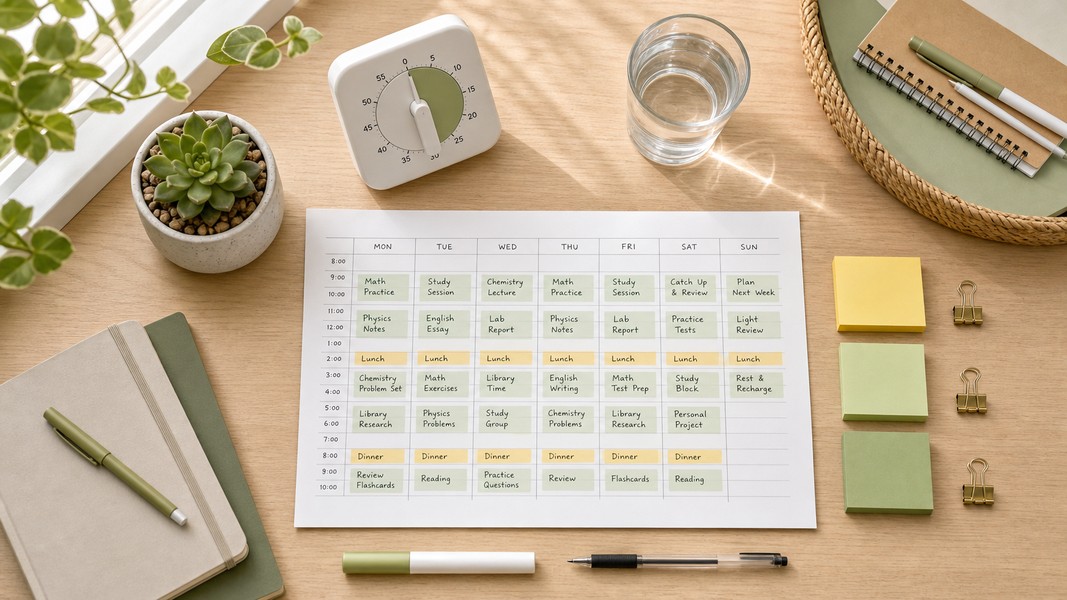
Struggling to manage your time as a student? These 7 evidence-backed tactics fix the real reasons students fall behind and waste hours.

Fathom AI is great for free Zoom notes, but it has real limits. Here are the best fathom ai alternatives for meetings, students, and multi-format capture.