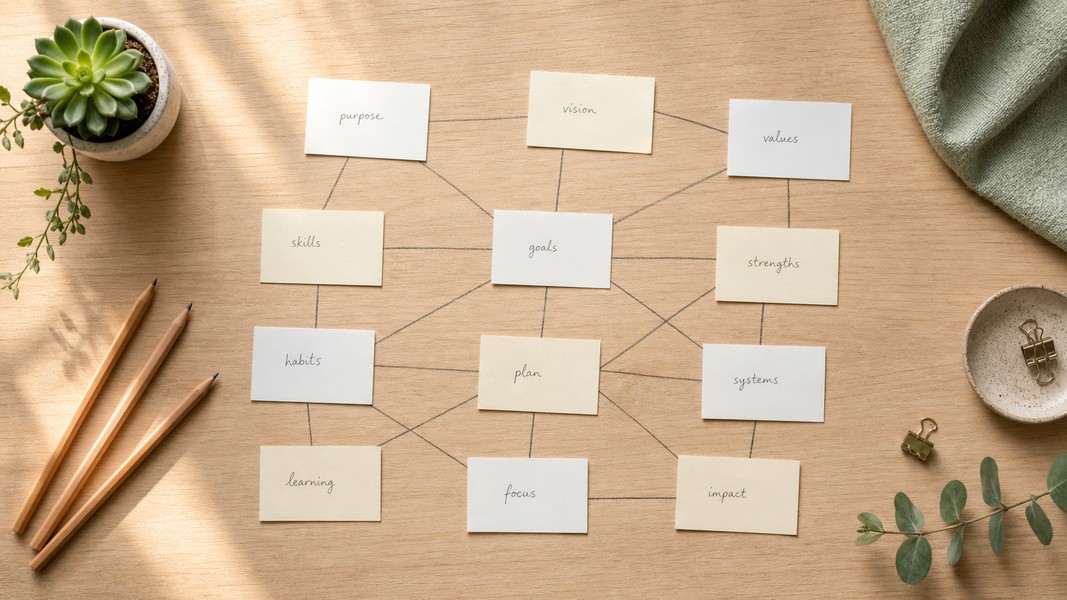
Zettelkasten: How to Build a Knowledge System
July 24, 2026
Learn how the Zettelkasten method works, why linked notes beat linear notebooks, and how to build your own knowledge system from scratch.


March 10, 2026
The Pomodoro Technique for studying is a time management method that breaks your study sessions into 25-minute focused intervals, each followed by a 5-minute break. After four of those intervals, you take a longer break of 20 to 30 minutes. That's it. The method is deceptively simple, which is part of why it works.
If you have ever sat down to study for hours and retained almost nothing, or struggled to start a task that felt too big to face, the Pomodoro structure addresses both problems. The short time block makes starting easier. The built-in break prevents the cognitive fatigue that erodes retention.
This guide walks you through the method step by step, covers how to adapt it to different subjects, and explains why it works especially well for students who struggle with focus.
The Pomodoro Technique is a structured study method that uses timed intervals to protect focused attention. One interval, called a Pomodoro, lasts 25 minutes. After each interval, you take a 5-minute break. After completing four Pomodoros, you take a longer break of 20 to 30 minutes.
The method was developed by Francesco Cirillo in the late 1980s. He named it after the tomato-shaped kitchen timer he used as a university student. The core idea is time-boxing: committing to a fixed, finite period of concentrated effort rather than sitting at your desk indefinitely and hoping focus arrives.
The technique works because 25 minutes aligns with the brain's natural attention window. Most people can sustain deep focus for 20 to 30 minutes, a limit confirmed by cognitive research, before fatigue begins to reduce the quality of thinking. Short time blocks keep you inside that window. Scheduled breaks reset attention before fatigue compounds.
The setup is minimal. You need a timer, a task list, and a way to track your completed Pomodoros.
The timer can be anything: a phone timer, a browser-based Pomodoro tool, or a physical kitchen timer. Physical timers are worth considering because the act of winding them creates a deliberate ritual that signals the start of a focused session. If you use a phone, put it face down and set it to do-not-disturb before you start.
Your task list should be specific. "Study biology" is not a Pomodoro-ready task. "Read and summarize pages 45-70 on cell respiration" is. Vague tasks produce vague sessions. Specific tasks give your 25 minutes a clear finish line.
Tracking completed Pomodoros on paper is worth doing, even if just with tally marks. Research consistently shows that visible progress tracking increases motivation and helps you plan future sessions more accurately.
Pick a single, specific task for the session. Resist the urge to plan multiple tasks for one Pomodoro. The method's effectiveness comes partly from single-task focus. Multi-tasking during a Pomodoro defeats the purpose.
If your task is larger than one Pomodoro, break it into pieces before you start: "Read chapter introduction," "Summarize key arguments," "Write practice question." Each piece becomes its own session.
Before you start the timer, remove everything that could interrupt the 25 minutes. Close browser tabs unrelated to your task. Silence your phone. If you study in a shared space, put on headphones as a signal that you are unavailable.
The five minutes before you start is the right time for distraction removal, not after the timer begins. Once the Pomodoro is running, any interruption requires a decision: note it and continue, or abandon the session. Neither is ideal.
Set the timer for exactly 25 minutes and begin. Do not wait until you feel ready. The method's design is to replace the requirement for motivation with the commitment to a timer. You do not need to feel like studying; you need to start.
During the 25 minutes, your only job is the task you chose. If a thought, question, or unrelated idea surfaces, write it in a side list and return to it after the session. Do not open a browser to check something. Do not reply to a message. The Pomodoro ends when the timer does, not when a distraction wins.
If an external interruption is unavoidable, handle it as quickly as possible, note that the Pomodoro was broken, and start a fresh session once the interruption is resolved. Cirillo's original method counts a broken Pomodoro as invalid: the session restarts from zero.
When the timer rings, stop immediately. Do not add five more minutes because you are "almost done." Note what you completed in your task list or study log. This record serves two purposes: it gives you an accurate sense of what one focused Pomodoro produces, and it gives you a satisfying marker of progress.
Get up from your desk. Stretch, get water, look out a window, or take a short walk. The break should be genuinely restorative: screen-free, movement-friendly, and mentally away from your study material.
Avoid checking social media or reading news during short breaks. Those activities are not restful. They shift your attention into a high-stimulation mode that competes with the calm re-engagement you need when the next Pomodoro starts.
Every four completed Pomodoros, take a break of 20 to 30 minutes. This longer rest allows deeper cognitive recovery: the kind that replenishes sustained attention rather than just resetting surface-level focus. Use it for a meal, a walk, or genuine rest. Return to the next block of four Pomodoros from a position of recovered energy.
The 25-minute structure works across subjects, but the way you use it varies.
For sciences and STEM, dedicate each session to a single problem type or concept. If you are studying calculus, one Pomodoro might cover three practice problems from scratch. During the break, you can review the relevant formula to reinforce what you just practiced. Do not split attention between solving and reviewing during the same session.
For reading-heavy subjects like history, literature, or social science, one Pomodoro works well for a single chapter section or a set number of pages. After the session, spend two minutes of your break writing what you remember from the reading without looking at the text. This turns the passive reading session into an active recall exercise.
For memorization tasks like vocabulary, pharmacology terms, or case law, use Pomodoros for flashcard review rather than passive re-reading. One session of active testing produces more retention than one session of reading the same cards. Tools that generate quiz questions from your notes automatically, such as Voice Memos, make this transition from notes to test material much faster.
For writing, separate drafting from editing. Draft in one Pomodoro, edit in a different session, preferably after a break. Mixing the two modes in the same 25 minutes slows both processes.
The Pomodoro Technique is particularly effective for students with ADHD, for reasons that go beyond general productivity benefits. ADHD affects the brain's ability to sustain attention on tasks that do not provide immediate stimulation or reward. Extended, open-ended study sessions are exactly the type of task ADHD brains find most difficult to begin and sustain.
The technique provides two things ADHD brains respond well to: visible structure and an immediate endpoint. Knowing a session ends in 25 minutes makes starting less threatening. The ticking timer creates a mild sense of urgency that provides the stimulation necessary to engage. Research from the University of Florida found that structured break schedules significantly improve time management and task completion in ADHD students. ADDitude Magazine similarly notes that external structure and short time commitments are among the most reliable focus strategies for ADHD learners.
If standard 25-minute sessions feel too long, start with 15 or 20 minutes. There is no rule that requires 25 minutes; the original length was what worked for Cirillo as a student. Your optimal session length is the one that keeps you engaged without becoming uncomfortable. You can find more strategies paired with this approach in our guide to ADHD study tips.
Voice Memos is particularly useful in Pomodoro sessions for ADHD students because it lets you capture thoughts, questions, or ideas by speaking them aloud rather than stopping to type. If a useful thought appears during a session, you can voice-record it in seconds and immediately return to work without breaking focus.
Batch similar tasks across consecutive Pomodoros. Working on related material in sequential sessions builds momentum and reduces the cognitive cost of switching contexts. Four Pomodoros of biology review produces more than two of biology and two of alternating subjects.
Use the first Pomodoro of any study session as your warm-up: choose a task you find manageable rather than your hardest material. Starting with a small win overcomes the procrastination barrier that prevents many students from beginning at all.
Review your notes at the start of the next session, not at the end of the current one. Briefly revisiting what you covered in the previous Pomodoro before beginning new material reinforces the connection between old and new information. Linking Pomodoro sessions this way also supports the kind of note-taking methods that build cumulative understanding rather than isolated facts.
Count your completed Pomodoros. Students who track their sessions often discover they were doing fewer focused hours of actual study than they thought. Tracking creates an honest baseline and makes progress visible.
The most common mistake is treating breaks as optional. Skipping breaks because a session "was going well" eliminates the cognitive reset that makes the next session productive. Consistent breaks are not a reward for good work; they are a functional part of the method.
The second most common mistake is using the 25-minute window for vague, open-ended activities. "Work on the essay" is not a Pomodoro task. "Write the introduction paragraph" is. The more specific the task, the more productive the session.
Some students find 25 minutes genuinely too short for their work style, particularly for complex problem-solving or creative writing where entering a flow state takes time. If you consistently find yourself just hitting stride at the 25-minute mark, experiment with 35 or 40-minute sessions with proportionally longer breaks. The method is a framework, not a strict contract.
The technique is also not ideal for situations that require extended uninterrupted immersion: a complex proof that takes 45 minutes to set up, or deep creative work where constant interruptions destroy the thread. Use Pomodoro for study tasks with natural stopping points. Reserve longer uninterrupted blocks for the work that demands them.
The Pomodoro Technique works for studying because it addresses the two most common obstacles to effective study sessions: starting and sustaining attention. The 25-minute commitment makes starting feel manageable. The mandatory breaks prevent the fatigue that degrades retention over long sessions.
The steps are simple and the setup requires nothing beyond a timer and a specific task. The challenge is consistency: the method produces results when used regularly, not just in the days before an exam. Build it into your daily study routine, adapt the session lengths to your subject and attention style, and track your Pomodoros to see how much focused time you are actually putting in.
Discover more insights and tips to enhance your productivity
Learn how the Zettelkasten method works, why linked notes beat linear notebooks, and how to build your own knowledge system from scratch.
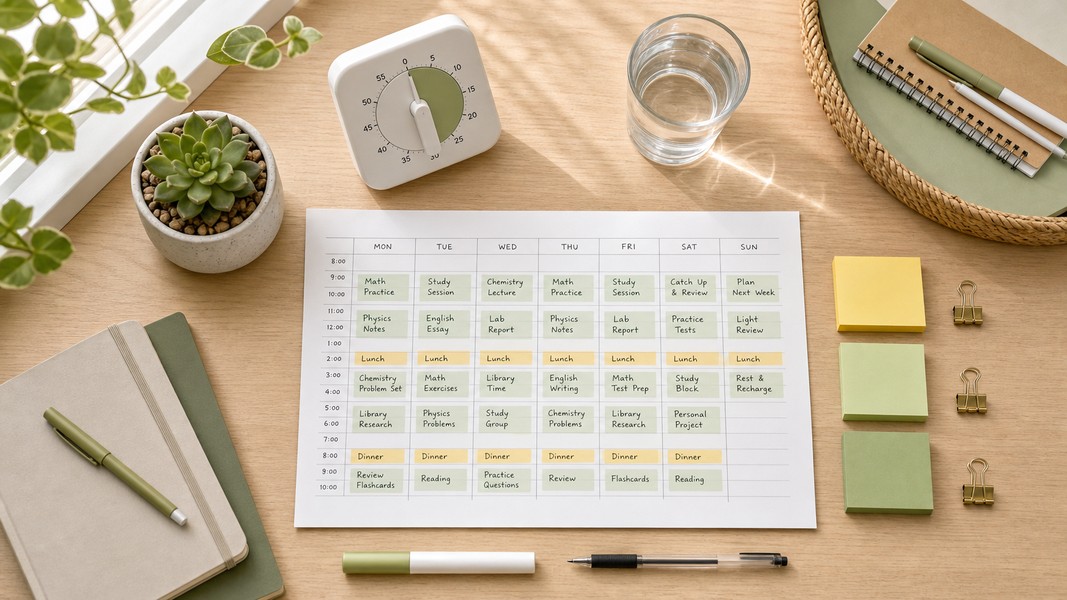
Struggling to manage your time as a student? These 7 evidence-backed tactics fix the real reasons students fall behind and waste hours.

Fathom AI is great for free Zoom notes, but it has real limits. Here are the best fathom ai alternatives for meetings, students, and multi-format capture.