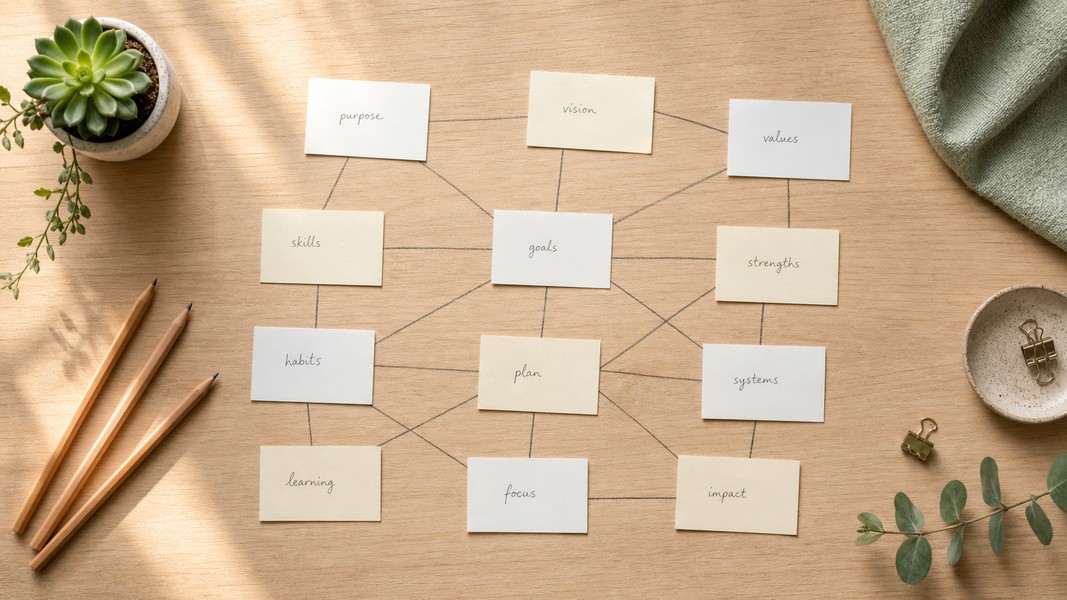
Zettelkasten: How to Build a Knowledge System
July 24, 2026
Learn how the Zettelkasten method works, why linked notes beat linear notebooks, and how to build your own knowledge system from scratch.


May 6, 2026
Good study habits don't come from studying harder. They come from studying smarter, with strategies that work with how your brain actually learns and retains information. Research consistently shows that students who use structured study methods outperform those who rely on passive review alone, yet up to 80% of students still default to re-reading and cramming when exams approach.
The nine habits below aren't generic productivity advice. Each one is grounded in learning science research, and each has a practical implementation you can start today, whether you're preparing for finals, working through a difficult course, or trying to build a routine that holds up across a semester.
Your environment shapes your focus before you open a single textbook. A cluttered, inconsistent space forces your brain to filter distractions rather than process information. Research on attention management consistently shows that dedicated study spaces reduce the mental overhead required to start and maintain focus.
The setup doesn't need to be elaborate. Pick a consistent location, clear the surface of anything unrelated to your current task, and arrange it the same way each time you sit down. Consistency is the signal: when you repeatedly study in the same place, your brain starts associating that environment with focused work and shifts into study mode faster.
For students with ADHD, environment matters even more. Silence can worsen attention, so low-level background sound like instrumental music or brown noise helps many people sustain focus. Removing visual clutter reduces impulsivity and keeps your attention on the material.
One practical approach: spend two minutes before each session setting up your space. Same spot, same setup, same start cue. That small ritual signals a transition and reduces the friction between "about to study" and "actually studying."
Re-reading feels productive because it's comfortable, but psychologists Henry Roediger and Jeffrey Karpicke found in their 2006 research that retrieval practice dramatically outperforms repeated reading for long-term retention. Students who tested themselves on material three times retained about 60% of the content a week later. Students who re-read the same material four times retained only 40%.
Active recall works because retrieving information strengthens the neural pathways associated with that knowledge. Each recall attempt, even an unsuccessful one, makes the memory more durable. Re-reading doesn't trigger that consolidation process.
The simplest version: close your notes and write down everything you remember about a topic. Then check what you missed. Repeat until the gaps shrink. Flashcards work on the same principle, especially when you commit to answering before flipping.
Active recall is the single most impactful study habit on this list. According to APA research, it's also one of the most consistently underused by students despite the evidence behind it. If you only change one thing, make it this.
Most students review material heavily in the days before an exam and rarely touch it again. This approach produces short-term performance but poor long-term retention. Spaced repetition works the opposite way: you review material at increasing intervals timed to catch it just before you'd forget it.
A 2025 meta-analysis covering 21,415 learners found a 0.78 standardized mean difference favoring spaced repetition over standard study methods, a large effect size by academic standards. A separate study of over 26,000 physicians found that those using spaced review scored 58% correct on retention tests at six months, compared to 43% for those who didn't.
The spacing effect is the mechanism: reviewing material slightly after the point of forgetting produces stronger memory consolidation than reviewing it while it's still fresh. Most flashcard apps (Anki is the most widely used) build this scheduling into the algorithm automatically, so you don't have to track intervals manually.
Voice Memos generates spaced repetition flashcard decks automatically from your lecture recordings, PDFs, and uploaded notes. Instead of building a deck from scratch after class, you capture the content once and the AI produces a study-ready set scheduled across your review calendar.
Four hours of unfocused studying produces worse outcomes than 90 minutes of concentrated work. Cognitive load accumulates over time, and your ability to process and encode new information degrades as sessions stretch beyond a productive threshold.
Research points to 25-50 minute blocks as the sweet spot for sustained attention, with short breaks in between to let your working memory reset. The Pomodoro technique (25-minute blocks, 5-minute breaks) is the most common framework, but the exact timing matters less than the principle: work in defined periods and protect those boundaries from interruption.
For students with ADHD, shorter blocks around 20-25 minutes are often more effective than 50-minute stretches. Front-loading your hardest subjects at the start of a session, when executive function is strongest, also helps. Visual timers make abstract time concrete, which reduces the time blindness that many ADHD students experience.
The goal isn't to minimize study time. It's to make every minute count by keeping your attention genuinely engaged with the material in front of you.
Capturing information during a lecture or reading session is only half of note-taking. Notes that can't be reviewed efficiently are just archives, not study tools.
Structured notes with clear headings and organized sections dramatically outperform dense freeform writing for review purposes. If you can't scan your notes in 10 minutes and identify the key concepts, they aren't functioning as a study resource.
Voice Memos addresses this at the capture stage. When you record a lecture or import a PDF, the AI automatically transcribes and organizes the content into structured notes, extracts key points, and prepares the material for review, without any manual formatting required. For students who struggle to keep up while taking notes by hand, recording and reviewing AI-processed output often produces more complete coverage of the material.
Whichever format you use, the test is simple: could you study effectively from these notes tomorrow without remembering the original context? If the answer is no, the notes aren't complete yet.
Memory consolidation weakens rapidly after a learning session. The forgetting curve is steepest in the first 24 hours, which means a brief same-day review can significantly reduce how much you lose before your next session.
The process doesn't need to be long. Spend five minutes at the end of each study session writing or recording a verbal summary: what were the three or four most important things you just covered? Don't look at your notes while doing this. Then check what you missed.
This combines retrieval practice with timely review, two of the strongest memory-consolidation techniques in a single five-minute habit. Students who do same-day summaries consistently retain substantially more heading into exams than those who rely on a single review block close to the test date.
Sleep is not a recovery period separate from studying. It is where memory consolidation happens. During slow-wave and REM sleep, your brain replays and strengthens the memories formed during the day, integrating new information with existing knowledge.
According to sleep researchers, students who get six hours of sleep perform significantly worse on memory tests than those who sleep eight hours. Pulling an all-night study session and testing on reduced sleep can functionally erase the benefit of the extra study hours.
Evening study sessions have an additional advantage: material covered before sleep goes through consolidation overnight without interference from other waking experiences. If you're working through something difficult, studying it in the evening and sleeping on it often produces better understanding in the morning than continuing to push through fatigue.
Protect sleep as a non-negotiable part of your study system, not something to sacrifice when a deadline approaches.
Not every study method works equally well for every person or every subject type. Students who default to one technique regardless of the material often hit diminishing returns. Matching your approach to both the subject and your own processing style produces better results.
Visual learners often benefit from concept maps, diagrams, and color-coded notes. Auditory learners retain more from recording verbal explanations and playing them back. Kinesthetic learners do better with applied practice, working problems and case studies rather than passive reading.
For students with ADHD, playing to interest-driven hyperfocus and using varied formats across sessions can improve both engagement and retention. Data from CHADD research indicates that building novelty into study routines reduces the cognitive fatigue that comes from using the same method repeatedly.
This doesn't mean building an elaborate personalized system from day one. Start by noticing which sessions feel productive versus which feel like you're going through the motions, then adjust toward what actually works for you.
The best study method is one you'll actually use. Many effective study habits fail not because the techniques are wrong but because they require too much setup to maintain consistently. Reducing friction between intention and action is one of the most reliable ways to build sustainable habits.
Technology helps most when it removes the manual overhead of good study practices. Automatically generated flashcards from your notes mean you're more likely to do spaced repetition because you don't have to build the deck first. Processed lecture summaries mean you're more likely to do a same-day review because the material is already organized.
Voice Memos handles this end-to-end: record or import content, get structured notes and flashcard sets automatically, then review with the built-in quiz and spaced repetition modes. The goal is to make good study habits the path of least resistance rather than an extra step.
Tools matter less than consistency. But if the right tool removes the friction that's been keeping you from a technique you know works, that's worth using.
Building better study habits doesn't require overhauling your entire routine at once. Pick one strategy from this list, practice it for two weeks until it feels automatic, then add another. Most students see the biggest gains by starting with active recall or same-day review, since both are immediately actionable and produce visible results without requiring new tools or significant time investment.
The patterns that produce long-term academic success are consistent retrieval practice, well-timed review intervals, adequate sleep, and structured note-taking. Getting those four right puts you ahead of most students before you add anything else to the mix.
Discover more insights and tips to enhance your productivity
Learn how the Zettelkasten method works, why linked notes beat linear notebooks, and how to build your own knowledge system from scratch.
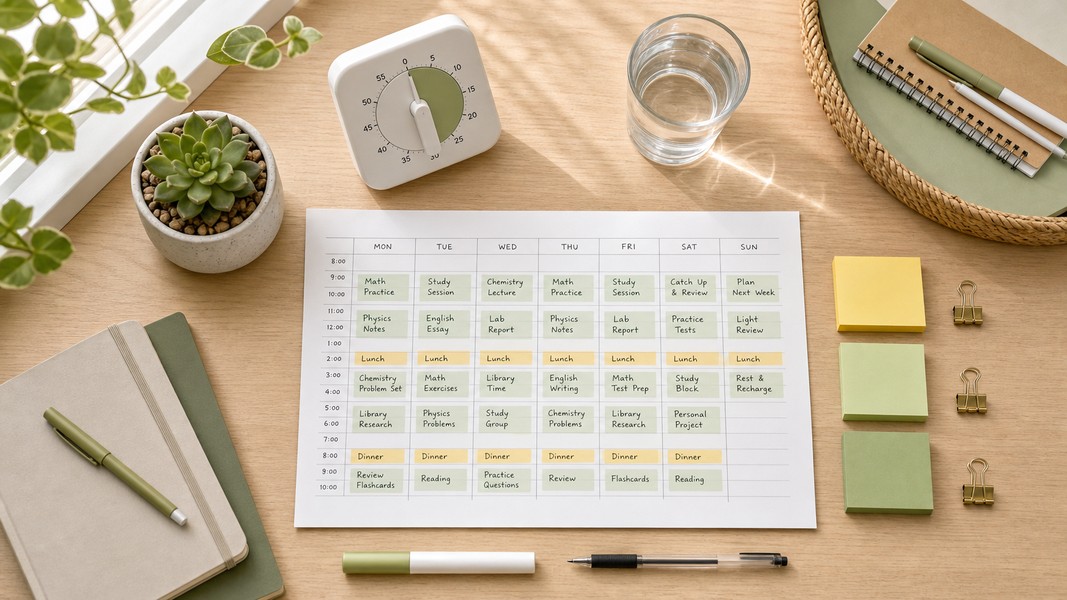
Struggling to manage your time as a student? These 7 evidence-backed tactics fix the real reasons students fall behind and waste hours.

Fathom AI is great for free Zoom notes, but it has real limits. Here are the best fathom ai alternatives for meetings, students, and multi-format capture.