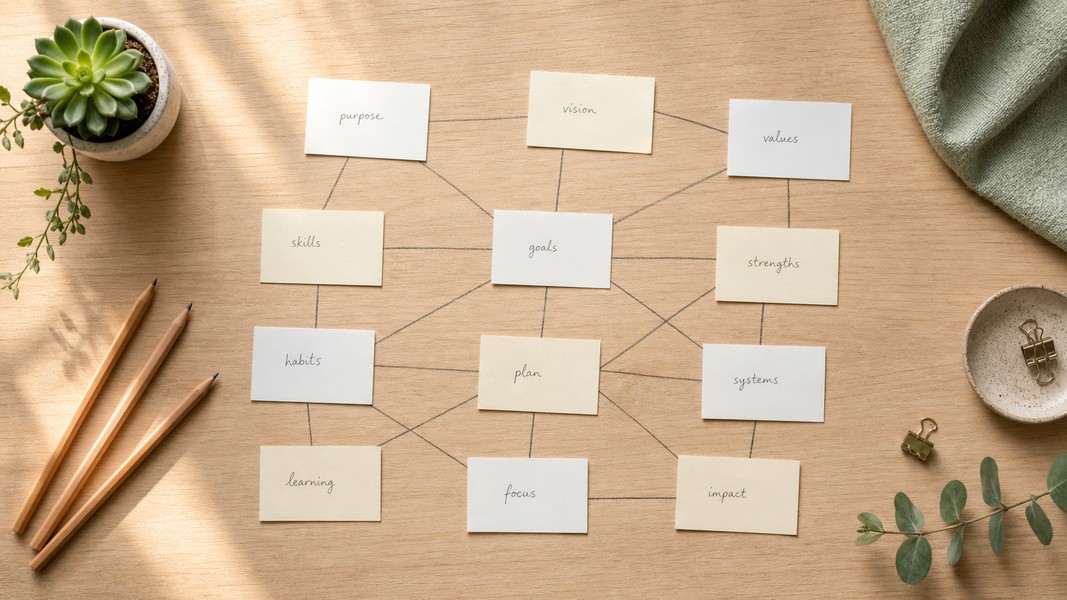
Zettelkasten: How to Build a Knowledge System
July 24, 2026
Learn how the Zettelkasten method works, why linked notes beat linear notebooks, and how to build your own knowledge system from scratch.


March 7, 2026
The best AI note taker for professionals does three things well: captures what was said, extracts what needs to happen next, and routes results into the tools your team already uses. In 2026, several tools do this reliably, but they work very differently, and picking the wrong one creates more friction than it removes.
This guide covers the top AI note takers for professionals: Voice Memos, Fireflies.ai, Fathom, Otter.ai, tl;dv, and Notion AI. Each is evaluated for transcription accuracy in real-world conditions, action item detection quality, language support, and what the free tier actually delivers.
| Tool | Best For | Free Plan | Key Strength | Languages |
|---|---|---|---|---|
| Voice Memos | Multi-modal capture | Yes | 6-category action detection | 40+ |
| Fireflies.ai | Global teams | Limited AI | 100+ language support | 100+ |
| Fathom | Individuals, small teams | Unlimited | Fast summaries, no credit card | 28 |
| Otter.ai | Live collaborative notes | 300 min/mo | Real-time multi-user editing | English-primary |
| tl;dv | Sales coaching | Unlimited | Highlights and call coaching | Multiple |
| Notion AI | Flexible note organization | Varies | Workspace integration | Varies |
Five criteria drove the evaluation: transcription accuracy in real-world conditions (not just clean audio demos), action item detection quality, integrations with professional tools, language support for global teams, and the actual value each free tier delivers to a working professional.
Meeting bot behavior also matters in practice. Some tools send a visible AI participant ("Fred from Fireflies" or "OtterPilot") to join your calls. That works fine for internal team meetings but creates friction in client-facing contexts. Where botless recording options exist, they're noted.
Pricing is not a factor in rankings. Tool capability and fit for real workflows determined the order.
Most AI note takers are built around a single scenario: you're on a Zoom call, a bot joins to transcribe it, and you get a summary afterward. That works well until your actual day involves client phone calls, PDFs to review, handwritten whiteboard notes, a recorded webinar, and a voice memo captured while walking between meetings.
Voice Memos handles all of those in one place. It captures content from voice recordings, PDF uploads, YouTube video links, camera scans of physical documents, and typed text. The AI processes each source the same way: extract structure, detect action items, and generate organized output.
What sets Voice Memos apart from every other tool in this roundup is its 6-category action detection system. While other tools extract generic "action items," Voice Memos automatically categorizes output into tasks, events, reminders, locations, contacts, and notes. A recording doesn't just produce a list of to-dos; it surfaces the client's address as a location, the follow-up call as a calendar event, the contact details mentioned in passing, and the open tasks as separate buckets. You can review the full guide to capturing meeting notes and action items to see this in practice.
The 40+ language transcription with automatic translation is useful for international client work. Record a call in Spanish, get organized notes in English, without copy-pasting into a translation tool.
Voice Memos also includes four study and knowledge modes: interactive quiz, flashcards with spaced repetition, deep research, and mind maps. For professionals who use recorded content for team training, onboarding, or ongoing knowledge retention, these tools have direct applications beyond personal study.
Start using Voice Memos free to see how multi-modal capture compares to tools limited to meeting bots.
Ideal for: Consultants, researchers, client-facing roles with varied information sources, and teams who need a single AI tool for meetings, documents, and research rather than separate specialized apps.
Limitations: Voice Memos does not auto-join Zoom, Google Meet, or Teams calls with a bot. You record directly through the app, capturing device audio rather than a dedicated meeting integration. For teams who want a hands-off bot that joins every calendar invite automatically, the tools below fit that workflow better.
Built for distributed teams working across multiple countries, the Fireflies platform leads the category in language support at 100+ languages. It joins meetings automatically as a bot, transcribes the conversation, and generates summaries and action items immediately after the call ends.
AskFred is the standout feature for professionals with large meeting archives. Instead of searching through transcripts for a specific mention, you ask a natural language question like "What did the client say about budget in the March review?" and get a direct answer pulled from your entire call history.
Topic Trackers let you monitor specific keywords or themes across all meetings. A sales manager tracking competitor mentions or a project lead watching for scope creep discussions will find real value in ongoing keyword surveillance across call archives.
The free plan includes unlimited meeting storage, but AI-generated summaries (the core value for most professionals) require a paid subscription. That limits the free tier's usefulness in practice.
One consistent friction point: Fireflies is bot-only. For internal team meetings, a visible "Fred from Fireflies" participant is a non-issue. For client calls where meeting recording disclosure matters, it requires upfront communication or a different approach.
Ideal for: International organizations, large teams that need a searchable archive of meeting content, and managers who want ongoing keyword monitoring across call libraries.
Limitations: Bot-based only with no botless recording option. AI summaries require a paid plan. Recordings stored on third-party infrastructure, which may conflict with strict data residency requirements.
Fathom's free plan is genuinely unlimited: no minute caps, no credit card required. That alone makes it worth testing before committing to any paid tool.
Summaries arrive within 30 seconds of meeting end, and the output is concise and decision-focused. After a fast-paced call, most professionals want a clear record of what was decided and what happens next, not a wall of text to skim. Fathom delivers that by default.
The Perfect Recall feature enables natural language search across your entire meeting history. Fathom covers Zoom, Google Meet, and Microsoft Teams, and supports 28 languages. A botless recording option is available in beta, which is useful for client-facing roles where a visible meeting bot creates awkward moments.
CRM sync with Salesforce and HubSpot, plus team analytics, sit behind the paid plan. For solo professionals and small teams without heavy CRM requirements, the free tier delivers substantial value without upgrade pressure.
Ideal for: Individuals, freelancers, and small teams who want reliable meeting transcription and summaries at no cost. Also an effective starting point for evaluating AI note takers before committing to an annual plan.
Limitations: 28-language support falls short for highly multilingual teams. CRM integration and team dashboards require a paid subscription.
The Otter AI platform is the only tool in this roundup built around real-time, collaborative note-taking. During a call, multiple participants can view, highlight, and annotate the live transcript simultaneously. If your team actively edits and responds to notes while a meeting is in progress rather than reviewing a summary afterward, nothing else in this list matches that workflow.
OtterPilot joins calls automatically and posts summaries directly to connected tools, reducing the post-call administrative cycle significantly. Sales teams get automated follow-up draft emails and CRM sync on the Business plan. Custom vocabulary support helps with domain-specific terminology, which is useful for medical teams, legal professionals, and technical organizations adding specialized terms that trip up standard transcription models.
Otter's primary limitation is language support. It's built for English-primary environments, which creates real problems for global teams. The free plan also limits you to 300 minutes per month, which fills quickly if you're in multiple hour-long meetings daily.
Ideal for: Sales teams, collaborative teams that want to interact with live transcripts, and English-primary organizations that need solid CRM pipeline integration.
Limitations: Limited multilingual support, bot-only with no botless recording option, and the free plan runs out quickly for active meeting participants.
The tl;dv platform is built around a sales team's specific needs: highlight specific moments in recorded calls, share coaching clips with reps, and push notes directly into your CRM. The free plan includes unlimited recordings, which is rare at this feature level.
The highlight and clip feature is tl;dv's core differentiator. Sales managers can mark specific moments in a recorded call, an objection handled well or a pricing question that went sideways, and share that timestamp with the team for review or coaching. Other tools in this list produce summaries; tl;dv makes it easy to build a library of annotated call moments that become coaching material.
AI summaries, multilingual support, and CRM integration are available with recording support across Zoom, Google Meet, and Teams. Like Fireflies and Otter, tl;dv is bot-based, so it joins calls as a visible participant.
Ideal for: Sales teams and revenue organizations where call coaching, rep development, and playback of specific call moments are ongoing priorities.
Limitations: Less suited to non-sales professionals. The sales-specific feature set adds no value outside revenue roles, and the bot-based approach creates the same client-facing friction as other bot-dependent tools.
Notion AI is not a meeting transcription tool. It doesn't join calls, generate summaries, or detect action items from audio. It's included here because many professionals use Notion as their primary workspace and want to understand how it fits, or doesn't fit, alongside dedicated AI note takers.
Notion AI works best as a destination, not a capture tool. Fireflies, Otter, and Fathom can all push meeting summaries directly into a Notion workspace via their integrations. From there, Notion AI can reorganize, expand, and query those notes within your document structure.
For professionals who want complete flexibility in how meeting information is organized and searched after capture, the Notion-plus-dedicated-transcriber combination is a legitimate stack. The tradeoff is complexity: you're maintaining two tools instead of one.
Ideal for: Teams already embedded in Notion who want it as a central knowledge base with AI-enhanced organization. Works best as part of a broader stack with a dedicated transcription tool feeding content into it.
Limitations: Cannot record or transcribe on its own. Requires a separate meeting transcription tool for any audio capture. Not suitable as a standalone AI note taker.
If your workflow revolves around a CRM, verify that the tool pushes notes and action items automatically on the specific plan you're evaluating. Most CRM integrations are paid features across all tools in this list. Teams using Slack for async follow-up will find broad coverage across Fireflies, Fathom, Otter, and tl;dv. For project management tools like Asana or Jira, Fireflies has the widest integration library.
Visible meeting bots work fine for internal calls. For client-facing professionals in sales, consulting, or account management, an unexpected "Fireflies.ai is now recording" message mid-call can create awkward moments with clients who weren't expecting it. Fathom's botless beta and Voice Memos' direct recording approach avoid this problem. If client-facing calls are a significant part of your week, factor in bot visibility before committing.
If your team operates regularly in multiple languages, Fireflies (100+) is the clear leader. Voice Memos (40+) covers most global professional needs. Fathom (28) handles the most common languages outside of highly multilingual environments. Otter is English-primary and falls short for teams with consistent multilingual requirements.
Organizations in regulated industries (healthcare, finance, legal) need compliance certifications before adopting any tool that stores voice recordings on external infrastructure. SOC2, GDPR, and HIPAA support vary significantly across tools; check the vendor's security documentation before rolling out to sensitive client conversations.
For smaller teams building a voice note organization system from scratch, starting with a free tier and evaluating real usage over two to four weeks beats committing to an annual plan based on feature lists alone. If you're comparing dedicated note takers with broader AI tools, the best AI tools for knowledge work covers the full range.
AI note takers in 2026 are no longer productivity experiments; they're core infrastructure for professionals who run on meetings and documentation. The right choice comes down to your actual workflow, not the longest feature list.
For pure meeting transcription with broad language coverage, Fireflies serves global teams best. For the most capable free plan with fast, clean summaries, Fathom delivers without any upfront commitment. For live collaborative notes and sales-specific workflows, Otter.ai has the most polished execution. Voice Memos handles more than just meeting recordings: documents, video content, handwritten notes, and voice captured across contexts, covering the full scope of how information moves through a professional day.
Match the tool to the work, and you'll get real time back.
Discover more insights and tips to enhance your productivity
Learn how the Zettelkasten method works, why linked notes beat linear notebooks, and how to build your own knowledge system from scratch.
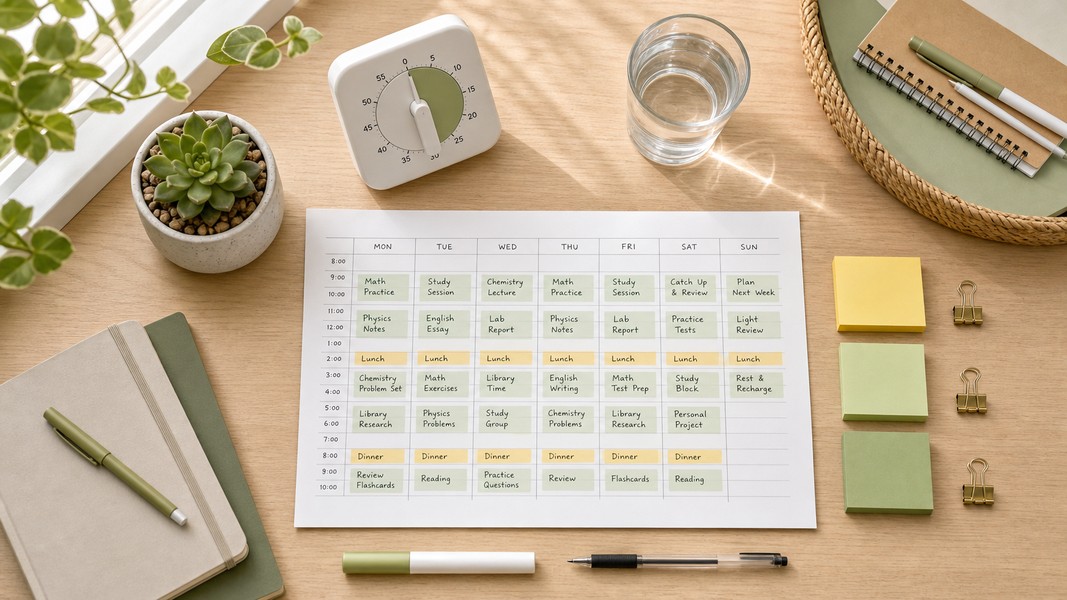
Struggling to manage your time as a student? These 7 evidence-backed tactics fix the real reasons students fall behind and waste hours.

Fathom AI is great for free Zoom notes, but it has real limits. Here are the best fathom ai alternatives for meetings, students, and multi-format capture.