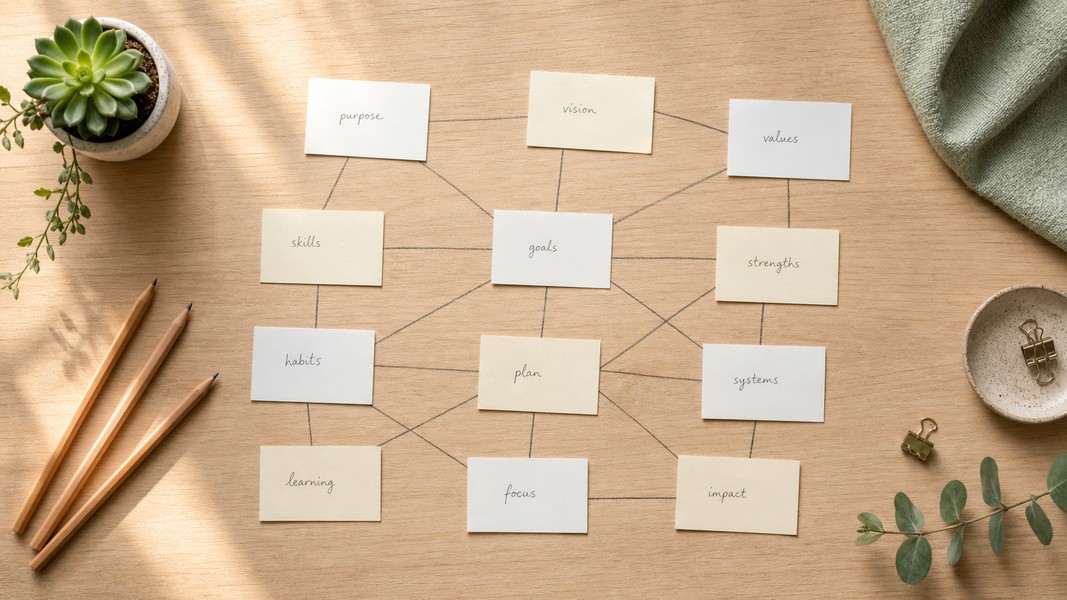
Zettelkasten: How to Build a Knowledge System
July 24, 2026
Learn how the Zettelkasten method works, why linked notes beat linear notebooks, and how to build your own knowledge system from scratch.


June 18, 2026
AI-powered study tools are most effective when they're built around how memory actually works. They can automate the tedious parts: transcription, flashcard generation, and quiz creation. The real gains come from pairing that automation with evidence-based strategies like retrieval practice and spaced repetition. This post walks through five practical workflows that combine both.
Each workflow addresses a specific study scenario: lectures, textbooks, video content, exam prep, and group projects. Together they form a complete system for students who want to stop passively reviewing material and start actually retaining it.
Most students default to rereading notes, rewatching lectures, or re-highlighting textbooks. These feel productive because the material looks familiar on the second pass. The problem is that retrieval practice research consistently shows that recognition and recall are not the same thing.
Your brain builds memory through the act of pulling information out, not putting it in. Rereading gives you fluency with the text. Testing yourself gives you fluency with the knowledge. Exams test the latter.
Students who test themselves retain significantly more after a delay than students who only reread, even when rereaders feel more confident going in. Combine testing with spaced practice and retention improves by 10 to 30 percent over massed reviewing.
AI-powered study tools change the equation by automating the creation of retrieval practice materials from any input you give them.
Here's how each workflow maps to a common study challenge:
The goal isn't to spend more time studying. It's to replace low-yield passive review with high-yield active learning at each stage.
Manual note-taking during lectures splits your attention between listening and writing. You miss nuance trying to keep up, and the notes you produce are rarely organized enough to study from directly.
The AI workflow flips this. You record the lecture and stay fully present in the room. Afterward, an AI note-taking app transcribes the audio, generates a summary, and segments the content by topic. You end up with structured notes in minutes rather than hours. International students benefit further when the app supports transcription in multiple languages, letting them record in the lecture language and review notes in their own.
The critical step most students skip is converting those structured notes into questions before the next class. Take the AI summary, identify 10 to 15 key claims, and turn each into a practice question. That takes 10 minutes and is more valuable than rereading the transcript three times.
If you're evaluating options, the roundup of free AI note takers covers the main tools by use case.
Textbooks and reading assignments are where passive review dominates. Students read a chapter, feel like they understood it, and then score poorly on the exam because reading for comprehension is not the same as being able to retrieve information on demand.
Upload your PDF into an AI study tool and it extracts key terms, definitions, relationships, and rules, then generates a flashcard deck from them. You get a draft deck in minutes instead of hours. The actual work is curation: go through the AI-generated cards, remove trivial ones, refine question wording to match how your professor or exam asks, and add any concepts the tool missed.
Once the deck is curated, load it into a spaced repetition system. The algorithm tracks what you get right and wrong and schedules each card to reappear just before you're likely to forget it. That scheduling is what drives the 10 to 30 percent retention gains over cramming.
For high-volume memorization needs in medicine, law, or engineering, this workflow is especially important. The volume of material makes manual card creation impractical, but AI generation makes it feasible to have a complete deck for every chapter before each exam cycle. Voice Memos includes a built-in spaced repetition flashcard mode that integrates directly with its AI processing pipeline, so you can go from uploaded PDF to a scheduled review deck without switching apps. See the guide to PDF to flashcard tools for a comparison of the main options.
Lectures aren't the only video content students need to process. Supplementary YouTube videos, recorded seminars, and online course content often cover material that won't appear in lecture slides.
The workflow here starts the same way as lecture transcription. Paste a YouTube URL into a tool that processes video transcripts, then have the AI generate comprehension questions from the content. Instead of watching passively and hoping information sticks, you finish with a set of quiz questions to test your understanding.
Good AI study tools generate different types of questions: factual recall, cause-and-effect, conceptual explanation. This matters because exams rarely ask the same question the same way twice. Practicing retrieval across multiple phrasings strengthens the underlying knowledge, not just your ability to answer one specific question.
After generating the quiz, wait at least a few hours before attempting it. Even brief spacing makes retrieval harder, which strengthens retention more than testing immediately after watching.
Most students start exam prep by reviewing notes and then rereading them again. A more effective approach is to spend the bulk of prep time on practice testing and use review only to address specific gaps the tests reveal.
Collect your structured notes, lecture summaries, and flashcard decks, then feed them into an AI tool to generate a full practice test. Attempt the test without notes, then review every question you got wrong before going back to the source material to close the gap.
For this to work well, the questions need to vary. AI tools can generate new question sets from the same material on demand, so you can test multiple times without memorizing specific answers. Each test run reveals new weak spots and prevents the false confidence that comes from repeated exposure to familiar questions.
Aim to do at least three full practice test cycles before a major exam, spaced over several days. The combination of practice testing and spacing produces some of the largest retention gains in memory research. This is not a new idea, but AI tools make it practical to generate enough varied questions to actually run multiple test cycles from your own study materials.
Group work breaks down when meetings produce conversation but no clear record of who's doing what. Someone takes messy notes, key commitments get forgotten, and the project falls behind.
AI note tools fix this automatically. Record the group discussion, and the AI extracts a structured summary with action items, assigned owners, upcoming deadlines, and any decisions the group made. Voice Memos detects six categories automatically: tasks, events, reminders, locations, contacts, and general notes. Every commitment gets captured, not just the ones whoever was writing happened to catch.
The practical difference is that everyone can participate in the discussion without splitting attention between talking and writing. After the meeting, the AI output becomes your project tracking document. You can share it, export tasks to a project board, or use it as the agenda for your next session.
This workflow matters more as group work scales up. A 20-minute check-in with two people is easy to track manually. A two-hour planning session with five contributors is not.
Not all AI study tools support every workflow. Some are built primarily for transcription, others for flashcard generation, and others for quiz creation. Before committing to a tool, check which of the five workflows it actually covers.
The highest-value tools support multi-modal input (voice, PDF, video, images) and connect AI capture directly to active review features like quizzes, flashcards, or spaced repetition. A tool that transcribes but then leaves you to manually convert notes into study materials still saves time but doesn't address the core problem: getting material into the right format for retrieval practice.
Voice Memos is built around the full pipeline, from capture through review. You can record a lecture, upload a PDF, paste a YouTube URL, and use the AI to generate flashcards, quizzes, and mind maps from any of them. All five workflows described here are supported in one place, which reduces the overhead of managing multiple tools.
AI-powered study tools are most valuable when they're used to build retrieval practice into your daily workflow rather than to create better notes to passively reread. Lecture recordings become quiz question sets. PDFs become spaced repetition decks. Videos become comprehension tests. Exam prep shifts from review to active testing. Group meetings produce trackable action items instead of lost commitments.
The technology handles the conversion. Your job is to keep showing up for the retrieval practice.
Discover more insights and tips to enhance your productivity
Learn how the Zettelkasten method works, why linked notes beat linear notebooks, and how to build your own knowledge system from scratch.
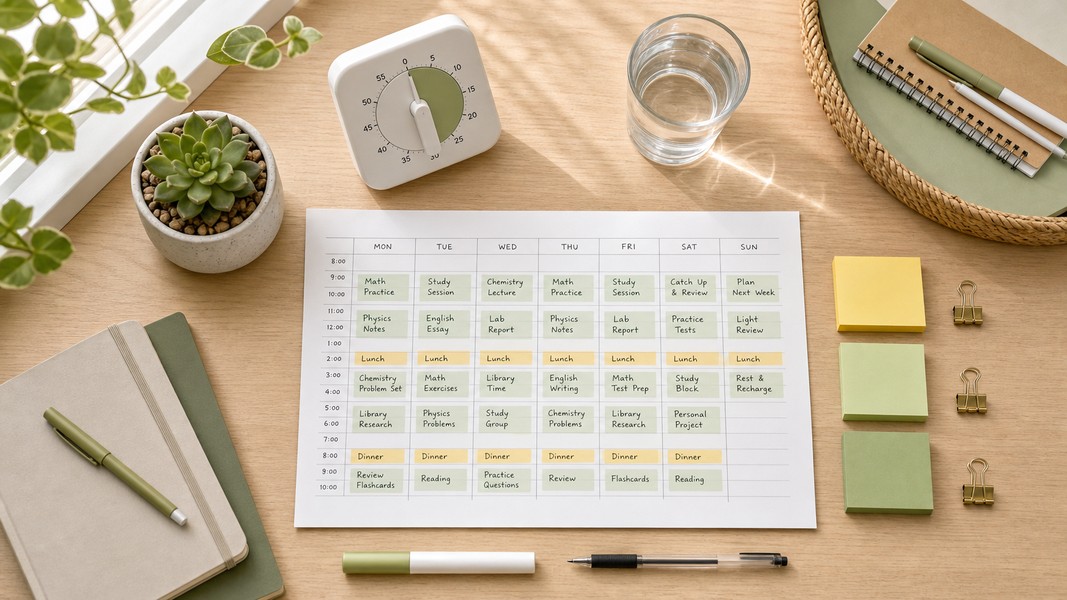
Struggling to manage your time as a student? These 7 evidence-backed tactics fix the real reasons students fall behind and waste hours.
Fathom AI is great for free Zoom notes, but it has real limits. Here are the best fathom ai alternatives for meetings, students, and multi-format capture.