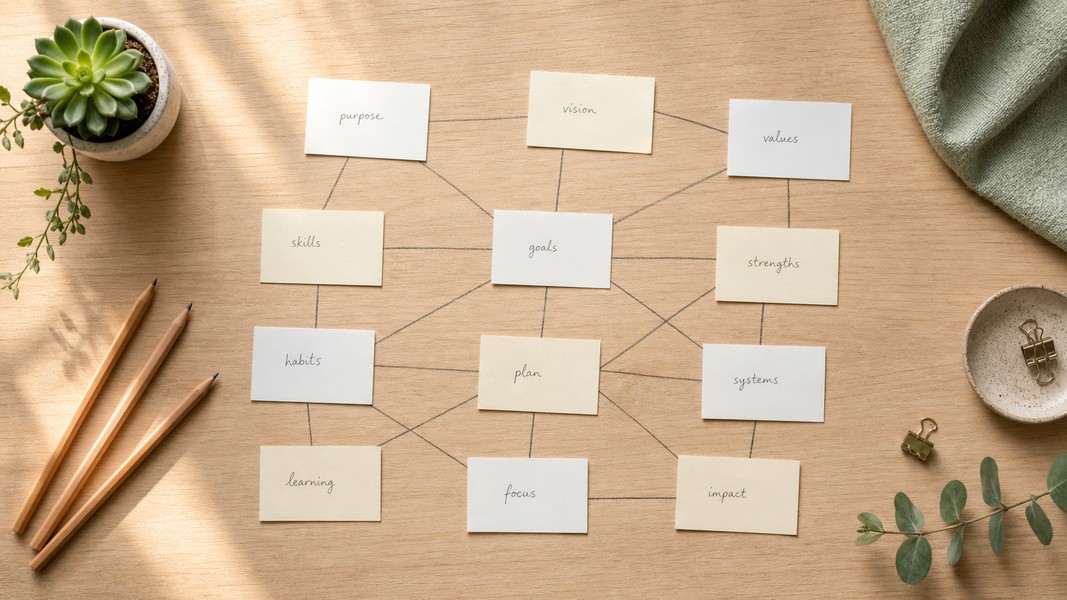
Zettelkasten: How to Build a Knowledge System
July 24, 2026
Learn how the Zettelkasten method works, why linked notes beat linear notebooks, and how to build your own knowledge system from scratch.

June 25, 2026
An AI writing assistant is software that uses a large language model to help you generate, rewrite, summarize, or improve text based on your instructions and source material. You provide the prompt and context; the tool produces polished language in return.
These tools have moved from novelty to daily use faster than most technology categories. Over 6.5 million users rely on Rytr alone, and that is just one of hundreds of platforms competing in this space. If you have been wondering what separates genuine utility from hype, this guide explains how AI writing assistants work, where they perform best, and how to build a workflow around them that actually holds up.
Not every AI writing assistant works the same way. The category divides into three distinct types, with significant overlap in practice.
Grammar and style tools focus on improving text you have already written. They catch errors, suggest clearer phrasing, adjust tone, and help you say what you mean more precisely. The most recognized product in this category, Grammarly's writing tool, has built its entire brand around this use case.
Generative AI writers create new content from a prompt. You describe what you need, and the tool produces a draft email, blog section, outline, or report. ChatGPT and similar models fall into this category, though the boundaries are blurring fast.
Hybrid assistants combine drafting and editing in one interface. They can generate a first draft, let you edit it inline, then help you refine the result. Most modern AI writing platforms have converged here: they do both, in the same window, with overlapping capabilities.
Understanding the type matters because it shapes how you use the tool. A grammar assistant is most useful after you have written something. A generative tool is most useful when you have not started yet. A hybrid handles both transitions.
Every modern AI writing assistant is built on a large language model, or LLM. An LLM trains on large amounts of text and, through that process, learns the statistical patterns of language: which words follow which, how sentences are structured, what makes writing coherent or persuasive.
When you type a prompt, the model generates text by predicting the most likely continuation of your input, shaped by everything it learned during training. It is not retrieving a stored answer from a database or looking anything up. It predicts token by token, weighted by your instructions and the context you provide.
That mechanism has two practical consequences. First, output quality depends heavily on input quality. Vague prompts produce vague text. Specific prompts with context, constraints, and examples produce far more usable results. Second, the model does not have a way to determine what is factually true, only what is statistically plausible. Those are very different things, and the gap matters for anything that requires accuracy.
AI writing assistants are language prediction engines, not independent authors. They convert your instructions and source material into draft prose. The human supplies the judgment about what to say, what is true, and what fits the audience.
The strongest use cases involve reducing friction in stages of writing that are genuinely tedious or cognitively demanding.
Overcoming the blank page is the most widely cited benefit. If you know roughly what you want to say but cannot get started, AI generates a rough first draft you can react to and improve. Getting from zero to something is often the hardest part of writing, and AI handles it quickly.
Paraphrasing and restructuring existing text is another area where these tools perform reliably. When a paragraph is unclear or does not flow, AI can rephrase it, break up long sentences, or reorder the ideas. Tools like QuillBot's paraphraser are built specifically around this.
Summarizing source material works well when you feed the tool a lengthy document and need a condensed version. This is most reliable when you already understand the material and can catch any errors in the summary.
Generating structural options is faster with AI than without it. Ask for five possible outlines, three alternative angles on a topic, or ten headline variations, and you have something to react to within seconds. That speed shifts your role from generating ideas to evaluating them, which is often easier.
Editing for tone is another practical use. If a paragraph needs to sound more professional, more casual, or more direct, a targeted rewrite instruction usually gets close on the first try.
The limitations are just as important to understand as the capabilities.
AI does not know your audience the way you do. It cannot sense that a particular argument will land wrong with a specific reader, or that a tone is slightly off for your team's culture. Those judgments require context that lives outside the tool.
AI-generated text can be factually wrong, and it is often wrong with confidence. Because the model predicts language rather than truth, it produces plausible-sounding claims that do not hold up to verification. Any specific statistics, dates, quotes, or factual assertions in AI-generated output require independent checking before they go anywhere.
Without strong prompting, AI-generated writing tends toward the generic. Ask for a paragraph about time management and you will get competent, predictable prose. The distinct angle, the concrete example only you know from experience, the comparison that reframes the whole question: those still come from you.
Writing also does cognitive work that matters. When you struggle to articulate something, you are often discovering what you actually believe about it. Delegating that struggle to AI means skipping the thinking the writing was designed to produce.
University policies on AI writing have shifted considerably, and institutions have landed in different places. The consistent theme across most current guidelines is a distinction between using AI to support your process and using AI to substitute for the intellectual work the assignment is designed to assess.
Using AI to brainstorm topic angles, clarify a paragraph you have already written, or identify gaps in your argument falls in the first category. Having it draft your thesis, generate your analysis, or produce your conclusions falls in the second.
UNESCO's AI guidance in education notes that AI tools can improve information access and support complex analysis, but that over-reliance risks reducing the development of analytical skills and independent thinking. Applied to writing specifically, the question is whether the AI use preserves the learning the assignment is meant to develop, or bypasses it.
The practical test is direct: could you explain, defend, and expand on everything in the finished piece without referring back to what the AI wrote? If yes, the AI supported your process. If no, it replaced it.
The most effective use of AI writing assistants does not begin with "write this for me." It begins with raw material.
The capture-to-draft approach works in four stages. First, you collect your inputs: voice notes recorded while thinking through the topic, research you have read and want to reference, rough ideas you have jotted down, quotes worth keeping. You capture everything before you start shaping it.
Second, you use AI to organize. Ask it to identify themes in your notes, propose an outline based on your material, or flag what is missing from what you have gathered. At this stage the AI works as an organizer and editor, not as the source of ideas.
Third, you draft section by section, feeding the AI your structured notes as input rather than a blank prompt. The output reflects your thinking because it is built on your material, not on the model's generic knowledge of the topic.
Fourth, you revise for voice, accuracy, and argument. You verify every factual claim, tighten the logic, and ensure the finished piece sounds the way you intend.
AI note-taking apps are built for exactly the first stage of this workflow: capturing content from voice recordings, documents, YouTube videos, and other sources in one place before any drafting begins. Voice Memos processes those inputs and organizes them automatically, so what you bring into a writing session is structured material rather than a blank prompt and a scattered pile of notes.
That starting point matters more than most writers expect. The quality of AI-assisted drafts depends heavily on what you feed the tool. Organized, source-backed notes produce far better output than vague descriptions of what you want to say.
For professionals who regularly write from meetings and research, AI productivity tools that bridge the capture and drafting stages reduce the overhead of each writing task. Voice Memos fits that role: record a meeting, receive a structured summary with action items and key points, then use those organized notes as the raw material for a follow-up email or project brief rather than starting from scratch.
Grammar tools are most useful when you have existing text to improve. Generative AI works when you need drafts produced quickly, in volume, or from a blank start. Hybrid tools are worth the learning curve when you write often enough to benefit from both functions in one place.
The tool choice matters less than the workflow around it. An AI writing assistant used with specific inputs, clear prompts, and disciplined fact-checking produces consistently better results than one treated as a shortcut around thinking. The bottleneck is rarely the tool. It is the clarity of the material and instructions you bring to it.
An AI writing assistant is most useful as a friction-reducer, not as a replacement for the work of writing. It handles the mechanical challenges: generating draft language, restructuring sentences, adjusting tone, summarizing source material. The strategic elements, original thinking, accurate claims, and distinctive voice, remain yours.
The most reliable approach is to start with raw material rather than a blank prompt. Capture your research and ideas first, structure them, then use the AI to help articulate what you already know. That sequence keeps the cognitive work where it belongs while letting the tool do what it does well.
Discover more insights and tips to enhance your productivity
Learn how the Zettelkasten method works, why linked notes beat linear notebooks, and how to build your own knowledge system from scratch.
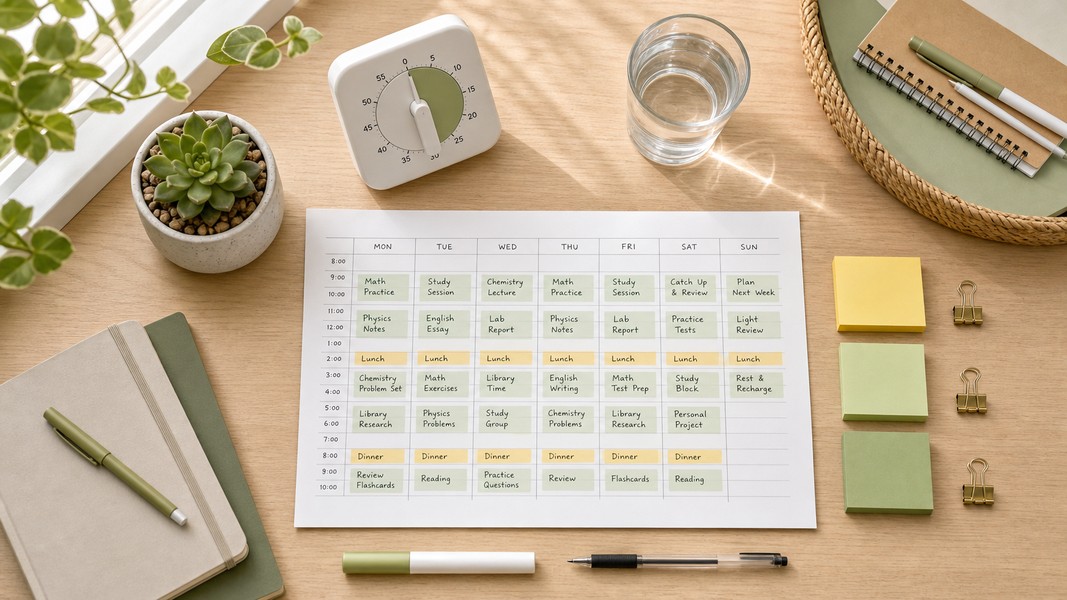
Struggling to manage your time as a student? These 7 evidence-backed tactics fix the real reasons students fall behind and waste hours.

Fathom AI is great for free Zoom notes, but it has real limits. Here are the best fathom ai alternatives for meetings, students, and multi-format capture.