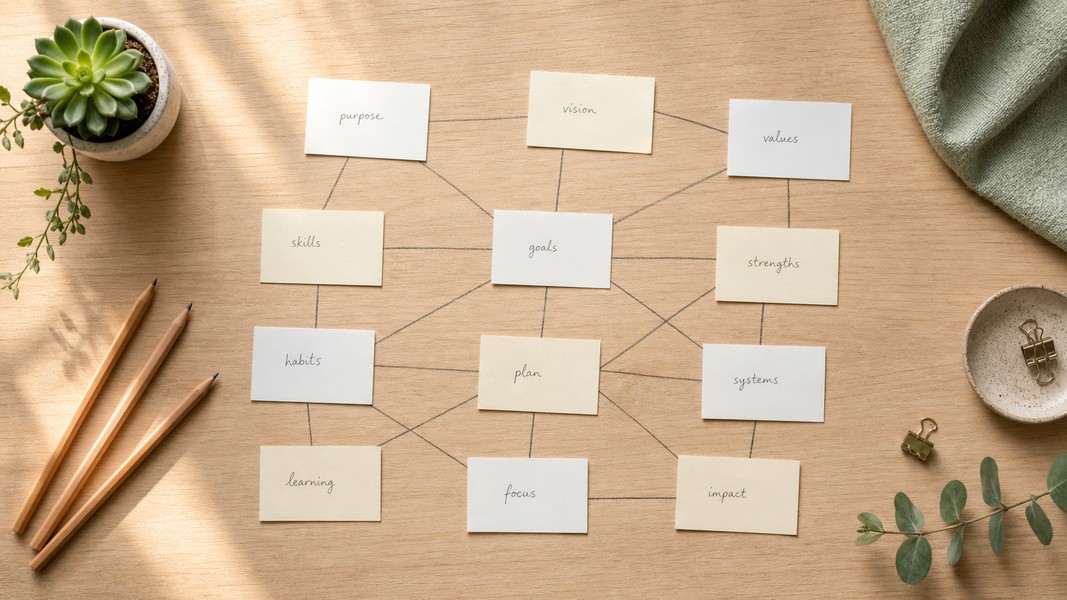
Zettelkasten: How to Build a Knowledge System
July 24, 2026
Learn how the Zettelkasten method works, why linked notes beat linear notebooks, and how to build your own knowledge system from scratch.

June 13, 2026
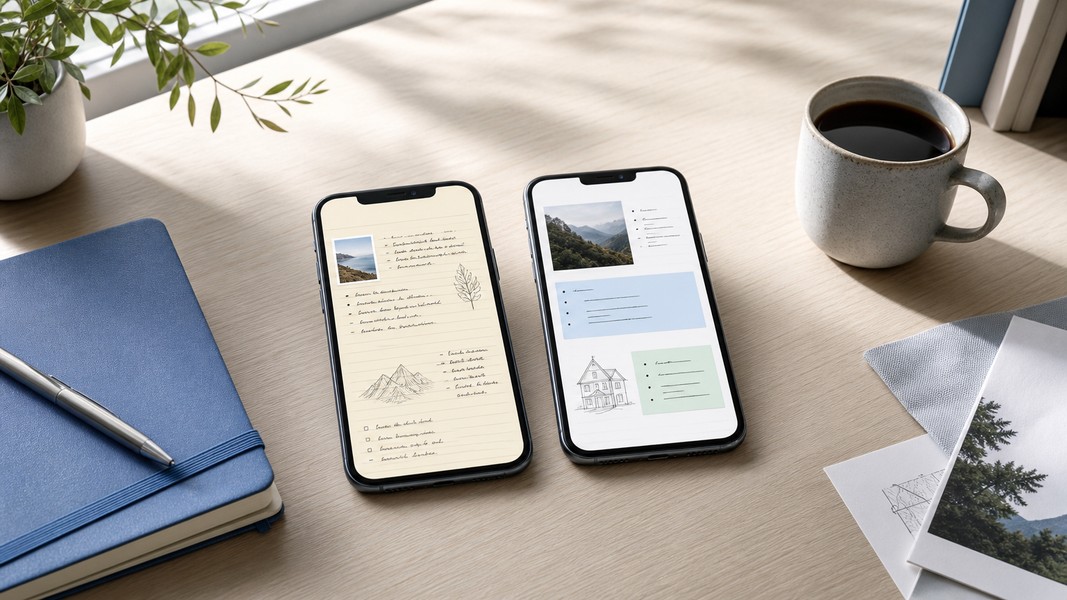
If you're looking for the best AI note-taking app and have narrowed it down to Turbo AI and Voice Memos, this comparison will help you decide. Both use AI to convert raw input into organized notes. Both target students and busy professionals. But they take meaningfully different approaches to how they capture content, what study tools they offer, and which workflows they actually support.
The short version: Turbo AI is built for learners who want visual summaries and podcast-style audio from their notes. Voice Memos is a broader platform with more input types, more study modes, and built-in tools for both students and professionals.
| Category | Turbo AI | Voice Memos |
|---|---|---|
| Best for | Visual and audio learners | Students + professionals |
| Input types | Voice, text, PDF | Voice, PDF, camera, YouTube, text |
| Study modes | Visual notes, podcast audio | Quiz, flashcards, deep research, mind maps |
| Action detection | Limited | Tasks, events, reminders, locations, contacts, notes |
| Language support | English-focused | 40+ languages with auto-translation |
| Accessibility | Standard | Dyslexic-friendly formatting |
| Platform | iOS, Android | iOS, Android, web |
Turbo AI is an AI study app that takes voice recordings, documents, or typed notes and converts them into visual summaries and podcast-style audio. The differentiator is the output format: where most AI note apps generate text outlines, Turbo AI generates content designed to be consumed visually or by listening on the go.
That focus makes it appealing for students who absorb information better through spoken explanation than through reading bullet-point text. Record a lecture, upload a document, or paste in notes, and the app restructures it into a clean visual layout or an audio episode you can replay while commuting or working out.
The strongest use case for Turbo AI is passive review: converting existing material into a format that suits audio and visual learners during revision sessions.
Where the limits show up is in active learning features. Most research on memory retention points to spaced repetition and retrieval practice as the most effective study techniques, not passive review. Turbo AI's emphasis on visual and audio output means it has weaker support for tools that test your knowledge, like quizzes or flashcard systems, which produce measurably better recall over time.
Turbo AI is primarily an individual tool, meaning there is limited emphasis on collaboration, team workspaces, or workflow integrations. It is mobile-first on iOS and Android, targeting students in a learning context rather than professionals managing shared meeting outputs.
Voice Memos is an AI-powered productivity and study platform that processes five types of input and transforms them into organized notes, study materials, and actionable outputs. It works at the intersection of academic study and professional productivity.
The multi-modal input sets the foundation. You can record lectures directly in the app, upload PDFs, photograph handwritten notes or whiteboards with your camera, paste a YouTube URL to extract transcript content, or type notes manually. All five methods feed into the same AI pipeline, so your workflow does not change depending on the source.
From there, Voice Memos generates four study formats: an interactive quiz drawn from your content, spaced-repetition flashcard decks, a deep research mode that expands your notes with additional context, and visual mind maps showing how concepts relate to each other. It also detects and categorizes six types of information automatically within any recording or document: tasks, events, reminders, locations, contacts, and general notes. That action detection layer is what extends its usefulness beyond the classroom and into professional workflows.
Voice Memos is available on web, iOS, and Android with real-time sync across devices. It supports transcription in 40+ languages with automatic translation, which makes it genuinely useful for international students studying in a second language. It also includes dyslexic-friendly formatting as a built-in feature, restructuring any processed content using patterns shown to improve readability for readers with dyslexia.
Input coverage is one of the clearest differences between the two apps.
Turbo AI covers the core scenarios: voice recording or audio upload, text input, and PDF uploads. That handles the most common student workflows, such as recording a lecture, pasting in notes, or uploading a reading for summary.
Voice Memos adds camera capture and YouTube URL processing on top of that baseline. Camera capture lets you photograph handwritten notes, whiteboard diagrams, or printed textbook pages and have the AI process the text directly. YouTube processing means you paste any lecture or tutorial video link, and the app extracts and processes the transcript automatically without requiring a screen recording.
For students mixing sources across a typical week, from recorded lectures to uploaded readings to video content, Voice Memos handles all of them in one place. For professionals dealing with PDFs, call recordings, and shared links, the same advantage applies. According to a broader review of multimodal learning approaches, the ability to process information from multiple input types supports stronger knowledge integration, which is exactly the workflow gap multi-modal capture tools are designed to fill.
This is where the two apps diverge most significantly, and where the choice matters most for exam preparation.
Turbo AI's outputs serve comprehension and review. Visual notes restructure content into a clean, scannable format. Podcast-style audio gives you an explanation you can listen to rather than read. Both are useful, especially during initial review of unfamiliar material or for auditory learners.
Voice Memos extends that into active learning tools. The interactive quiz generates questions directly from your content and tests your recall on demand. The flashcard system uses spaced repetition scheduling, which surfaces each card at the optimal interval for long-term retention rather than in a fixed rotation. Deep research mode expands your captured content with additional context and sources. Mind maps visualize concept relationships from any document or recording.
The practical difference is this: Turbo AI helps you absorb material passively, while Voice Memos gives you tools to actively test and reinforce what you have learned. Both play a role in a full study system, but students preparing for high-stakes exams or courses requiring memorization of large volumes of detail will find active recall tools deliver meaningfully better results than passive audio review.
For a deeper look at how these tools handle professional use, best AI note takers covers the leading options across meeting transcription and output quality.
Both apps can handle meeting recordings, but the output quality differs considerably for professional use.
Turbo AI converts a recorded meeting into a visual summary or audio recap. If you want a clean, listenable overview of what was discussed, that format works for personal review. It suits professionals who want to revisit a recorded call or training session in a condensed format.
Voice Memos adds intelligent extraction on top of transcription. Its AI automatically detects and categorizes six types of information within any recording: tasks, events, reminders, locations, contacts, and notes. When you record a client call, the app does not just produce a transcript. It pulls out the action items, flags follow-up dates, and identifies the contacts mentioned, without any manual tagging or review from you.
For client-facing roles in sales, consulting, or account management, that passive extraction turns meeting recordings into immediately actionable outputs. A meeting that produces five follow-up tasks and three contact additions is processed once rather than reviewed manually to extract those same items. Over a week of meeting-heavy work, that difference compounds.
Accessibility is where Voice Memos holds a unique position in the market.
The dyslexic-friendly formatting feature restructures any processed content using formatting patterns designed to improve readability for readers with dyslexia. This is built into the core product, not an add-on. No other major AI note-taking app currently offers this natively. For students with dyslexia, the friction of working with dense AI-generated text is significantly reduced without requiring manual reformatting.
Voice Memos supports transcription across 40+ languages with automatic translation into the user's preferred language. This is particularly useful for international students who attend lectures in one language and study in another. A student recording lectures in German and reviewing notes in English does not need a separate translation step.
Turbo AI operates primarily in English. That covers the majority of users but leaves international students and multilingual professionals without the same flexibility.
ADHD is another consideration. Voice Memos' record-and-review workflow reduces the cognitive load during lectures: you record and review later, rather than splitting attention between listening and note-taking in real time. That workflow matches how many students with ADHD function most effectively. To understand more about how AI note-taking apps work technically, the guide on how AI note-taking works explains the key architectural differences.
Turbo AI fits a specific learner profile well. If you primarily want to convert lecture recordings or study materials into a format you can listen to or scan visually, it delivers that cleanly. It works best for students who:
If your study workflow rarely involves exam preparation requiring flashcards or active recall practice, and your content is primarily in English, Turbo AI covers what you need without extra complexity.
Voice Memos serves a wider range of users. Students preparing for exams, studying in a second language, or working across multiple content types (lectures, PDFs, videos) will find the broader feature set essential rather than optional. Professionals who need action items and follow-up tasks extracted automatically from meetings will find genuine time savings that go beyond what a visual summary provides.
For students with ADHD or dyslexia, the built-in accessibility features reduce friction that affects daily study without requiring workarounds.
Voice Memos is the better choice for anyone who needs a single platform that handles capture, active study, and professional output across multiple contexts. The broader input coverage, four study modes, six action types, language support, and accessibility features give it meaningful depth that Turbo AI does not match.
Turbo AI and Voice Memos solve different problems. Turbo AI is built for learners who want audio and visual output from their study material. It does that well and cleanly, and for that specific use case, it is a focused tool worth using.
Voice Memos covers that same ground and extends well beyond it. Multi-modal input, active learning modes, intelligent action detection, 40+ language support, and accessibility features built into the core product make it a more complete system for both students and professionals.
Your choice depends on what you actually need. If podcast-style audio review is the primary goal, Turbo AI delivers it. If you want a full study and productivity system that handles everything from lecture capture to exam prep to professional meeting outputs, Voice Memos is the more capable option.
Discover more insights and tips to enhance your productivity
Learn how the Zettelkasten method works, why linked notes beat linear notebooks, and how to build your own knowledge system from scratch.
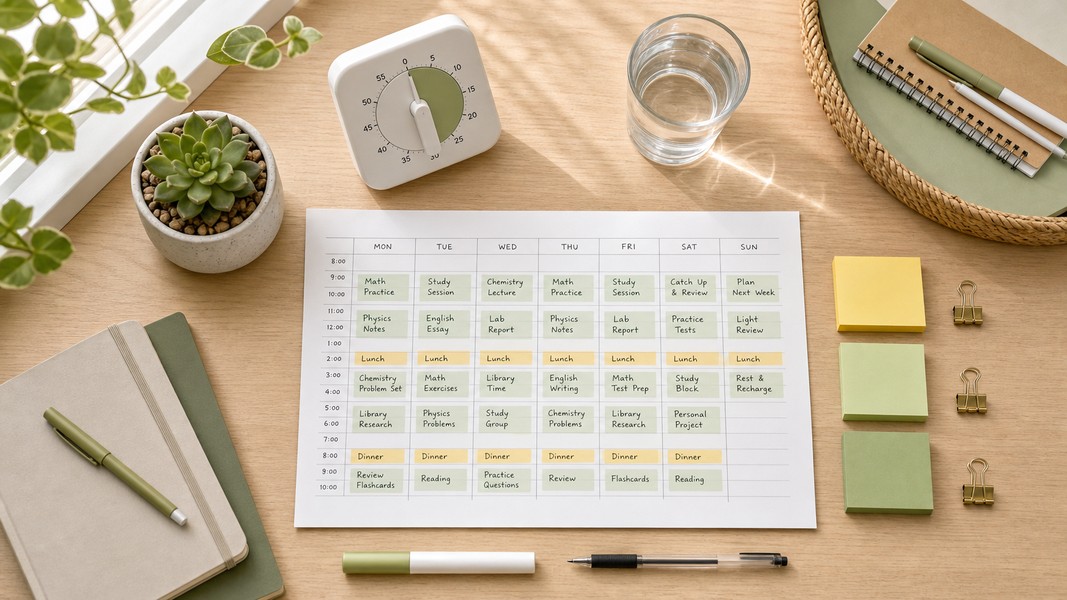
Struggling to manage your time as a student? These 7 evidence-backed tactics fix the real reasons students fall behind and waste hours.

Fathom AI is great for free Zoom notes, but it has real limits. Here are the best fathom ai alternatives for meetings, students, and multi-format capture.