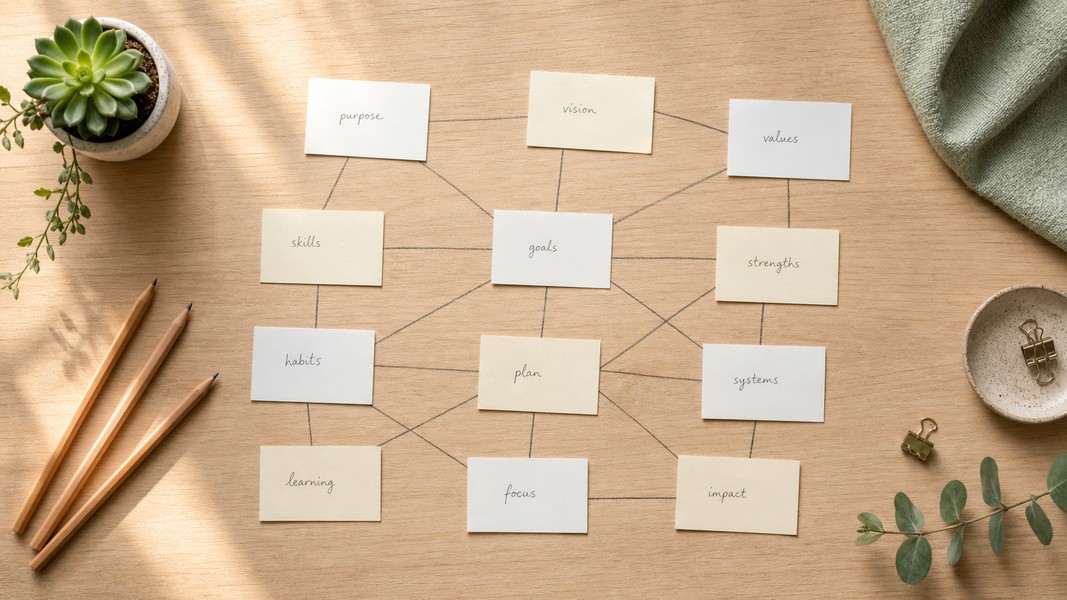
Zettelkasten: How to Build a Knowledge System
July 24, 2026
Learn how the Zettelkasten method works, why linked notes beat linear notebooks, and how to build your own knowledge system from scratch.

April 5, 2026
A good lecture recording app does more than capture audio. The best ones transcribe your recordings automatically, pull out key concepts, and connect directly to study tools like flashcards and quizzes so you never have to retype your notes. This post covers the 7 best lecture recording apps for students in 2026, evaluated on transcription accuracy, AI study features, free tier quality, and how well they fit into a real study workflow.
If you've been searching for a recording app because you struggle to keep up with fast-paced lectures, you're not alone. Research shows that 70% of students record their lectures but still struggle with review because raw audio files are hard to study from. The apps below solve that problem by turning recordings into structured, searchable, and usable study material.
| Rank | App | Best For | Free Tier |
|---|---|---|---|
| 1 | Voice Memos | Full study workflow with AI | Yes |
| 2 | Otter.ai | Real-time transcription | Yes (300 min/mo) |
| 3 | Notability | iPad audio + handwriting sync | Limited |
| 4 | GoodNotes | iPad handwriting-first | Limited |
| 5 | Notta | Free AI note-taking | Yes |
| 6 | Rev Voice Recorder | High-accuracy transcription | No |
| 7 | Apple Voice Memos | Basic recording, no AI | Yes |

Not all lecture recording apps deserve the same ranking. We tested each app against five criteria relevant to students:
Transcription accuracy is the baseline. An app that mishears technical terms in a biology or law lecture is a liability. We looked for apps consistently hitting 85-90%+ accuracy, especially with subject-specific vocabulary.
AI study features are what separate the best from the rest. Can the app generate summaries? Create flashcards from your recording? Produce quiz questions? These features turn passive recordings into active study aids, which research links to 20-30% better retention compared to reviewing raw audio.
Free tier quality matters because most students aren't paying for premium tools in every category. We prioritized apps with genuinely useful free tiers, not crippled trials.
Cross-platform support determines whether the app works on your iPhone, Android, Mac, and the web without losing your recordings. Cloud sync is non-negotiable for students who move between devices.
Study workflow integration covers how well the app connects to downstream study habits: does it export to flashcard tools, let you search transcripts, or let you organize recordings by course?
Voice Memos stands apart from every other app on this list because it treats the recording as the beginning of a workflow, not the end. Once you record or upload audio, the AI transcribes it in over 40 languages, then automatically identifies and categorizes six types of information: tasks, events, reminders, locations, contacts, and notes. You don't need to go back through the transcript and highlight action items. The app does it for you.
For students, the study features are the real differentiator. After any recording, you can generate flashcard decks with spaced repetition scheduling, create a quiz to test yourself on the lecture content, build a mind map of key concepts, or trigger deep research mode to expand on what was covered. These aren't separate tools you export to. They're built directly into the app, so you go from recorded lecture to ready-to-study material in a few taps.
The transcription handles multilingual lectures particularly well, which is valuable for international students or anyone in a foreign language program. You record in the lecture's language and translate the transcript automatically.
Voice Memos also processes more than audio. You can feed it a PDF of your textbook, a YouTube link to a lecture recording, or a photo of your handwritten notes, and the same AI workflow applies. This makes it the most versatile input-to-study tool on this list.
The app runs on iOS, Android, and web, with real-time sync across all devices.

The Otter.ai platform is the most established name in lecture and meeting transcription, and for good reason. Its real-time transcription hits around 89% accuracy across a range of accents and speaking speeds, with speaker identification that labels different voices automatically. If you sit in a seminar where multiple professors or classmates speak, Otter marks each speaker separately in the transcript.
The keyword search is practical for exam review. You can search your transcript for "mitochondria" or "consideration in contract law" and jump directly to the moment it was discussed rather than scrubbing through an audio file. Otter AI Chat, which was updated in 2025, lets you ask questions about your transcript in natural language, so you can type "what were the three main arguments from today's lecture?" and get a summary pulled directly from your recording.
The free tier provides 300 minutes of transcription per month, which covers a full week of lectures for most students. The main limitation is that the free tier doesn't generate study aids. You get the transcript and summaries, but not flashcards or quizzes. If you want to turn your Otter transcript into study materials, you're exporting to another tool.
For students who just need excellent transcription and searchable notes without the full study workflow, Otter.ai is a reliable choice. It's particularly strong for AI transcription apps users already familiar with the category.
Notability is built for iPad users who prefer handwriting their notes. You write with an Apple Pencil, and the app records audio in sync with your writing. During playback, you can tap any word in your handwritten notes and the audio jumps to the exact moment you wrote it. It's a genuinely useful review feature for visual learners who want to connect written notes to spoken context.
The downside is that Notability doesn't transcribe automatically. The audio-sync feature is powerful for review, but you still have to read your own notes rather than searching a text transcript. There are no AI study features for generating flashcards or quizzes from recordings.
For students already invested in handwritten notes on iPad, Notability is the best app for adding audio context to existing notes. For students who want their recordings to generate study materials, it's not the right fit.
GoodNotes takes a similar approach to Notability with a strong emphasis on handwritten notes and Apple Pencil support. The iPad experience is polished, and the notebook interface appeals to students who want their digital notes to feel like paper.
Audio recording in GoodNotes is more basic compared to Notability. There's no AI transcription, no study tool generation, and no speaker identification. It records alongside your notes and lets you play back, but the audio is passive storage rather than an active feature.
Where GoodNotes excels is in the notebook experience itself. The organizational system, template library, and PDF annotation tools are strong. Students who primarily want a digital notebook and use audio recording occasionally will find GoodNotes comfortable to work in.
The Notta app is an AI meeting and lecture note-taker with a solid free tier. It supports real-time transcription, speaker identification, and generates summaries from recordings. The interface is cleaner than Otter.ai, and the summary generation is useful for students who want a quick recap of what was covered without reading the full transcript.
The free tier has limits on monthly transcription minutes and summary generation. Notta positions itself primarily for professional meetings, but the core features work well for student use. If you're on a tight budget and need AI-generated summaries beyond basic recording, Notta is worth trying before upgrading to a paid tool.
It lacks the flashcard and quiz generation you get from Voice Memos, but as a free-first transcription and summarization tool, it's one of the better options available.
Rev Voice Recorder takes a different approach from every other app on this list. Instead of AI-only transcription, it offers a hybrid model where trained human transcriptionists review the AI output for difficult recordings. The result is near-perfect transcription accuracy, which matters when you're recording technical lectures in medicine, law, or engineering where terminology is specialized and errors are costly.
The tradeoff is that human transcription is pay-per-use, which makes it expensive for everyday lecture recording. Rev makes more sense for high-stakes recordings like thesis presentations, key research meetings, or guest lectures you need verbatim accuracy on.
For everyday lecture recording where you need affordable, automated transcription with study tool integration, Rev is overkill. It belongs in your toolkit for important recordings, not your weekly class schedule.
Apple's built-in Voice Memos app deserves a mention because it's free, pre-installed on every iPhone, and handles basic recording reliably. If you just need to capture audio with no other features, it works without any setup.
Where it falls short: there's no automatic transcription, no AI-generated notes, no flashcards, no search. On iOS 17 and later, Apple added basic transcription for voice memos, but it's limited to English, runs after the fact rather than in real time, and doesn't integrate with any study tools. For a first-year student recording their first few lectures, Apple Voice Memos is acceptable. For anyone serious about using recordings as study material, the lack of AI features quickly becomes a friction point.
Before downloading an app, match it to how you actually study. A few questions help narrow the choice:
Do you study from text or audio? If you review by reading and searching, you need transcription. If you prefer listening while reviewing handwritten notes, audio-sync tools like Notability work better.
Do you need AI study aids? Flashcards and quizzes built from your recordings are the fastest way to apply active recall to lecture content. AI note takers with built-in study modes eliminate the export-and-import step entirely.
How many minutes do you record per month? A student taking 15 hours of classes weekly could easily record 10-15 hours of audio. Free tier limits of 300 minutes per month cover roughly two weeks of full-time lecture recording. If you'll exceed that regularly, a paid plan makes more financial sense than juggling multiple free accounts.
What devices do you use? iPad-first students with an Apple Pencil have different needs than students using Android phones or switching between a laptop and phone. Make sure the app you choose syncs seamlessly across your devices.
Do you need multilingual support? International students or anyone studying foreign language content should prioritize apps with multi-language transcription rather than English-only tools.
Recording is only the first step. Students who improve their exam outcomes aren't just playing back audio, they're using recordings to build retrieval practice. Research consistently shows students using AI-structured review from transcripts score measurably higher on recall tests than students relying on passive listening.
A simple workflow: record the lecture, review the auto-generated summary within 24 hours to consolidate the main ideas, then spend 15-20 minutes testing yourself with quiz questions or flashcards generated from the recording. This converts passive captured audio into active spaced repetition, which is how long-term retention actually works.
The apps that support this workflow end-to-end, from recording straight through to flashcard review without leaving the app, will save you the most time and produce the best results. Voice Memos handles the full pipeline: record, transcribe, generate study materials, and test yourself in a single workflow.
The best lecture recording app depends on how you study and what you need from your recordings. If you want transcription only, Otter.ai and Notta are both strong free options. If you're on iPad and prefer handwritten notes, Notability's audio-sync feature is well-built. If you need human-level accuracy for critical recordings, Rev is worth the cost for selective use.
For students who want recordings to automatically become study material, including flashcards, quizzes, and mind maps, Voice Memos offers the most complete workflow in one app, with multi-language support and no need to export to separate study tools.
Discover more insights and tips to enhance your productivity
Learn how the Zettelkasten method works, why linked notes beat linear notebooks, and how to build your own knowledge system from scratch.
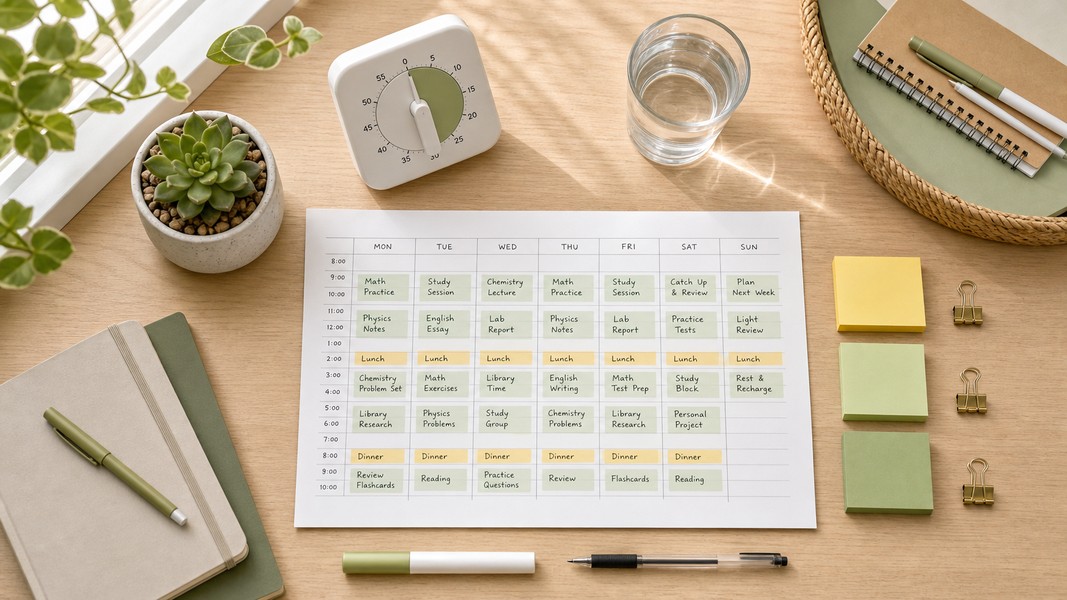
Struggling to manage your time as a student? These 7 evidence-backed tactics fix the real reasons students fall behind and waste hours.
Fathom AI is great for free Zoom notes, but it has real limits. Here are the best fathom ai alternatives for meetings, students, and multi-format capture.