
One-on-One Meeting Template: Agenda, Questions & Guide
July 18, 2026
A complete one on one meeting template with agendas, discussion questions, and follow-up formats to help managers run more effective 1:1s.


July 19, 2026
Cognitive load theory is the science behind why some study sessions click and others leave you more confused than when you started. It describes how your working memory has limited capacity, and when that capacity gets overwhelmed, learning breaks down regardless of how much time or effort you put in.
Most students assume the problem is focus, motivation, or intelligence. Cognitive load theory suggests the real culprit is usually design: the way material is presented, structured, and reviewed. Understanding this theory doesn't just explain past frustrations. It gives you a practical framework for redesigning how you study, take notes, and review material.
Cognitive load theory explains how the design of instruction affects your ability to learn, based on the limits of working memory. Psychologist John Sweller introduced the concept in the late 1980s, and it has since become a cornerstone of instructional design and educational psychology.
The core idea is that your brain operates with two very different memory systems. Working memory handles active, in-the-moment processing but can only juggle a small number of unfamiliar elements at once. Long-term memory, by contrast, can store large amounts of organized knowledge indefinitely. Effective studying moves information from working memory into long-term memory through repeated, meaningful processing.
When working memory gets overloaded, that transfer fails. You might read a chapter three times and still retain nothing, not because you're a poor learner, but because the way you engaged with the material gave your brain too much to handle at once.
Cognitive load isn't a single thing. Researchers identify three distinct types, each with a different cause and a different solution.
| Type | Source | Effect on Learning |
|---|---|---|
| Intrinsic | The inherent difficulty of the material itself | Necessary; can be managed but not eliminated |
| Extraneous | Poor presentation, clutter, or disorganized structure | Harmful; wastes working memory on non-learning tasks |
| Germane | Productive effort building schemas and connections | Helpful; supports long-term retention |
Intrinsic load comes from the topic itself. Learning organic chemistry mechanisms or legal case structures for the first time demands significant mental effort because many elements must be understood together. You can't eliminate intrinsic load, but you can control how much you expose yourself to at once.
Extraneous load comes from the format, not the content. A cluttered lecture slide, a diagram separated from its labels, or notes filled with irrelevant detail all add friction that consumes working memory without contributing to learning. This is the most fixable type of load.
Germane load is the productive kind: the effort you spend connecting new ideas to what you already know, building the mental schemas that make future learning easier. Good study design preserves working memory for germane load by reducing the other two.
Cognitive overload rarely happens because material is too hard. It usually happens because the load is poorly distributed, and a few patterns are especially common.
The first is split attention. When related information lives in different places, such as a diagram on one page and its explanation on another, you burn working memory integrating the two instead of understanding either. This is the split-attention effect, and it shows up constantly in student notes.
The second is cramming too much at once. When you tackle five new concepts in a single sitting, the combined intrinsic load across all of them can exceed what working memory can handle. None of the concepts get processed deeply enough to stick.
The third is redundancy. When the same information is presented in multiple overlapping formats at the same time, like a transcript while an instructor reads it aloud verbatim, both streams compete for attention and neither lands effectively.
Each of these problems shows up in how you structure your study sessions. Each also has a specific fix.
These strategies target extraneous load, freeing working memory for the processing that actually builds understanding.
Study one concept family at a time. Mixing unrelated topics within a single session stacks intrinsic load from multiple subjects on top of each other. Blocking time by subject keeps load manageable and gives each topic the deep processing it needs before you move on.
Use worked examples before independent practice. For unfamiliar material, solving a problem from scratch requires you to search broadly for a method while simultaneously understanding the concept. Studying worked examples first removes that search burden and lets you focus on the logic of the solution. This approach is especially effective when you're new to a topic.
Put related information in one place. When building your notes, keep diagrams, definitions, and explanations together rather than spread across separate pages or tabs. The goal is to eliminate any situation where your brain has to hold two separate sources in mind while trying to understand one concept. Eliminating split attention reduces the cognitive friction of review and means every minute of study time goes toward understanding rather than information logistics.
Strip out what isn't needed. Redundant text, decorative elements, and tangential detail all create extraneous load. When preparing materials for review, remove anything that doesn't contribute to the specific learning goal. A focused, clean study sheet consistently outperforms a dense, comprehensive one.
Match the format to your expertise level. As you build knowledge in a subject, you need less scaffolding. The guided structures and worked examples that help beginners can actually slow down more advanced learners because they've already internalized the patterns. This is called the expertise reversal effect, and it means your study approach should evolve as your knowledge deepens.
Tools like Voice Memos can help with the fourth and fifth points. When you process a lecture recording or PDF, the AI condenses the content into structured notes, removing redundancy and surfacing key points rather than returning a verbatim transcript to sift through.
The notes you take during a lecture or reading aren't just a record. They're a study material you'll return to, and their format determines how much cognitive work your future self has to do to learn from them.
Wall-of-text notes increase extraneous load during review. Continuous prose without structure forces you to scan for relevant ideas instead of processing them. Chunked notes, where related ideas are grouped into small, clearly labeled units, reduce that friction. Your working memory can focus on understanding rather than searching.
Dual coding theory and cognitive load theory complement each other here. Pairing concise text with a relevant diagram reduces load by distributing information across verbal and visual channels. But if the diagram and the text are disconnected or redundant, they create split attention rather than reduce it. Integration matters more than the format alone.
The timing of study sessions also matters. Reviewing material across multiple shorter sessions reduces the pressure of handling everything at once. Active recall fits naturally into this: testing yourself on small chunks of material at spaced intervals is more efficient than re-reading dense notes because it keeps working memory load manageable while also strengthening retrieval.
Voice Memos applies this same logic through its flashcard and quiz modes. Rather than presenting all the content from a lecture at once, the AI breaks it into discrete review items, keeping each session focused and within working memory limits. When you study in this format, you're applying CLT principles without having to manually restructure anything.
One practical takeaway that applies regardless of which tools you use: separate capture from organization. During class or a reading session, focus on getting the essentials down. Afterward, reorganize and condense those notes into a format that supports review. That second pass is where the meaningful cognitive work should happen, not during the chaotic process of capturing information under time pressure.
The principle extends to how you review, too. Re-reading a full set of notes in one sitting is both high in total load and low in germane load. Replacing that habit with targeted retrieval practice on specific chunks, whether through flashcards, practice questions, or self-explanation, reduces the load per session while increasing the quality of processing. You study less material at once but engage with it more deeply.
Cognitive load theory reframes learning struggles as a design problem rather than an ability problem. When working memory gets overloaded, comprehension breaks down regardless of how motivated or capable you are. The fix isn't more effort; it's better structure.
The three load types give you a clear lens for diagnosing what's going wrong in your study sessions. Intrinsic load comes with the territory of learning anything difficult. Extraneous load is unnecessary friction that can and should be reduced. Germane load is the productive effort you're building toward: deep understanding that transfers into long-term memory.
Applying these ideas to how you take notes, build study materials, and time your review sessions won't make hard content easy. Intrinsic difficulty is real, and some subjects are genuinely demanding. But a large portion of study frustration comes from extraneous load that shouldn't be there. Fixing that is entirely within your control, and it doesn't require more hours at the desk.
Discover more insights and tips to enhance your productivity
A complete one on one meeting template with agendas, discussion questions, and follow-up formats to help managers run more effective 1:1s.

The best voice notes app does more than record. Compare top AI-powered picks for students and professionals, including transcription, summaries, and study tools.
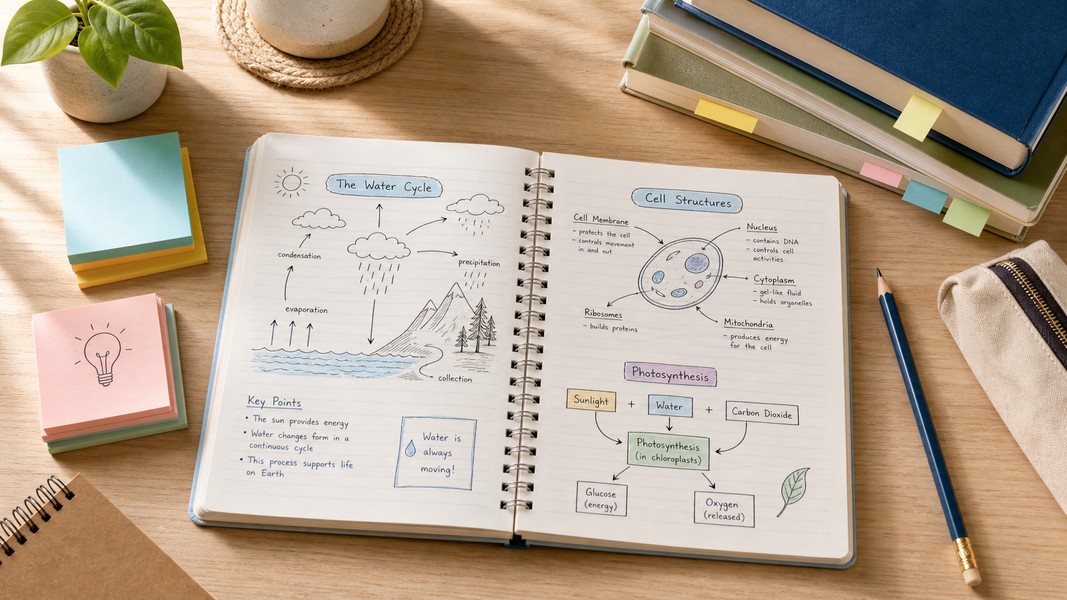
Dual coding theory shows that pairing text with visuals improves memory and recall. Learn how to use it with diagrams, mind maps, and structured notes.