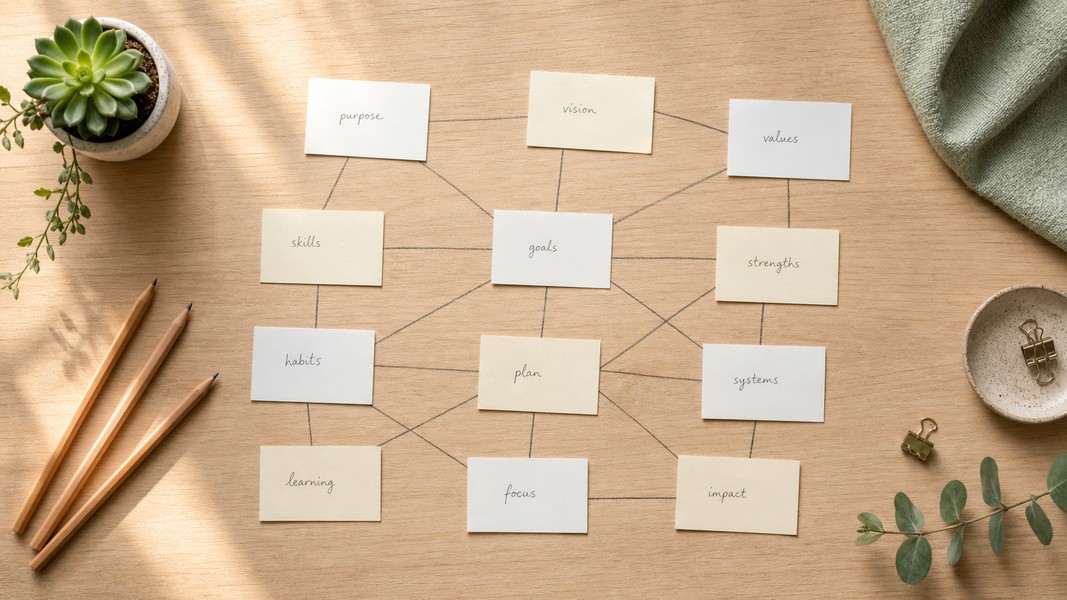
Zettelkasten: How to Build a Knowledge System
July 24, 2026
Learn how the Zettelkasten method works, why linked notes beat linear notebooks, and how to build your own knowledge system from scratch.


March 31, 2026
The best dyslexia-friendly fonts for students include OpenDyslexic, Lexend, Arial, Verdana, Atkinson Hyperlegible, Comic Sans, and Trebuchet MS. Each one reduces the visual stress that makes reading harder for dyslexic readers by widening letter spacing, clarifying character shapes, and opening up letterforms.
Font choice matters more than most students realize. For someone with dyslexia, switching from a default system font to one designed for readability can meaningfully reduce reading fatigue and improve comprehension. The difference comes down to specific typographic features, not just personal preference.
This guide covers each of the seven best options, explains the design principles behind them, and shows how to apply them to your notes and study materials.
Dyslexia affects roughly 20% of the population. It changes how the brain processes written language, which can cause letters to appear to flip or blur, make similar characters hard to distinguish (b/d, p/q, m/n), and slow reading speed overall. These aren't attention or intelligence issues. They're the result of how visual letter information gets processed.
Typography directly influences how much work your brain does when decoding text. Research highlights several features that make reading easier for dyslexic students: open counters (the enclosed spaces in letters like a, e, and c), generous letter spacing to prevent crowding, and clean sans-serif forms without decorative strokes that add visual noise.
The British Dyslexia Association recommends fonts with consistent letter height, heavier stroke weight, and wide spacing between both letters and lines. They also advise a minimum body text size of 16px and a line height set to at least 1.5 times the font size. These adjustments apply regardless of which font you choose.
Some AI note-taking tools go further than just displaying text in a chosen font. Voice Memos, for example, includes a dyslexic-friendly formatting mode that restructures note output using research-backed spacing and formatting patterns, so every captured note arrives in an accessible format without any manual adjustment.
Not every font on this list was designed specifically for dyslexia. Some, like Arial and Verdana, earned their place through general readability research and years of real-world use. Others, like OpenDyslexic and Atkinson Hyperlegible, were built with accessibility as their primary goal.
OpenDyslexic is the most recognizable font designed specifically for dyslexic readers. Abelardo Gonzalez created it as a free, open-source tool, and the design principles address the most common challenges directly. Each letter has a weighted, heavy bottom, which makes it harder for characters to appear flipped or rotated when reading. The heavy base anchors each letter visually, giving your brain a consistent orientation cue as your eyes move across a line.
The letter spacing is generous by default, and each character is designed to look visually distinct from its neighbors. The b/d and p/q pairs, which cause the most confusion for many dyslexic readers, have noticeably different silhouettes.
You can download it for free from OpenDyslexic's website and install it on any device. It's also available as a browser extension that can reformat any webpage's text in real time, making it useful beyond documents and notes.
Lexend is the top recommendation for most students because it's free, backed by reading proficiency research, and installs in seconds through Google Fonts. The font was developed with letter spacing calibrated to minimize visual stress, tested against readability metrics, and optimized to reduce the cognitive load of decoding text.
Unlike fonts that are simply clean and uncluttered, Lexend was actively measured for readability outcomes. The spacing decisions weren't based on aesthetic preference but on what made reading faster and more accurate across test groups.
There are several variants in the Lexend family: Lexend Deca, Lexend Giga, Lexend Mega, and others. Each has a different level of letter spacing. Lexend Deca works well for most body text in documents and notes. In Google Docs, add it from the font menu under "More Fonts" and set it as your default to apply it automatically to new documents.
Arial comes pre-installed on almost every device, which makes it one of the most practical options for students who need an accessible font without installing anything. Its rounded, open letterforms and consistent character spacing make it easy to distinguish individual letters even at small sizes. There are no decorative strokes creating visual noise, and the open counters in letters like a, e, and c help them read as clearly distinct shapes.
Arial was not designed specifically for dyslexia, but it meets most of the criteria research identifies as beneficial: a clean sans-serif structure, consistent x-height, and adequate letter spacing. It performs well across every platform and application, from word processors to note-taking tools, with no setup required.
For students who want to reduce reading friction immediately and can't install custom fonts, Arial is a solid starting point that's available everywhere.
Matthew Carter designed Verdana for Microsoft in the 1990s with a specific brief: create a font that stays legible at small sizes on low-resolution screens. To solve that problem, he built in generous letter spacing, a large x-height (which makes lowercase letters proportionally tall relative to capitals), and wide character forms with open counters. These features also happen to make Verdana well-suited for dyslexic readers.
Verdana's wide default letter spacing is one of its most useful features for students. Research on letter crowding consistently shows that tight spacing is a significant source of reading errors, because nearby letters interfere with each other's recognition. Verdana's spacing almost overcorrects for this, making it one of the most open standard fonts available.
It comes pre-installed on Windows and macOS and serves as a reliable option in documents, presentations, and digital notes. For long reading sessions, Verdana's generous spacing reduces eye fatigue over time.
The Braille Institute created Atkinson Hyperlegible with one clear goal: maximize letter differentiation. The font was designed for people with low vision, but its design principles map directly onto what makes reading easier for students with dyslexia. Every character pair commonly confused (0 and O, 1 and I and l, b and d) was given deliberately distinct visual features to remove ambiguity.
This means each letter has unique shape decisions, optimized stroke widths, and spacing that prevents adjacent characters from appearing to merge. The font looks clean and professional but includes dozens of small typographic choices that make individual letters instantly distinguishable at a glance.
Atkinson Hyperlegible is free to download from the Braille Institute's website and is available on Google Fonts. For students who specifically struggle with letter reversals, the b/d swap in particular, this font addresses that issue at the design level.
Including Comic Sans on a dyslexia font list seems counterintuitive, but there's documented support for it. The font's handwriting-inspired design gives each letter an irregular, asymmetric shape. Those irregular shapes are exactly what prevents the b/d/p/q confusion that comes from geometric sans-serif fonts, where letters are often near mirror images of each other.
Comic Sans was never designed with accessibility in mind. But its casual, uneven letterforms create high visual differentiation between characters, which is one of the core principles behind dyslexia-friendly font design. Many dyslexic students report finding it noticeably easier to read than more polished typefaces.
It works best in personal study materials. Notes for yourself, flashcards, rough outlines. For academic submissions or presentations, most students switch to something more formal. The readability benefit is real, and matching the font to the context matters.
Trebuchet MS shares many of Arial's readability strengths with slightly more character variation between letters. The letterforms are clean and unadorned, each claiming enough visual space to stand apart from its neighbors. Consistent stroke weights and a wide default spacing make it easy to read across different screen sizes and zoom levels.
For students who find Arial too neutral or Verdana too wide, Trebuchet sits usefully between them in terms of character density. It's pre-installed on most Windows and macOS devices, works reliably in documents and presentations, and holds up well at both body text sizes and smaller captions.
Changing fonts is straightforward in most tools. In Google Docs, open the font dropdown, click "More Fonts," and search for Lexend or Atkinson Hyperlegible to add them. To set one as your default, apply the font to any text, then go to Format > Paragraph Styles > Normal Text > Update "Normal text" to match. New documents will use it automatically.
In Microsoft Word, install OpenDyslexic by downloading the .otf file from its official site and running the installer. After installation, it appears in Word's font menu like any other option. You can set it as the default through the font dialog and save it as the Normal style template.
On mobile devices, font options depend on the app. Many iOS and Android note-taking apps let you set a preferred font in their display settings. For apps with limited font control, a system-level accessibility setting like Bold Text on iOS can make any font read more clearly.
Voice Memos takes a different approach to accessibility. Rather than requiring you to manually format notes, it includes a built-in dyslexic-friendly formatting mode that restructures captured content, whether transcribed from voice, uploaded as a PDF, or scanned from a photo, using spacing patterns and formatting choices designed to reduce reading friction. This applies automatically without needing to change fonts in each document individually.
For students who combine accessible formatting with study techniques like active recall, the goal is the same: spend mental energy on understanding content, not on decoding it. Reducing the effort of reading frees up cognitive resources for the actual learning.
Whatever app you use, three settings make a consistent difference across all of them: set body text to at least 16px, line height to 1.5x the font size, and limit line width to roughly 70-80 characters per line. These three adjustments alone can improve reading comfort significantly, regardless of which font you've chosen.
Dyslexia-friendly fonts reduce reading friction through specific typographic features: open letterforms, generous letter spacing, distinct character shapes, and consistent letter height. Lexend and Atkinson Hyperlegible are the strongest options for most students, and both are free. For students who need an accessible font without installing anything, Arial and Verdana are already on every device and meet most of the same criteria.
The best approach is to test two or three options in a document you're actively using and see which one feels most natural. Dyslexia affects people differently, so the font that works best for you may not match someone else's experience. Start with Lexend or OpenDyslexic, keep the font size at 16px and line height at 1.5x, and adjust from there as you develop a sense of what reduces your reading fatigue most.
Discover more insights and tips to enhance your productivity
Learn how the Zettelkasten method works, why linked notes beat linear notebooks, and how to build your own knowledge system from scratch.
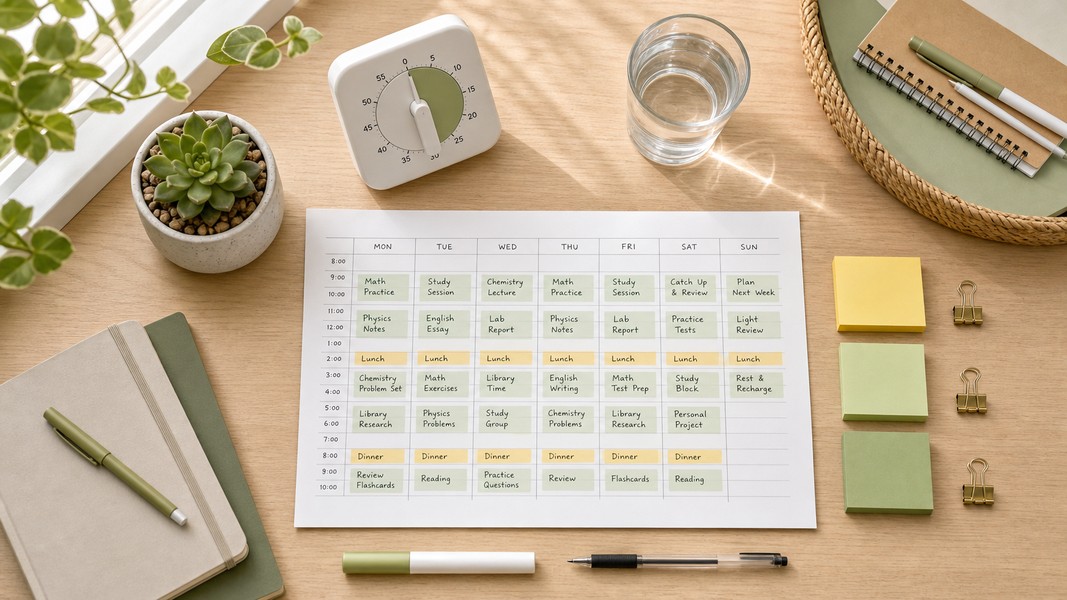
Struggling to manage your time as a student? These 7 evidence-backed tactics fix the real reasons students fall behind and waste hours.
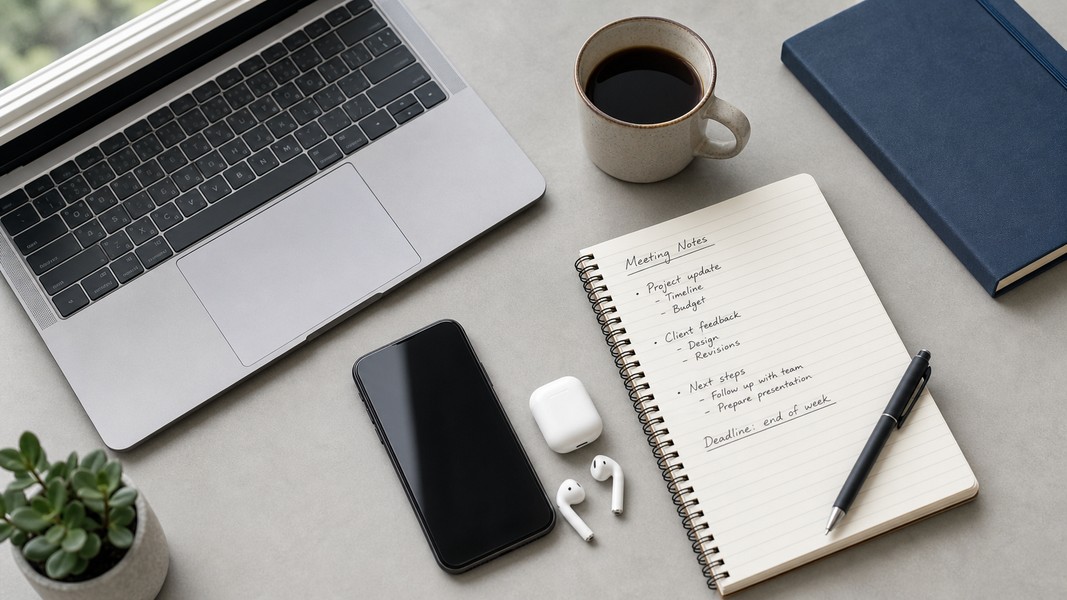
Fathom AI is great for free Zoom notes, but it has real limits. Here are the best fathom ai alternatives for meetings, students, and multi-format capture.