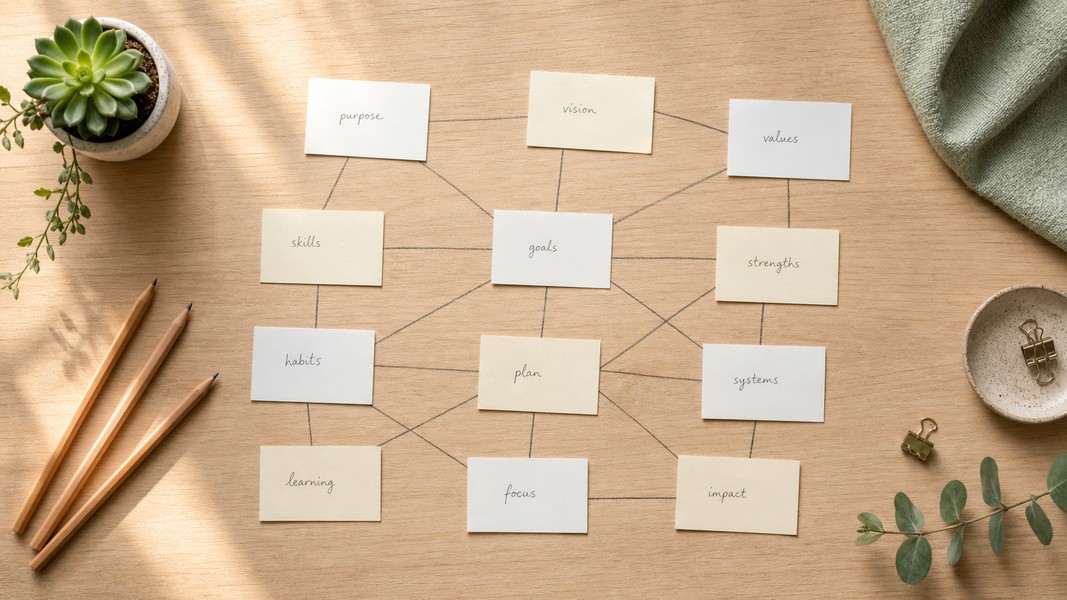
Zettelkasten: How to Build a Knowledge System
July 24, 2026
Learn how the Zettelkasten method works, why linked notes beat linear notebooks, and how to build your own knowledge system from scratch.

May 15, 2026
Taking notes from a textbook is harder than it looks. You control the pace and the structure is right there on the page, yet most students still finish a chapter with pages of copied sentences they'll barely use before the exam.
The problem is not effort. It is method. Passive strategies like highlighting and copying text word-for-word create a surface-level familiarity that fades fast. Active note-taking forces you to process, paraphrase, and connect ideas, which is what actually builds recall. This guide covers six methods for how to take notes from a textbook, each suited to different subjects and learning styles.
Textbooks and lectures are different environments. In a lecture, you work at the professor's pace with no chance to pause. With a textbook, you control everything: the speed, the depth, the order.
That control is an advantage when you use it deliberately. Textbooks already signal what matters through headings, subheadings, bold terms, and end-of-chapter summaries. The best note-taking methods work with that structure rather than ignoring it.
The other challenge is density. A single biology chapter or constitutional law casebook packs more meaning per page than most lecture slides. The University of Reading's study advice team warns that passive note-taking leads to large, disorganized notes that force students to spend double the time going back through them just to find what is actually important.
There is also a reference risk specific to textbooks. If you are taking notes for papers or essays, record page numbers and source details as you read. Retracing citations later wastes time and creates plagiarism risk.
The Cornell method was built for lectures, but it adapts cleanly to textbook reading. The page divides into three zones: a narrow left column for cues and questions, a wider right column for notes, and a bottom strip for a brief summary.
For textbooks, the workflow is: before reading, convert each section heading into a question and write it in the left column. "Cellular Respiration" becomes "What is cellular respiration and how does it produce ATP?" Read the section and fill the right column in your own words, not copied text. After each section, write two to three sentences at the bottom summarizing the main point.
The left column functions as a built-in quiz tool. Cover the right side, read each cue, and try to answer it from memory. This is retrieval practice baked directly into the method.
Cornell works well for humanities, social sciences, biology, and any course with essay exams or long-answer questions. For a full walkthrough and templates, see the guide to the Cornell Notes method.
The outline method mirrors the book's own hierarchy. Main headings become top-level entries, subheadings become indented tiers below those, and supporting details sit one level further in.
You are not inventing structure; you are compressing and personalizing the structure already on the page. Skim a chapter first to build a skeleton outline, then fill in content as you read. This keeps you anchored to what each section is actually about rather than copying everything that looks important.
Abbreviations help move quickly: an arrow for cause-and-effect, "ex:" before examples, "vs." for comparisons. After each major section, add a "Q:" line with one question you would expect to see on an exam. These become your review prompts later.
The outline method is strongest for history, psychology, intro-level STEM, and economics: any subject with well-structured chapters that build from general principles to specific detail. The full breakdown of the outline method covers when to use it and how to adapt it for different chapter formats.
SQ3R is a reading framework that turns note-taking into a question-and-answer cycle. The five steps are Survey, Question, Read, Recite, and Review.
Survey the chapter before reading: scan headings, diagrams, the chapter summary, and bolded terms. This gives your brain a structure to attach new information to. Then convert each heading into a question before reading that section. "Classical Conditioning" becomes "What is classical conditioning and how does Pavlov's experiment demonstrate it?"
Read to answer those questions, then close the book and try to answer from memory (Recite). What you cannot recall is what you actually need to study. Review later by turning your Q&A pairs into flashcards or merging them into a Cornell cue column.
The Recite step is the most skipped and the most valuable. According to retrieval practice research, actively pulling information from memory is far more effective for long-term retention than re-reading the same material.
SQ3R pairs naturally with Cornell Notes. The pre-reading questions become the left-column cues, and reading fills in the right column. Together, they cover both the comprehension and the self-testing phases in a single reading session.
Mind maps work from the center outward. Write the main chapter topic in the middle of the page, draw branches for each major subtopic, and add smaller branches for supporting details and examples.
The format keeps an entire chapter on one page and makes relationships between concepts visible at a glance. When a branch is sparse, that is where your understanding is weakest; the map shows gaps that a linear outline can hide.
Mind maps are particularly effective for subjects where relationships matter more than sequence: cell biology, ecosystems, circulatory systems, historical cause-and-effect chains. A single map of "The Endocrine System" can show glands, hormones, target organs, and feedback loops together in a way that an outline cannot.
For procedural subjects like calculus or organic chemistry, mind maps are less useful. A formula or reaction mechanism does not lend itself to branching the way a concept network does.
The sentence method is the simplest: write each important idea as a short, numbered sentence. Do not try to organize while reading. Capture every critical claim, definition, and argument in plain language, one sentence per idea.
This is the method for dense, argument-heavy content: legal casebooks, medical textbooks, philosophy, and advanced theory. When a paragraph contains three claims you need to keep straight, recording one sentence per claim prevents anything from slipping through.
The value compounds in the post-processing step. After finishing a section, group your sentences under headings, cut the ones you will not need for the exam, and convert the remaining sentences into a Cornell outline or flashcards. The first pass captures; the second pass compresses.
Common abbreviations help you keep pace: "b/c" for because, "w/" for with, arrows for cause-and-effect, and up/down symbols for increases or decreases.
If your textbook is a PDF or you can scan pages, AI tools can cut the time it takes to set up a note structure.
The core workflow is: upload the PDF chapter, ask the AI to generate an outline of headings and subheadings, and use that skeleton as your Cornell cue column or outline framework. Then read the actual chapter yourself and fill in notes. After reading, ask the tool to generate practice questions from the chapter.
Voice Memos handles this through its PDF upload and camera scan features. Upload a chapter PDF and the AI extracts key structure, generates a summary, and creates quiz questions automatically. Switch to flashcard mode and those questions become a spaced repetition deck you can review over the following days. For printed textbooks, photographing pages with the camera input runs the same process on scanned content.
AI summaries are a starting point, not a replacement for reading. Using a generated summary without reading the chapter is passive learning with extra steps. The AI should handle structural scaffolding; your brain should do the actual reading, paraphrasing, and connecting. Voice Memos' question-generation feature is where the real efficiency gain lives: merging AI-generated questions with your own Cornell cues produces a more complete review bank than most students build manually.
No single method fits every course. The most practical rule is to match the method to what the exam will ask of you.
For essay-based courses like history, political science, and sociology, Cornell Notes combined with SQ3R gives you built-in exam practice and a growing bank of self-test questions. For visual systems like anatomy or ecology, mind maps make relationships between concepts visible in a way outlines cannot. For STEM courses built around formulas and procedures, the outline method keeps hierarchy clear and worked examples organized alongside theory.
Dense reading in law or medicine usually calls for the sentence method during the first read, then compression into Cornell or an outline afterward. The first pass captures everything; structure comes in the second pass when you know what matters.
For any subject where you have PDF textbooks or can scan printed pages, AI tools remove the structural setup work so your reading time focuses on comprehension. The Cornell Learning Center recommends pairing active reading with review sessions spaced across multiple days, a principle that holds across all six methods.
What matters more than format is whether you are actively processing material: questioning, paraphrasing, connecting ideas. A perfectly formatted outline you passively copied will not help on exam day. An imperfect set of notes you actually thought through will.
These six methods cover most of what students face in textbook-heavy courses: Cornell Notes and SQ3R for conceptual depth and built-in self-testing, the outline method for hierarchical subjects, mind maps for visual relationships, the sentence method for dense argumentation, and AI workflows for PDF-heavy workloads.
The common thread is active engagement. Note-taking that requires you to question, paraphrase, and retrieve information drives retention. The format matters far less than how much thinking it forces you to do while you read.
Discover more insights and tips to enhance your productivity
Learn how the Zettelkasten method works, why linked notes beat linear notebooks, and how to build your own knowledge system from scratch.
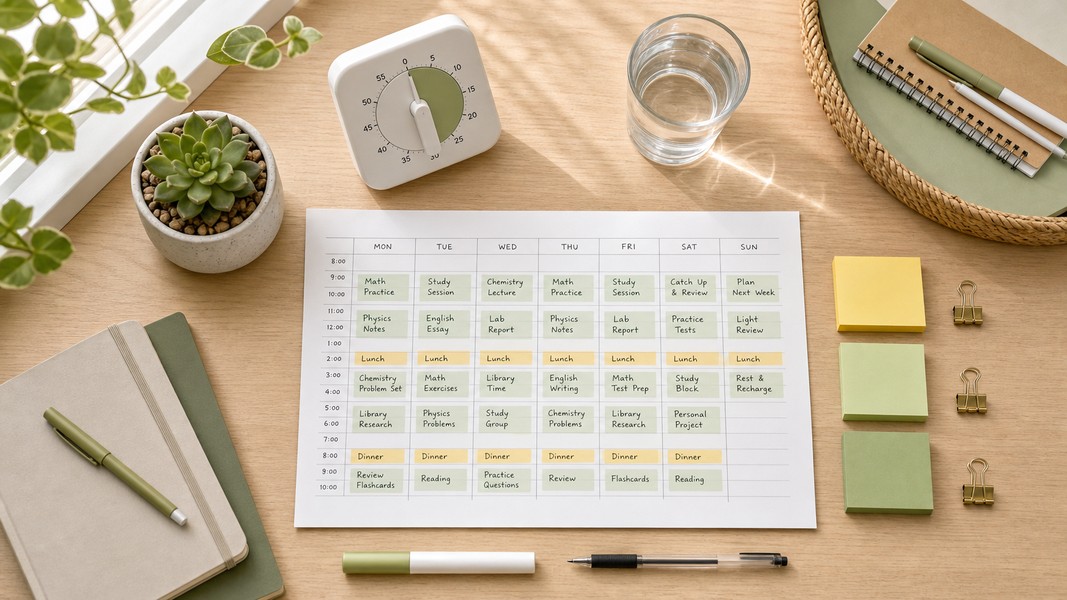
Struggling to manage your time as a student? These 7 evidence-backed tactics fix the real reasons students fall behind and waste hours.

Fathom AI is great for free Zoom notes, but it has real limits. Here are the best fathom ai alternatives for meetings, students, and multi-format capture.