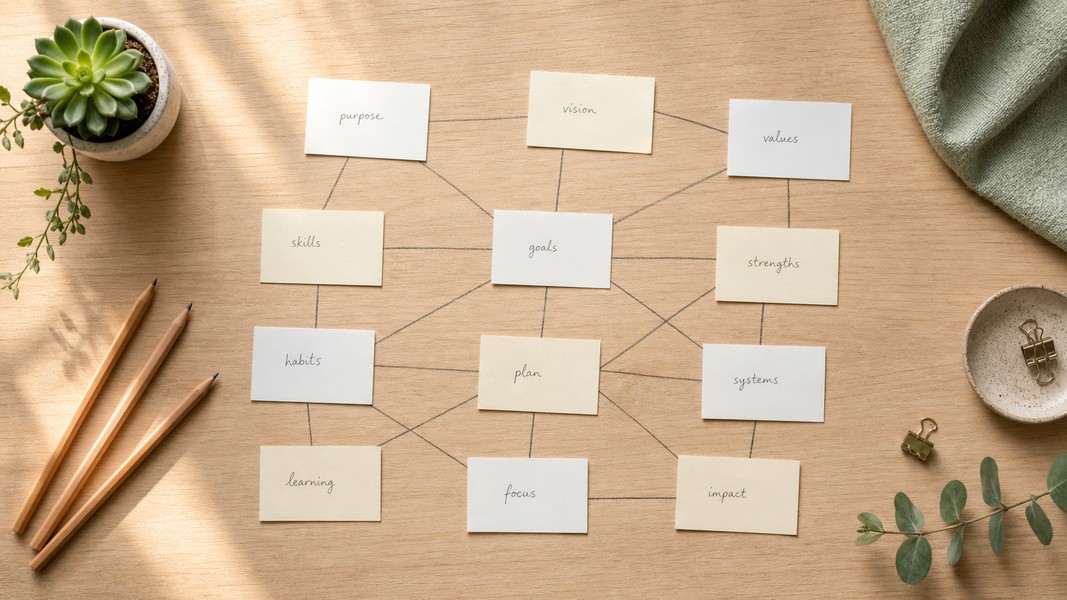
Zettelkasten: How to Build a Knowledge System
July 24, 2026
Learn how the Zettelkasten method works, why linked notes beat linear notebooks, and how to build your own knowledge system from scratch.


May 14, 2026
The average adult reads at about 238 to 250 words per minute, according to a meta-analysis of 190 reading rate studies. If you want to know how to read faster, the answer isn't a magic app or a skimming trick: it's fixing a handful of deeply ingrained habits that slow your eyes and brain down.
Most of what holds you back isn't your intelligence or vocabulary. It comes down to three things: subvocalization (silently pronouncing every word), regressions (rereading lines you've already passed), and a narrow eye span that fixates on one word at a time. Fix those, and faster reading follows naturally.
These seven techniques target each of those root causes. Each one is backed by how the brain actually processes text, not by speed-reading myths that sacrifice comprehension for WPM bragging rights.
Before changing how you read, it helps to understand why reading feels slow in the first place.
The first culprit is subvocalization: silently pronouncing each word as you read it. Most people learned to read aloud and then internalized that voice. This ties reading speed to speaking speed, which averages around 120 to 150 words per minute, well below what your eyes and brain can handle.
The second is regression. Your eyes backtrack to earlier lines far more often than you realize. Studies on reading fixations estimate that readers regress 15 to 30 percent of the time. These re-reads are usually habitual, not necessary.
The third is fixation width. Most readers pause on one or two words at a time, making several stops per line. Your peripheral vision can capture three or four words per fixation, but only if you train it.
These three habits compound into a major drag on reading speed. The techniques below address each one directly.
Subvocalization is one of the most common reasons people read slowly, and it's among the most trainable.
You can't eliminate it entirely, and for difficult material you shouldn't try. But for everyday reading, including articles, textbook summaries, and emails, reducing your inner voice by even 20 to 30 percent creates a measurable speed gain without losing comprehension.
Two approaches work well. The first is visualization: instead of pronouncing "supply chain disruption," picture a factory with an empty loading dock. Your brain processes the concept without needing the full verbal sequence. The second is distraction-based suppression: chewing gum or humming faintly while reading interrupts the inner speech mechanism without blocking comprehension.
Start with lighter material: news articles and blog posts are easier to practice on than dense academic text. Expect gains of 20 to 40 percent in reading speed once subvocalization is under control, with comprehension staying intact at around 300 WPM for most readers.
This technique is one of the fastest ways to cut regression and build pace. A thin pointer, such as a pencil, moves steadily under the line you're reading. A finger works but tends to block the text immediately below.
The physical guide does two things. It prevents your eyes from drifting backward, since there's a clear forward direction to follow. It also encourages a smoother reading rhythm, replacing the stop-start fixation pattern most readers rely on.
The sweep method moves the pointer in a continuous line under each row of text. The hop method bounces it twice per line to land on word groups rather than single words. For speed reading practice on a screen, a cursor moved steadily across the text serves the same function.
Many readers double their baseline WPM within a few weeks of consistent pointer use. The gains come from eliminating wasted time, not from skipping comprehension steps.
Most readers take three or four fixation pauses per line, landing on individual words. Your visual system can capture a chunk of three to four words in a single glance; you just haven't trained it to work that way.
Widening your eye span reduces the number of fixation stops per line, which directly increases reading speed. A useful starting exercise: focus on the center of a sentence and try to read the surrounding words without moving your gaze. This feels uncomfortable at first because you're working against years of word-by-word habit.
A good training drill is the visual gulp: glance at a row of five to nine digits or words for one to two seconds, then look away and recall what you saw. Gradually increase the length. Over weeks, your peripheral intake expands, and your eye span on actual text follows. Even improving from two words per fixation to three reduces reading time for a 10-page document by roughly a third.
Previewing the structure of a text before reading it in full is one of the most underused speed techniques. It works by building a mental framework so that when you encounter each section, your brain already has a place to file the information.
Spend three to five minutes on any long document before you begin: read the introduction and conclusion, scan the headings, and check any abstract or executive summary. For textbook chapters, read the first and last paragraph of each section.
This approach draws on research into cognitive scaffolding: previewing organizes your expectations, which makes the actual reading feel faster because patterns recognize themselves. Scanned material also tends to stay in memory longer because it's been encountered twice under different levels of attention.
For students processing large volumes of assigned reading, preview is one of the highest-return habits in terms of time saved versus comprehension gained.
Passive reading is slow reading. When you open a text without a specific goal, your brain doesn't know what to prioritize, so it tries to record everything, and does so inefficiently.
Before starting any reading session, ask yourself what you need from it. That might be "find the study's main finding and methodology," "identify the three main arguments," or "understand this process well enough to explain it in my own words."
Setting a clear purpose activates selective attention. Your brain flags relevant content faster and moves through irrelevant sections without getting stuck. This is the principle behind active reading frameworks: questioning the text before and during reading keeps your attention where it counts.
Voice Memos applies this same idea in its study modes. When you upload a document or recorded lecture, the app generates quiz questions before you review the material, priming your attention the same way a reading purpose does and making a second pass much faster.
Regression isn't always conscious. Many readers drift back to earlier lines automatically, often without realizing they've done it. This is different from deliberate re-reading when something is genuinely unclear; that kind of re-reading is productive. The habitual kind is pure waste.
The pointer technique addresses physical regression. Mental regression, where you re-read because you weren't truly focused, calls for a different approach.
The card method works well here: hold a piece of paper just above the line you're reading, and slide it down as you advance. This physically blocks text you've already passed, removing the option to backtrack. Combined with a clear reading purpose, it forces a single-pass mindset.
Most readers find that habitual regression accounts for 20 to 30 percent of their total reading time. Eliminating it doesn't require reading faster; it requires reading with more intention.
Speed reading is a skill. Like any skill, it responds to deliberate practice more than passive exposure.
A basic drill: count the words on a full page, set a 15-second timer, and read until it stops. Multiply the words read by four to get your WPM baseline. Run this weekly with new material to track progress.
The goal isn't to push toward extreme speeds. Research on reading comprehension shows that retention drops sharply above 400 WPM for most readers, and claims of reading thousands of words per minute with strong comprehension don't hold up under controlled study conditions. Targeting 300 to 400 WPM with solid retention is a realistic and useful improvement for most students and professionals starting at the average.
Short, consistent sessions beat long infrequent ones. Twenty to thirty minutes of focused practice three times per week will show measurable WPM gains within a few weeks for most readers starting below 300 WPM.
Reading speed only matters if you remember what you've read. Speed without retention is just flipping pages.
The most effective retention techniques work through active recall: after finishing a section, close the material and write down the main points from memory. This forces retrieval, which encodes information far more durably than re-reading the same passage. Studies consistently show that retrieval practice outperforms passive review by a wide margin.
Pair that with spaced repetition to reinforce key ideas over time. Reviewing material at increasing intervals, starting at 24 hours after reading, then 72 hours, then a week, compounds the retention without requiring more total study time.
Voice Memos can streamline this process: upload any PDF, paste text, or add a recorded lecture, and the app automatically generates flashcards and quiz questions. That means you can move through source material faster, then use the generated study tools to lock in the content rather than re-reading the same pages.
Starting at 238 to 250 WPM, a reader who consistently works through these techniques can realistically reach 350 to 450 WPM within several weeks while maintaining strong comprehension. That range is supported by cognitive research on eye movement and fixation efficiency, not by marketing claims.
The biggest gains come from the first three techniques: reducing subvocalization, using a pointer, and widening your eye span. Those three alone will move the needle significantly. Add preview, purpose, and timed drills, and the gains compound.
Don't chase maximum WPM. The real goal is reading enough faster to save time while still understanding what you've read. For a student working through 50 pages of assigned reading per day, moving from 250 to 350 WPM saves around 15 minutes on the same material. That adds up across a semester.
Discover more insights and tips to enhance your productivity
Learn how the Zettelkasten method works, why linked notes beat linear notebooks, and how to build your own knowledge system from scratch.
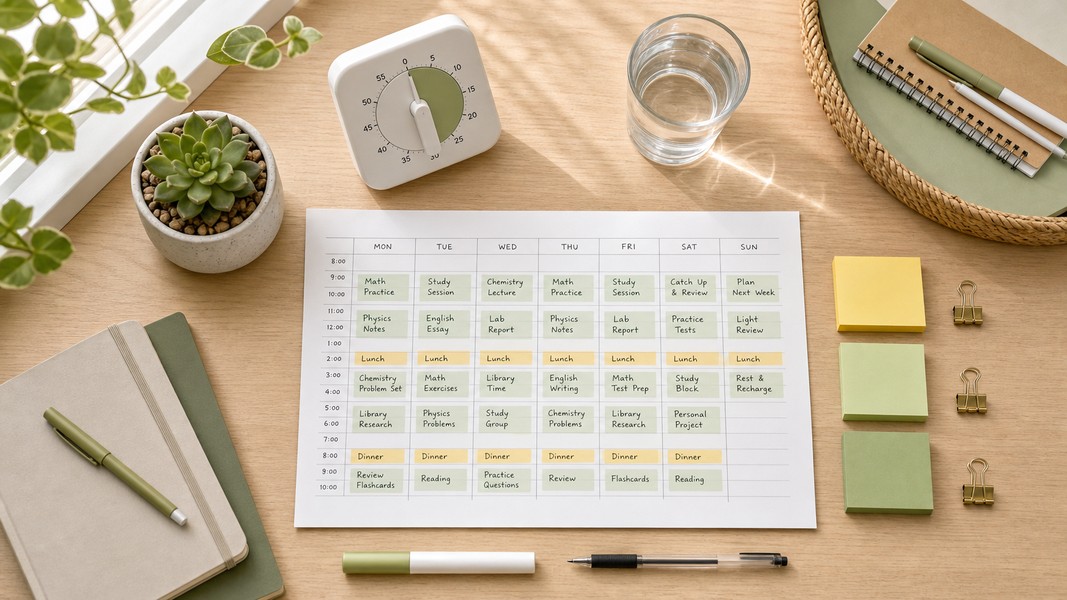
Struggling to manage your time as a student? These 7 evidence-backed tactics fix the real reasons students fall behind and waste hours.

Fathom AI is great for free Zoom notes, but it has real limits. Here are the best fathom ai alternatives for meetings, students, and multi-format capture.