
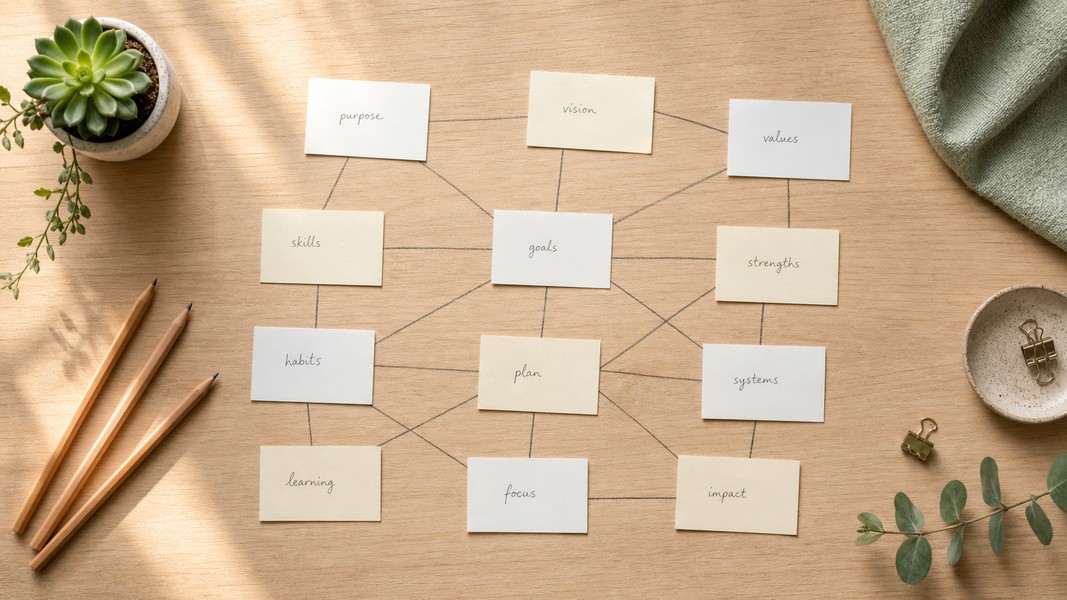
Zettelkasten: How to Build a Knowledge System
July 24, 2026
Learn how the Zettelkasten method works, why linked notes beat linear notebooks, and how to build your own knowledge system from scratch.

Recent
Bottom line up front: Fathom AI is the better choice for solo professionals who want a free, unlimited meeting recorder. Otter.ai is the better choice for teams that need live, collaborative transcription during meetings. Everything else in this comparison flows from that core difference.
Both tools record meetings, generate AI summaries, and extract action items. Where they diverge is in when the transcript appears (post-call vs. real-time), how generous the free tier is, and which workflows each one supports beyond basic recording.
| Category | Fathom AI | Otter.ai |
|---|---|---|
| Free plan | Unlimited recording, limited AI summaries | 300 minutes/month, 3 file imports |
| Real-time notes | Post-call only | Yes, live during meetings |
| AI summaries | Fast, within 30 seconds | Yes, plus AI Chat |
| Languages | 28-50+ | ~4 major languages |
| Mobile app | Limited | Strong iOS/Android |
| Best for | Free solo use, fast recaps | Live collaboration, hybrid teams |
Fathom is an AI meeting assistant that joins Zoom, Google Meet, and Microsoft Teams calls, records the conversation, and delivers a transcript plus AI-generated summary within about 30 seconds of the meeting ending. You can learn more on Fathom's website.
The standout feature is the free tier. Unlike most competitors that cap free users at a few hundred minutes per month, Fathom offers unlimited meeting recording and transcription at no cost. That makes it genuinely usable as a permanent free tool, not just a trial.
On paid plans, Fathom adds CRM sync with HubSpot and Salesforce, team dashboards, and sales-specific deal views. A botless recording option is in beta, which reduces friction when external guests aren't comfortable with visible bots in their calls.
Fathom supports 28 to 50+ languages depending on the plan, covers Zoom and Google Meet natively, and keeps transcripts in a searchable library you can query across past calls.
Strengths: unlimited free plan, fast summaries, clean UX, multi-language support, CRM sync on paid tiers, botless option.
Weaknesses: fully powered AI summaries are limited on the free plan; fewer integrations than competitors like Fireflies; team features require paid plans with minimum seat counts; some accuracy dips with heavy accents or fast multi-speaker calls.
Otter.ai is one of the original AI transcription tools, and it has carved out a clear niche: real-time, collaborative transcription that participants can view and edit as the meeting happens. Full feature details are on Otter's website.
Its OtterPilot feature joins video calls automatically and streams a live transcript that multiple people can annotate, highlight, and comment on simultaneously. After the call, it generates a summary with action items and key points. Otter Chat lets you ask follow-up questions about past meetings in a chat interface.
A notable feature for in-person users is Otter's mobile app. It handles face-to-face conversations, interviews, and hybrid meetings through the phone microphone, something Fathom is not optimized for. Otter also captures slides and screen content during calls and links them to the relevant transcript timestamps.
The main limitation is the free tier: 300 minutes per month with a 30-minute cap per conversation and only 3 file imports. For any professional using it regularly, that ceiling is hit quickly.
Strengths: best real-time transcription experience, live collaborative notes, Otter Chat for meeting Q&A, strong mobile app for in-person use, slide capture.
Weaknesses: restrictive free tier, no video recording, bot-only capture with no botless option, limited language support (primarily English plus a few others), CRM integrations lag behind dedicated sales tools.
Both tools deliver reliable transcripts in clean audio conditions, with Otter frequently cited as achieving up to 95% accuracy. Fathom performs at a comparable level and is noted for consistent reliability relative to its free price point.
Where they differ is in the context of use. Otter is consistently rated better for live, real-time transcription, particularly in hybrid settings where audio conditions vary. Fathom can show minor accuracy drops with strong accents or overlapping speakers, a limitation common to most speech recognition systems at this price tier.
For most meetings with decent audio, the practical difference in accuracy is small. Otter has a slight edge for live, in-room transcription; Fathom delivers reliable quality for recorded virtual calls.
Fathom generates its AI summary within approximately 30 seconds of meeting end. It pulls out action items, key decisions, and next steps and makes them shareable. On the free plan, these "fully powered" summaries have a monthly limit; the full suite requires a paid plan.
Otter generates post-meeting notes with action items and a short overview. Its Otter Chat feature goes further, letting you ask questions about any past meeting and even analyze themes across multiple meetings. It also captures slides and ties them to specific transcript moments, which adds useful context to the summary when presentations were involved.
For straightforward recap needs, Fathom is faster and simpler. For teams that want to explore meetings interactively or need slide-aware summaries, Otter's toolset is richer.
Both tools connect to Zoom, Google Meet, and Microsoft Teams for live meeting capture. Beyond that, they diverge.
Fathom on paid plans integrates directly with Slack, Notion, Asana, HubSpot, and Salesforce. The CRM integration is relatively simple to set up and pushes call summaries and action items into deal records without requiring third-party tools.
Otter connects to over 7,000 apps through Zapier, but most of the deeper integrations require paid plans and often need Zapier as the connector. Native CRM support is more limited than Fathom's on equivalent tiers. Otter does offer sales intelligence features at Enterprise, but reviewers consistently note that it lags behind dedicated sales tools like Fireflies for CRM automation.
For teams that need a direct pipeline from meeting notes into CRM records, Fathom's paid tier is more straightforward. For teams that need flexible app-to-app connectivity across a broad tool stack, Otter's Zapier integration is more versatile.
The gap between Fathom and Otter on their free tiers is one of the most significant differences in this category.
Fathom's free plan offers unlimited recording and transcription with no monthly minute cap. The constraint is on the richness of AI summaries, not on the volume of calls you can record. For a solo professional who records every call and reviews transcripts, Fathom's free tier is genuinely sufficient for basic use.
Otter's free plan caps at 300 minutes per month with a 30-minute limit per individual conversation and only 3 audio file imports. That ceiling is easy to hit within the first week for anyone in meetings regularly.
On paid plans, both tools offer expanded AI features, team collaboration tools, and admin controls. Fathom's paid tiers are positioned around CRM sync and team dashboards; Otter's paid plans extend the minute caps and unlock features like custom vocabulary, speaker tagging, and shared team notes.
Fathom is the right choice if you:
It's also the better fit for teams where external guests or privacy-conscious clients find meeting bots disruptive, since botless recording is in development. You can see how Fathom compares across the broader field in this roundup of AI note takers for professionals.
Otter.ai is the better fit if you:
It's a strong pick for project managers, facilitators, educators, and sales teams doing live discovery calls where real-time notes affect the conversation flow. Its weakness for multilingual teams is a real limitation: if your meetings regularly span more than a handful of languages, Otter will fall short.
Fathom and Otter both start from the same premise: the meeting is the unit of work. They record the call, generate a summary, and send you the output.
That works well for meeting recaps. It doesn't help when your workflow extends beyond video calls. Professionals and students who also take voice notes on the go, process PDFs and reports, review YouTube content, or work across multiple languages in non-meeting contexts need a tool that handles more than just calls.
Voice Memos processes five input types: voice recordings, PDFs, images, camera scans, and YouTube links, all feeding into the same organized note structure. It auto-detects tasks, events, reminders, contacts, and locations across every input type, not just meeting transcripts. It also generates quizzes, flashcards, mind maps, and deep research from any captured content.
For professionals tracking action items across meetings, meeting notes become one input among many rather than the only source of structured output. For multilingual users, the 40+ language support covers significantly more ground than Otter's four languages and matches or exceeds Fathom's range.
Voice Memos is available as a web app at voicememos.co and on iOS and Android.
Fathom AI wins on value: the free plan is genuinely unlimited for individual recording, and it delivers fast, reliable recaps without a monthly cap. Otter.ai wins on the live collaboration experience: real-time transcription, in-meeting note editing, and a strong mobile app make it the better tool for hybrid and in-person scenarios.
The choice comes down to what matters more to you. If you're recording calls solo and want a free, low-friction tool, Fathom is hard to beat. If your meetings require live note-sharing with participants or you rely on mobile capture for in-person conversations, Otter makes more sense.
Both tools are built specifically around meetings. If your workflow extends into documents, voice notes, and other content types, a broader AI workspace handles what either tool leaves behind.
Discover more insights and tips to enhance your productivity
Learn how the Zettelkasten method works, why linked notes beat linear notebooks, and how to build your own knowledge system from scratch.

Struggling to manage your time as a student? These 7 evidence-backed tactics fix the real reasons students fall behind and waste hours.

Fathom AI is great for free Zoom notes, but it has real limits. Here are the best fathom ai alternatives for meetings, students, and multi-format capture.