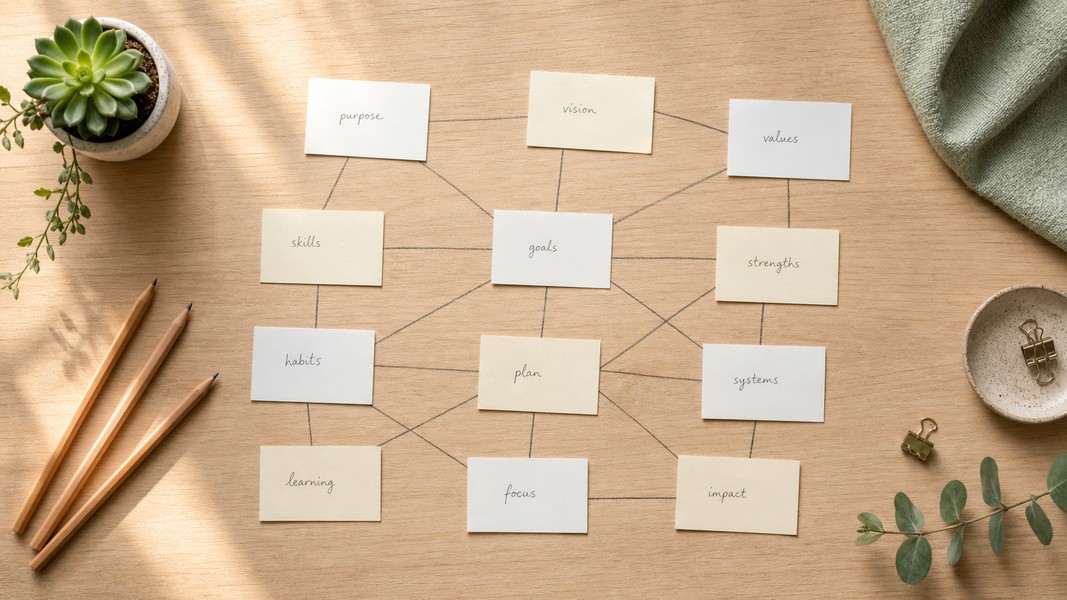
Zettelkasten: How to Build a Knowledge System
July 24, 2026
Learn how the Zettelkasten method works, why linked notes beat linear notebooks, and how to build your own knowledge system from scratch.

June 11, 2026
If you've ever sat down to study and found your mind drifting every few minutes, you're not dealing with a willpower problem. Knowing how to focus on studying is less about trying harder and more about removing the specific blocks that fragment your attention. Your brain has a finite capacity for sustained concentration, and most modern study environments are built to overwhelm it. This guide breaks down exactly why focus fails, what keeps pulling attention away, and what actually works to fix it.
Attention is a limited resource, not an infinite one. Your working memory can only hold a small number of pieces of information at once. When your environment adds extra demands, whether a buzzing phone, background conversations, or a cluttered desk, your brain spends capacity filtering them out instead of processing what you're trying to learn.
A 2025 research review found that college students average over 6.5 hours of non-academic screen time daily, and each extra hour of recreational screen use was linked to roughly a 10% drop in the likelihood of reaching higher academic levels. The issue isn't screen use in itself. The problem is rapid task-switching. Every time you check your phone mid-study session, your brain needs time to re-engage with the original task. Those brief interruptions accumulate into significant losses in depth of understanding.
Research on cognitive performance consistently shows that media multitasking, doing homework while simultaneously messaging or scrolling, produces worse retention than single-task studying, even when total study time is the same. The quality of your attention matters as much as the quantity of hours.
Understanding what specifically derails concentration gives you something to act on.
Smartphones and notifications sit at the top of the list. Devices are engineered to deliver intermittent rewards that pull your attention even when the phone is silent. The mere presence of your phone on your desk creates low-level background attention demands that reduce available cognitive resources. Research links heavy phone use to weaker working memory and more distractibility in future study sessions; this effect extends beyond the current session.
Environmental noise is a close second. Background speech or unpredictable sounds force your brain to constantly filter input, leaving fewer resources for your actual material. Variable noise, like conversations or TV, is especially disruptive compared with consistent background sound.
Cognitive overload is subtler but just as damaging. When you're trying to follow a dense lecture, keep up with note-taking word-for-word, and manage three browser tabs at once, you exceed your working memory capacity. The result is shallow processing where information doesn't stick, combined with the exhausted feeling that comes from intense effort with little payoff.
Mental fatigue builds across a session and compounds everything else. A study of medical students found that when average sleep dropped from 6.8 to 5.9 hours per night, academic scores, reaction time, and working memory all declined measurably, showing that depleted energy amplifies every other focus challenge.
Your physical workspace determines how hard your brain has to work before learning even begins. Small changes here create compounding gains across every study session.
Remove visual clutter from your desk. Objects in your field of view automatically trigger low-level attention, adding extraneous cognitive load. Keep only the materials for the current task visible: the textbook, your notes, and whatever you're actively working on.
Treat noise as a design choice, not an afterthought. If you can't control background sound, white noise or low-complexity instrumental music is consistently less disruptive than speech or TV. Earplugs work well in genuinely loud environments like dorms or libraries with open seating.
Lighting affects alertness more than most students expect. A bright, well-lit desk reduces eye strain and keeps you from sliding toward sleepiness. Studying in dim spaces or in bed activates cues your brain associates with rest, making sustained focus much harder.
The underlying principle is simple: if your environment handles distraction filtering for you, your attention can go entirely toward learning. The goal is to make concentration the default state, not something you have to fight to maintain.
Digital habits need more deliberate intervention than physical environment because the devices are designed to resist it.
The single most effective strategy is physical separation. Keeping your phone in another room during study blocks removes the temptation entirely. Research shows this is more effective than placing the phone face-down or on silent, because physical distance acts as a real barrier to the habitual checking that happens on autopilot.
For laptop-based work, browser extensions and app blockers remove distracting sites during scheduled study periods. Tools like these replace willpower with structure. Instead of deciding dozens of times per session not to open social media, you make one decision at the start of the block and remove the choice entirely.
Notification management eliminates the external triggers that prompt task-switching. Turn off non-essential alerts and enable Do Not Disturb during study blocks. Even a notification you consciously ignore still briefly shifts your attention, costing you the re-orientation time you'd pay for any switch.
Setting specific scroll windows, short bounded periods after each study block when you can check social media, contains recreational use rather than letting it bleed continuously into study time. A 5-minute window after a 45-minute block is far less damaging than checking twice per minute throughout.
Cognitive load theory explains why many students feel mentally exhausted after studying without retaining much: their working memory was full of irrelevant demands the entire time.
During lectures, your brain is already handling intrinsic load, the inherent complexity of new concepts and terminology. Stack extraneous load on top of that, frantic verbatim transcription, multiple open tabs, and unclear note organization, and something has to give. Usually what gives is depth of understanding.
Structured note formats directly address this. Cornell notes, concept maps, and simple question-answer columns focus your capture on key ideas instead of everything. You reduce the cognitive effort of deciding what to write, which frees more attention for following the material. According to cognitive load research, reducing extraneous load consistently improves both comprehension and retention.
Written checklists and session plans eliminate the low-level load of tracking what to do next. When your brain doesn't have to hold "what I need to study today" in working memory, more resources are available for actual learning.
Voice Memos handles the transcription and organization side automatically. Record your lecture, and the AI generates structured notes from the audio, so you can focus on understanding during class rather than racing to capture every sentence. That shift from active transcription to active listening reduces extraneous cognitive load at the moment it's most expensive.
Focus isn't purely mental; it's physiological. When you study matters almost as much as how you study.
Most young adults have a peak cognitive performance window in the late morning through early afternoon, with a dip in mid-afternoon. Scheduling your hardest subjects during your own high-energy hours produces better results than grinding through them when your brain is already depleted. This is less about discipline and more about working with your biology.
Sleep is the most significant variable of all. Research with college students consistently links shorter sleep to worse attention, slower reaction times, and lower grades. The medical student study mentioned earlier found sleep duration to be an independent predictor of academic performance even after controlling for other factors. Recreational screen use near bedtime worsens sleep quality further: studies report a strong correlation between high recreational screen time and poor sleep quality in students, which compounds the focus problems the next day.
Short, planned breaks maintain performance across longer study periods far better than pushing through fatigue. The Pomodoro Technique, 25 minutes focused followed by a 5-minute break, keeps sessions short enough to sustain attention quality. For deeper conceptual work, 50-to-90-minute focused blocks followed by a 10-to-15-minute real break, walking, stretching, or getting outside rather than scrolling, preserve cognitive capacity through a full afternoon.
Hydration has a measurable effect on attention that most students overlook. Mild dehydration reduces cognitive performance and concentration even at levels you don't consciously notice. Water at your desk and balanced meals instead of skipping them removes a basic physiological drag on focus that no study technique can fully compensate for.
The sleep hygiene research is consistent: regular bedtimes and limiting screens before bed improve both sleep duration and quality, which in turn improve the attention and working memory you bring to every study session.
Environment and energy set the conditions. The right study methods use those conditions to produce actual learning.
Active recall is the most evidence-backed approach for both retention and focus. Instead of re-reading notes, you close them and try to retrieve what you just covered, through flashcards, practice problems, or explaining the concept aloud. The deeper mechanics of this approach are covered in our guide on active recall methods.
Active recall helps with focus for a specific reason: it demands full engagement. Passive re-reading lets the mind wander because the task is too easy for your brain to stay locked in. Retrieval practice requires working actively at the edge of what you know, which keeps attention on the material.
Spaced repetition pairs naturally with active recall. Rather than re-studying the same material in one long session, you return to it across multiple days. This spaced study approach keeps individual sessions shorter and more focused while improving long-term retention more than any equivalent amount of massed practice.
Single-tasking consistently outperforms multitasking in both comprehension and retention. Students who study with frequent digital interruptions have lower grades and more self-reported distraction than those who single-task, even when the total hours spent studying are similar.
Voice Memos supports focused review by turning captured lectures and notes into interactive quizzes and spaced repetition flashcard decks automatically. Instead of passively skimming notes before an exam, you test yourself on the material without needing to manually set anything up, which removes the setup friction that often leads to passive re-reading by default.
The common thread across every strategy here is that focus is a systems problem. Environment, digital habits, energy management, and study methods either protect your attention or erode it; willpower alone can't compensate for a system working against you.
Start with the highest-leverage changes: physical separation from your phone, a clean study workspace, and consistent sleep. Build from there with structured note-taking, planned break schedules, and active recall sessions. Each adjustment removes a barrier that was costing you focus, and the gains compound quickly once the basic conditions are in place.
The students who study most effectively aren't the ones who try harder. They're the ones who've removed the obstacles that make concentration expensive.
Discover more insights and tips to enhance your productivity
Learn how the Zettelkasten method works, why linked notes beat linear notebooks, and how to build your own knowledge system from scratch.
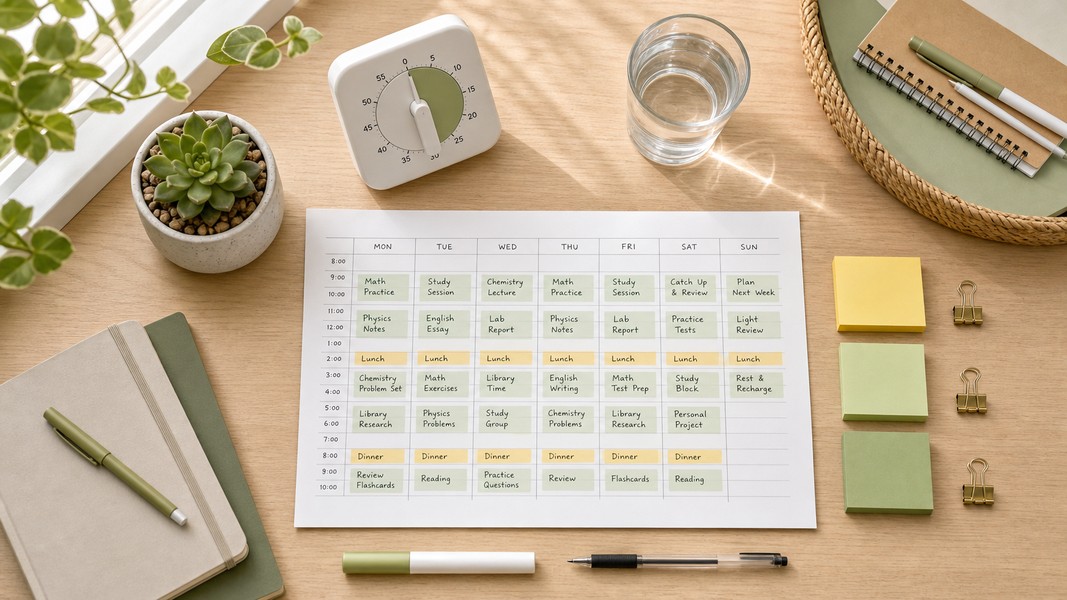
Struggling to manage your time as a student? These 7 evidence-backed tactics fix the real reasons students fall behind and waste hours.
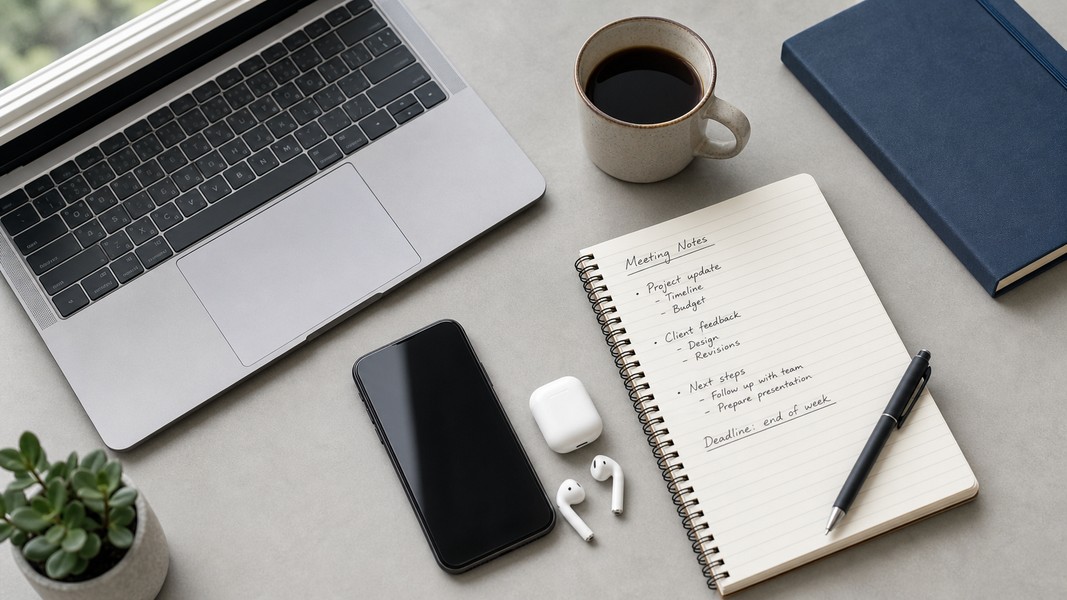
Fathom AI is great for free Zoom notes, but it has real limits. Here are the best fathom ai alternatives for meetings, students, and multi-format capture.