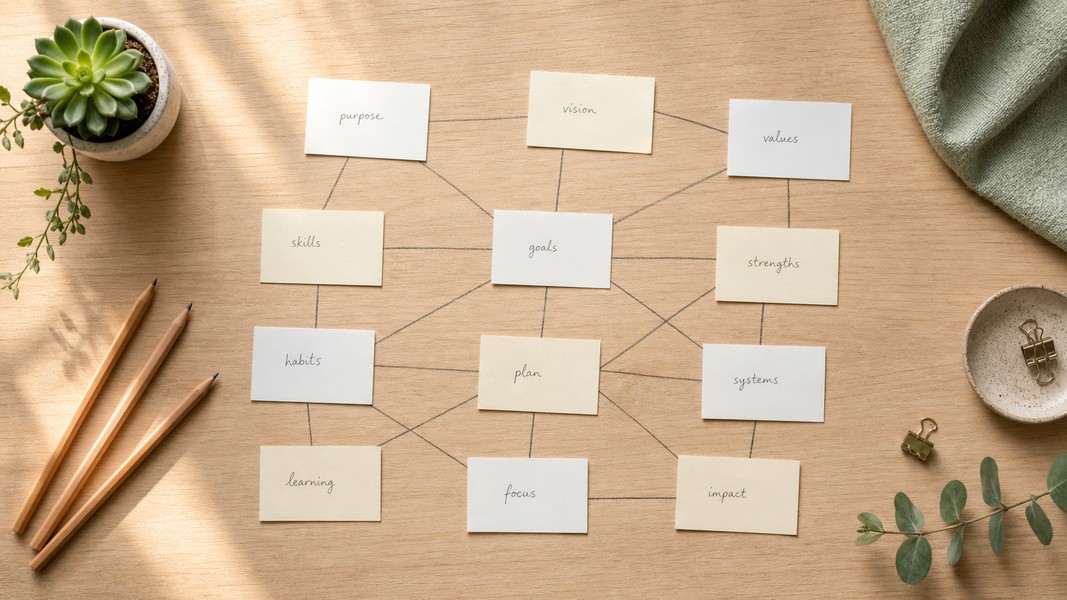
Zettelkasten: How to Build a Knowledge System
July 24, 2026
Learn how the Zettelkasten method works, why linked notes beat linear notebooks, and how to build your own knowledge system from scratch.


April 1, 2026
Multisensory learning is an instructional approach that engages visual, auditory, kinesthetic, and tactile pathways at the same time to reinforce reading, spelling, and writing skills. For students with dyslexia, activating multiple input channels simultaneously helps build stronger neural connections around phonics, where single-modality instruction often falls short.
If you've been told to "just read more" or "try harder," you already know that advice misses the point. Dyslexia isn't a matter of effort. It's a difference in how the brain processes language, and multisensory learning is the research-backed method designed specifically for that difference.
The term has its roots in the Orton-Gillingham approach, developed in the 1930s by neuropsychiatrist Samuel T. Orton and educator Anna Gillingham. Their insight was that dyslexic students struggled not because they lacked intelligence, but because standard instruction relied on a single channel: print on a page.
The OG method paired sight (seeing letters), sound (hearing phonemes), and movement or touch (tracing symbols, tapping syllables) into a unified teaching sequence. Instead of learning a letter by looking at it, a student would say its sound aloud, trace it in sand, and watch their hand form it all at once. Each pathway reinforces the others, creating a more resilient memory trace.
Modern structured literacy builds on this foundation, incorporating decades of reading science while retaining the multisensory, sequential core. The principles remain the same: explicit instruction, diagnostic adjustment based on individual need, and no guesswork.
Dyslexia affects roughly 5 to 10 percent of the population globally and involves persistent difficulty with decoding, phonological awareness, and verbal working memory. These are not reading problems caused by vision issues or low intelligence. They stem from differences in how the brain processes sound-symbol relationships.
When a student learns through only one channel, those weak phonological pathways carry the entire load. Multisensory input distributes the task. A student who struggles to link the letter "b" to its sound through print alone may form that connection more reliably when simultaneously saying "buh," tracing the letter shape, and tapping the beat of a syllable. Research by Ehri and Castles confirms that multisensory integration creates stronger phoneme-grapheme links for dyslexic learners, improving both decoding speed and fluency where traditional methods fail.
A 2024 study of 76 at-risk children found that structured multisensory phonics interventions significantly reduced pre-literacy failure rates, with at-risk students reaching literacy milestones comparable to non-risk peers after a 28-session programme. Early intervention matters, but these techniques remain effective at high school and university levels for students working with complex vocabulary and dense reading loads.
The VAKT model, covering Visual, Auditory, Kinesthetic, and Tactile input, forms the practical backbone of most multisensory programmes. Here are the techniques most useful for secondary and university students:
Sand tracing. Write a word or letter in a sand tray while saying its sounds aloud. The tactile feedback from dragging your finger combines with the visual formation and the auditory output to reinforce all three simultaneously. You can replicate this with a thick layer of salt in a baking tray.
Colour coding. Assign consistent colours to vowel patterns, consonant blends, or prefixes. Red for short vowels, blue for long vowels, green for consonant clusters, for example. Colour transforms abstract phonics rules into visual patterns your brain recognises faster each time.
Air writing. Trace letters in the air using your full arm, not just your wrist, while saying each sound. The larger kinesthetic movement engages your motor cortex alongside your language processing centres.
Audio recording and playback. Record yourself reading a passage aloud, then listen back while following the text on the page. The act of producing the audio, hearing it back, and tracking it visually gives you three simultaneous inputs on the same material. This technique scales well for lecture review and textbook reading. An app like Voice Memos lets you record, transcribe, and replay audio with automatic text alongside it, so the auditory and visual review happen in sync without any manual effort.
Phoneme manipulation. Segment words into sounds by moving objects, such as coins or bricks, one per phoneme, while saying each sound separately. Tap a rhythm on your desk for each syllable in longer academic vocabulary. Physical objects make abstract phonological units concrete.
A consistent daily routine is where these techniques turn from isolated exercises into real retention gains. The 28-session structured intervention in the 2024 research worked because the repetition was systematic, not random.
A 45 to 60 minute daily block works well for most secondary and university students. Start with five minutes reviewing what you covered in the previous session, using colour-coded notes as your visual anchor. Move into 10 minutes on new or difficult vocabulary using sand tracing or air writing paired with verbal repetition. For your main content block, 20 to 30 minutes, read sections aloud rather than silently, highlight or colour-code key terms as you go, and pause every few paragraphs to close the book and narrate back what you just processed, either aloud to yourself or into a voice recorder.
End with a 10-minute review: use tactile flashcards you can physically handle and sort, or tap through vocabulary on a phone. The physical act of sorting and handling cards while saying words aloud recruits kinesthetic memory alongside verbal recall.
For mathematics, use physical manipulatives and narrate every calculation step out loud. For history and social sciences, build timelines on paper using different colours per era and walk along them if you can. For sciences, label diagrams with tactile markers while narrating the function of each component.
Technology has made it significantly easier to implement VAKT principles without specialist tutors. The key is choosing tools that combine input channels rather than just digitising the same single-channel approach.
Text-to-speech tools let you hear text while reading it, combining auditory and visual input. Dyslexia.com maintains a regularly updated resource list of assistive tools with research backing. Lexercise offers online structured literacy therapy grounded in OG principles with multimodal delivery.
For note-taking and study material, best apps for dyslexia covers a range of tools with accessibility features built in. Voice Memos is particularly suited for the multisensory workflow because it handles multiple input modes in one place: you can record a lecture, receive an automatic transcript to read alongside the audio, and then generate flashcards or a quiz from the same content without switching tools. The dyslexic-friendly formatting feature restructures any captured content into a layout shown to reduce reading friction for dyslexic learners, reducing cognitive load before you even start reviewing.
Pairing an auditory input tool with dyslexia-friendly fonts in your reading environment compounds the visual accessibility gains further. Typography affects reading speed for dyslexic students more than most people realise, and getting both the font and the input channel right removes two barriers at once.
Multisensory learning works because dyslexic brains don't fail to learn. They learn differently, and single-channel instruction simply doesn't match how those brains build connections. The Orton-Gillingham approach, now backed by decades of structured literacy research, shows that engaging sight, sound, and movement together is not a workaround but a more accurate match to how phonological memory is built.
The practical takeaway is straightforward: build colour coding, voice recording, physical manipulation, and verbal narration into your regular study sessions. Start with one or two techniques, not all of them at once. Track what makes recall easier. Adjust from there. The neuroscience says the connections will strengthen with consistent multisensory practice, and the research agrees.
Discover more insights and tips to enhance your productivity
Learn how the Zettelkasten method works, why linked notes beat linear notebooks, and how to build your own knowledge system from scratch.
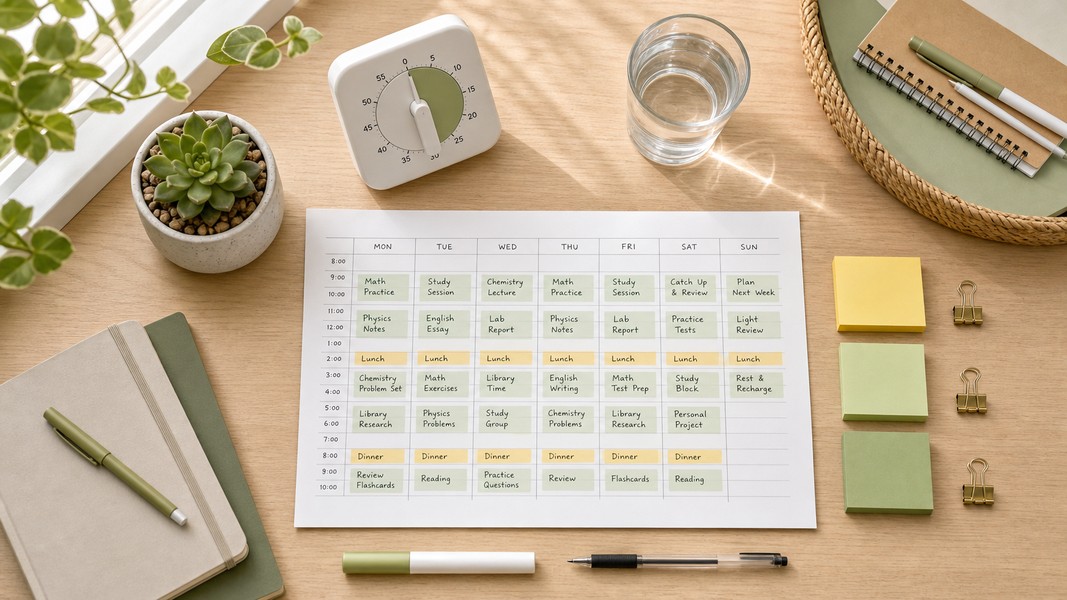
Struggling to manage your time as a student? These 7 evidence-backed tactics fix the real reasons students fall behind and waste hours.
Fathom AI is great for free Zoom notes, but it has real limits. Here are the best fathom ai alternatives for meetings, students, and multi-format capture.