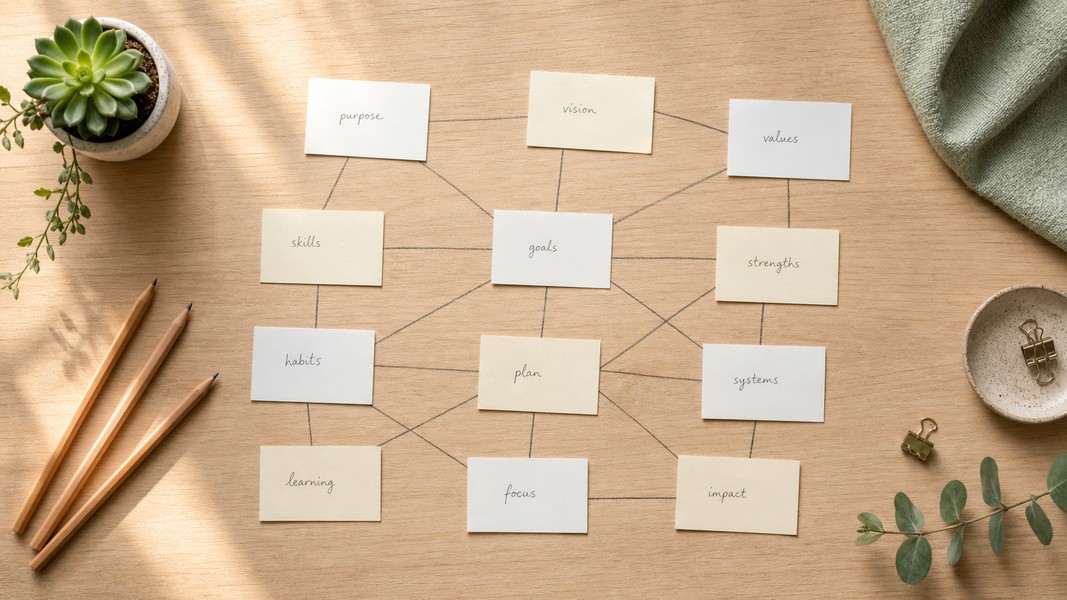
Zettelkasten: How to Build a Knowledge System
July 24, 2026
Learn how the Zettelkasten method works, why linked notes beat linear notebooks, and how to build your own knowledge system from scratch.


June 20, 2026
AI note taking is no longer a fringe tool. More than half of college students now use generative AI regularly for coursework, and purpose-built AI note-taking apps have become a core part of how many students capture and process information.
But using these tools effectively is different from just turning them on. The students who benefit most understand what AI note taking actually does, how to fit it into a practical study workflow, and where human judgment still matters. This guide walks through each step: from capturing lectures to building flashcards and quizzes, with tips for making it work across different subjects.
AI note taking combines two technologies: automatic speech recognition to convert spoken audio to text, and large language models to summarize, structure, and generate content from that text.
Most modern apps extend beyond audio. You can upload PDFs, photograph handwritten notes or whiteboards, or paste a YouTube URL. The app uses optical character recognition to extract text from images, then passes everything to the AI for processing. What comes back depends on what you ask for: a clean summary, a term list, flashcards, practice questions, or a structured outline.
This distinction matters. AI note taking is a capture and processing engine, not a study replacement. It handles the mechanical work of transcribing and organizing; you still have to review, verify, and apply the material through active study.
Modern transcription reaches around 90-95% accuracy in good conditions, but performance drops in noisy lecture halls, with non-standard accents, and with technical vocabulary in fields like medicine, law, or engineering. Some higher education research shows AI adoption rising sharply while institutions are still developing guidance on how students should use these tools effectively. Knowing the limits of the technology helps you use it without getting tripped up.
You need an AI note-taking app that supports the input types you work with most. If your workflow is primarily audio, basic transcription apps will do the job. If you work across lectures, PDFs, textbook scans, and supplementary videos, you need an app that handles all of those input formats.
A decent microphone improves transcription accuracy more than most students expect. You don't need expensive equipment: a USB desk mic or a good headset mic is enough. Sitting closer to the speaker in large lecture halls also helps significantly.
Most AI note-taking apps work in a browser and on mobile, with notes syncing across devices. Set up your account before your first lecture so you're not troubleshooting during class.
The first step in any AI note-taking workflow is recording lectures and generating transcripts. Most apps support live transcription, so notes build in real time as you record. This lets you focus on listening and understanding while the app handles the verbatim capture.
After class, generate an AI summary. This typically produces a structured outline: main topics, key definitions, important examples, and any action items or dates the professor mentioned. It's faster than rewriting notes by hand and more complete than most manual transcripts.
If you're an international student or studying content in a second language, AI transcription adds a layer of support that didn't exist before. Apps like Voice Memos support transcription in 40+ languages and can translate content automatically, so you can capture a lecture in English and get a summary in your native language. This bridges comprehension gaps without adding hours of manual translation work.
One practical note: live transcription won't perfectly catch every word, especially for technical courses. Build in 10-15 minutes after each class to scan the transcript for obvious errors before they propagate into your study materials.
Lectures don't exist in isolation. You're also working with uploaded slides, assigned readings, textbook chapters, and supplementary video content. AI note-taking apps that handle multiple input types let you bring all of this into one place.
For PDFs and textbook chapters, upload them and generate a summary or key concept list. You can also ask questions directly: "Explain this formula using a concrete example" or "What's the relationship between these two concepts?" This is particularly useful for dense technical texts where a single paragraph might need unpacking.
For whiteboards and handwritten notes, photograph them immediately after class. AI extracts the text using OCR and can generate a summary or structured outline from what's on the board. Photo quality matters: blurry or low-light images significantly reduce accuracy, so use your phone's standard camera in good lighting rather than a hurried shot on the way out.
For supplementary video content, apps that accept YouTube URLs can generate transcripts and summaries automatically. Voice Memos lets you paste a video link directly and process it without downloading anything. This is useful when a professor references an external lecture, or when you want to supplement a confusing explanation with a clearer version from another source.
This is where AI note taking creates the most concrete value. Decades of cognitive research show that active recall, testing yourself on material rather than re-reading it, produces significantly better long-term retention than passive review. AI accelerates the step of converting notes into active-study tools.
From any set of notes, you can generate three types of study material:
Generation is fast; curation takes judgment. Review what the AI produces, fix errors, and cut cards that are too broad or too specific to be useful. The AI doesn't know your exam format or your professor's emphasis, so you do need to filter.
For spaced repetition, integrate your generated flashcards into a review schedule. Some apps have built-in spacing algorithms; others let you export. Either way, the AI handles card creation and you manage the cadence.
A sustainable AI study system works in layers: capture, process, practice, and review.
Each week, record your lectures and generate transcripts. Upload corresponding readings and slides. Generate summaries, create flashcards, and run a short quiz on the week's content before moving on. This keeps material fresh without requiring a major review session before every exam.
Before exams, upload past papers or practice tests and ask the AI to identify recurring question patterns. Ask it to generate a "final review" quiz covering the semester's content by topic or week. This is more targeted than rereading notes and gives you real retrieval practice on a compressed timeline.
The most effective AI study workflows map directly onto evidence-based learning principles: retrieval practice, spaced review, and distributed study rather than cramming.
The emphasis of your workflow shifts depending on your field. For STEM courses, focus on generating worked examples and formula flashcards, but verify AI-generated solutions carefully: LLMs can produce plausible-looking but incorrect derivations. For humanities, AI is most useful for summarizing readings and generating essay prompts that mirror exam analysis questions. For law and medicine, AI note taking is strong for case synthesis and term flashcards, but accuracy verification against primary sources is non-negotiable.
One underused feature of AI note apps is the ability to query your own material. Rather than using AI only to generate passive summaries, ask it questions that deepen your understanding.
Useful prompts after processing a lecture or reading:
"What are the three most likely exam questions on this topic, and what are the ideal answers?"
"Explain this concept as if I had no prior background in the subject."
"Where do students most often misunderstand this topic, and why?"
"Create five application questions that test whether I understand this concept, not just whether I've memorized it."
This shifts AI from a summarization tool into something closer to a study partner. It won't know your specific course or professor, but it can surface angles you haven't thought about and generate practice problems you wouldn't have written yourself.
Organize by exam unit from the start, not just by date. Tag notes by midterm and final as you go so that when exam prep time arrives, you can pull the right content without sorting through weeks of material. Spaced practice research consistently shows that distributed review beats massed review, so the earlier you organize, the easier it is to spread your study sessions properly.
Keep a short "corrections" note after each lecture. Write down any transcription errors you caught and any terms the AI misrepresented. This becomes a useful reference when generating flashcards.
For group study sessions and seminars, some apps support speaker detection, which labels different voices in the transcript. This makes reviewing discussion-based content significantly more useful than a single undifferentiated block of text.
Don't skip the curation step. AI-generated flashcards and practice questions need a human pass before they go into your study rotation. A few minutes of review after generation prevents you from drilling incorrect or low-quality cards.
AI note taking works best as a system, not a shortcut. By combining lecture transcription, multi-modal input processing, and automatic generation of flashcards and practice questions, you move from raw captured content to ready-to-use study materials in far less time than doing it manually.
The technology handles the mechanical work: transcription, summarization, card creation. Your role is to guide it, verify the output, and apply it through consistent retrieval practice and review. That combination, AI handling scale and you handling judgment, is what makes the approach genuinely effective rather than just efficient.
Discover more insights and tips to enhance your productivity
Learn how the Zettelkasten method works, why linked notes beat linear notebooks, and how to build your own knowledge system from scratch.
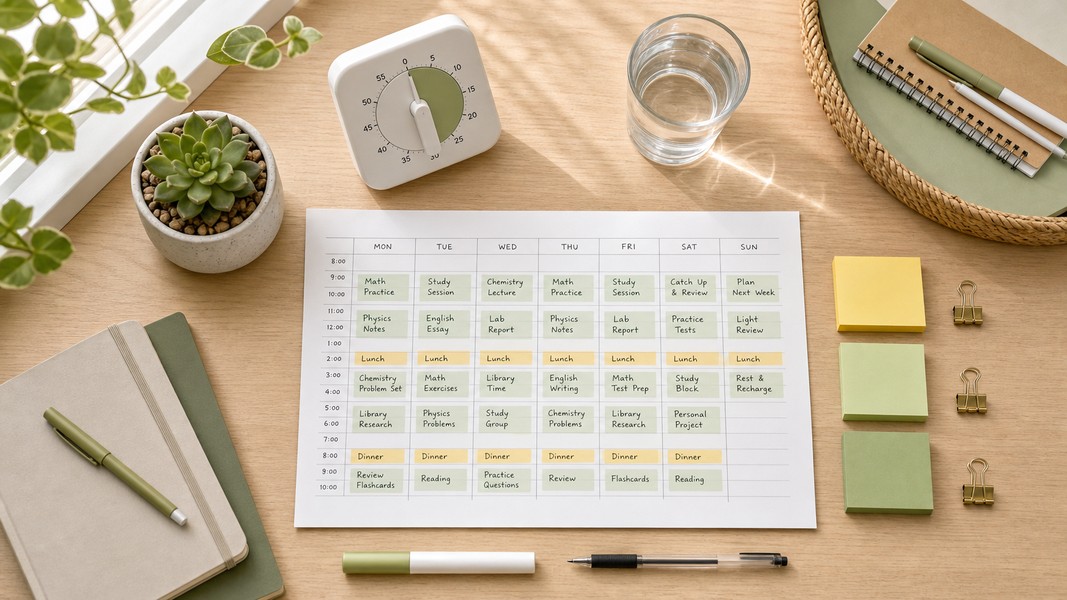
Struggling to manage your time as a student? These 7 evidence-backed tactics fix the real reasons students fall behind and waste hours.

Fathom AI is great for free Zoom notes, but it has real limits. Here are the best fathom ai alternatives for meetings, students, and multi-format capture.