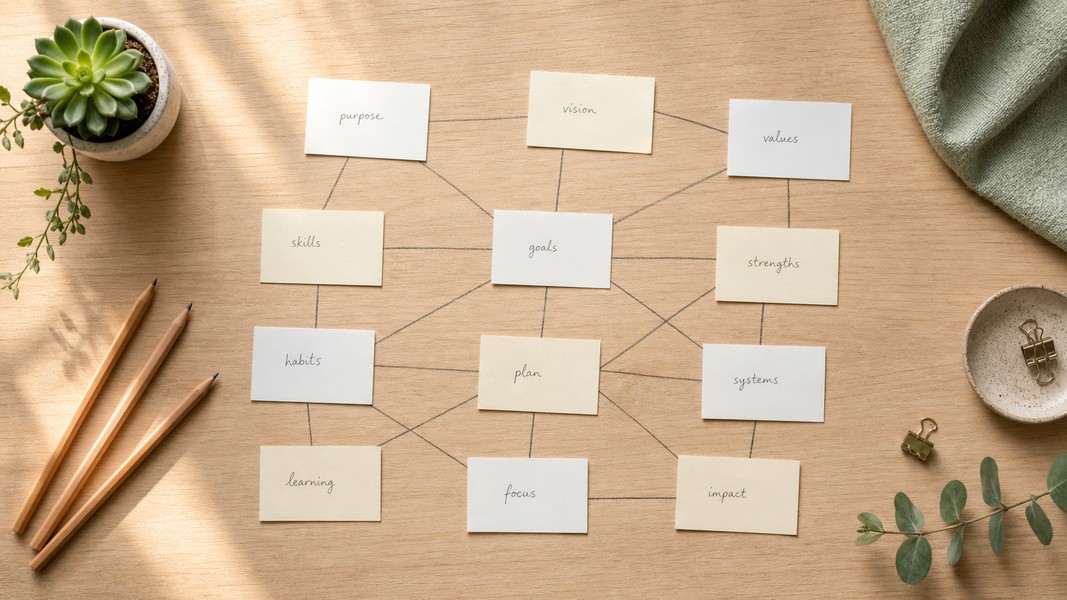
Zettelkasten: How to Build a Knowledge System
July 24, 2026
Learn how the Zettelkasten method works, why linked notes beat linear notebooks, and how to build your own knowledge system from scratch.


March 12, 2026
The best Quizlet alternatives for students include Anki, Knowt, Brainscape, RemNote, Kahoot!, and Voice Memos. Each covers a different gap: some replace the core flashcard experience for free, others go further by generating study materials from your own notes, recordings, or PDFs.
Quizlet built its reputation on student-friendly flashcards and collaborative study sets. But as the free tier has shrunk, more students are looking for tools that do not interrupt a study session at the worst possible moment. The options below are worth a genuine look.
The core issue is not that Quizlet stopped working. It is that key features moved behind a paywall without a proportional improvement in what the free tier offers.
The Learn mode cap is the most common complaint. Students on the free tier hit a monthly limit on Learn mode rounds, which is exactly when exam prep reaches its most intensive phase. Ads during study sessions add to the frustration, and offline mobile access requires a paid plan. For students doing daily review, these limits add up fast.
Reddit threads and App Store reviews from 2025-2026 consistently flag the same problems: "limits hit too fast for STEM cramming," "ads breaking focus during high-volume review," and no way to import content from audio recordings or PDFs without upgrading. For students who want a straightforward, free tool for full-length study sessions, the free tier no longer delivers what it once did.
| Tool | Best For | Free Tier | Standout Feature |
|---|---|---|---|
| Anki | Med and law students | Fully free (desktop/Android) | Spaced repetition algorithm |
| Knowt | AP students, Quizlet migrants | Unlimited flashcards and tests | Direct Quizlet set import |
| Brainscape | Self-paced adaptive review | Limited access | Confidence-based card prioritization |
| RemNote | Note-heavy study workflows | Free with AI credits | Notes-to-flashcards conversion |
| Kahoot! | Classroom and group study | Limited quizzes | Gamified study mode |
| Course Hero | Textbook and homework help | Partial access | Crowd-sourced solved problems |
| Voice Memos | AI-generated study materials | Free tier available | Auto-flashcards from voice/PDFs |
Anki is the most trusted free tool for long-term memorization, and it is the go-to recommendation for students in high-stakes fields like medicine and law. The Anki platform is completely free on desktop and Android, with a one-time purchase for the iOS app.
Its spaced repetition algorithm is what sets it apart from Quizlet. Rather than letting you decide when to review a card, Anki schedules each card based on how well you recalled it last time. Cards you struggle with come back sooner; cards you know well appear less often. Over weeks and months, this produces significantly better retention than game-based review.
The drawbacks are real. Anki has a steep learning curve, minimal visual design, and no pre-built library of shared sets. You build everything from scratch, which suits disciplined learners but frustrates students who want to start studying immediately. For students who want to understand how this scheduling system works and why it improves recall, the research behind spaced repetition is worth reading before committing to the workflow.
Knowt has become the most popular free Quizlet replacement among students in 2025 and 2026, largely because it offers the same core features Quizlet has paywalled, at no cost. Unlimited flashcards, Learn mode, matching games, and practice tests are available on the free tier, with ads.
The killer feature for switchers is Quizlet set import. You can bring your existing Quizlet decks into Knowt without recreating anything. For students who have spent years building Quizlet libraries, this removes the biggest friction of switching.
Knowt also uses AI to generate practice questions from imported content, which closes one of the gaps students feel most acutely on Quizlet's free tier. The main downsides are a smaller shared deck library compared to Quizlet's community and the ads that appear on the free plan. For students whose primary complaint is hitting the Learn mode cap, Knowt is often the most direct replacement.
Brainscape takes a different approach to flashcards. Instead of simple pass/fail or game-based review, Brainscape asks you to rate your confidence on each card after seeing it. The algorithm uses those ratings to prioritize the cards where your confidence is lowest, which means each session focuses your time where it actually needs to go.
This confidence-based system works well for self-paced learners who want something smarter than Quizlet's basic repetition but find Anki too technically demanding to set up. The free tier has access limits, and the card library is smaller than Quizlet's. It fits students who are building their own decks and want adaptive scheduling without learning a complex tool.
RemNote is designed for students who take notes and want their flashcards to emerge from those notes automatically. Rather than maintaining a separate flashcard app and a separate note-taking tool, RemNote keeps them in the same place.
When you write notes in RemNote, you can mark any sentence or term as a flashcard directly within your notes. The app then surfaces those cards for review using spaced repetition scheduling. This integrated workflow reduces the extra step of transferring information between tools, which is one of the main sources of friction in a multi-app study setup.
RemNote includes a free tier with AI credits for automated card generation. It suits college and graduate students who are already taking structured notes and want a study tool that lives inside that system rather than alongside it. Students who just want a fast way to make and review flashcards without the note-taking layer may find it more complex than necessary.
Kahoot! started as a classroom quiz tool and has since added a solo study mode for individual review. If you have used Kahoot! in a class setting, the study mode works similarly but without the group competition element.
The gamified format makes it better for keeping motivation high than for deep memorization. It suits students reviewing content for engagement rather than doing serious exam prep. The free tier covers basic quizzes, with paid plans unlocking advanced features and larger question sets.
For students specifically looking for tools that make quizzes from their own content, the broader category of AI quiz tools covers more options, including tools that generate questions automatically from notes and recordings.
Course Hero is less of a Quizlet replacement and more of a supplement for students who need help with specific textbooks or classes. It hosts crowd-sourced notes, step-by-step solutions, and study guides contributed by students at thousands of schools.
The use case is different from flashcard tools: you are looking for solved problems and class-specific materials rather than building your own review deck. Course Hero has a partial free tier, but the most useful content is behind a subscription or can be unlocked by uploading your own materials.
It works best alongside a spaced repetition tool rather than replacing one. For students who are stuck on specific problems or want to see how other students organized notes for a course, it fills a gap that Quizlet and Anki do not address.
Voice Memos approaches the study tool problem from a different direction. Rather than asking you to manually type or import content, it generates flashcards and quizzes automatically from what you already have: voice recordings, PDFs, images of handwritten notes, and YouTube video links.
The workflow removes the manual step entirely. Record a lecture, upload a chapter PDF, or paste a YouTube link, and Voice Memos produces organized notes, flashcards ready for review, and quiz questions you can use immediately. This is especially useful for students who capture information in multiple formats and want to consolidate it into one study tool.
For students with ADHD or dyslexia, Voice Memos includes a dyslexic-friendly formatting option and reduces the executive function overhead of organizing notes before you can start studying. The app supports 40+ languages, which makes it practical for international students studying in a second language.
The decision comes down to four factors: what kind of learner you are, what you are studying, what devices you use, and how much manual work you are willing to do up front.
If long-term retention is the priority, Anki's spaced repetition algorithm produces better results than any game-based review tool. The learning curve is worth it for high-stakes exams.
If you need a free, direct Quizlet replacement with your existing sets intact, Knowt handles the import and gives you the same core workflow without the paywall restrictions.
For students who take extensive notes and want flashcards built into that system, RemNote removes the step of maintaining two separate tools.
If your content is locked in recordings, PDFs, or video lectures rather than typed text, Voice Memos handles that format automatically without requiring you to retype anything.
And if you are studying for a specific class and need solved problems or class-specific notes rather than flashcards, Course Hero fills that need better than a dedicated review tool.
The best approach is usually to test the free tier of your top one or two options for a week of actual studying, not just setup. What feels friction-free during that first study session tends to be the tool you will actually use consistently.
Quizlet remains a functional tool for many students, but the free tier no longer matches what alternatives can offer. Anki and Knowt cover the core flashcard and spaced repetition use cases for free. RemNote fits note-heavy learners. Brainscape suits those who want adaptive scheduling. Voice Memos fills the gap for students whose content lives in recordings and PDFs rather than typed text. Choosing based on how you actually study, not just which app looks the most polished, tends to produce better long-term results.
Discover more insights and tips to enhance your productivity
Learn how the Zettelkasten method works, why linked notes beat linear notebooks, and how to build your own knowledge system from scratch.
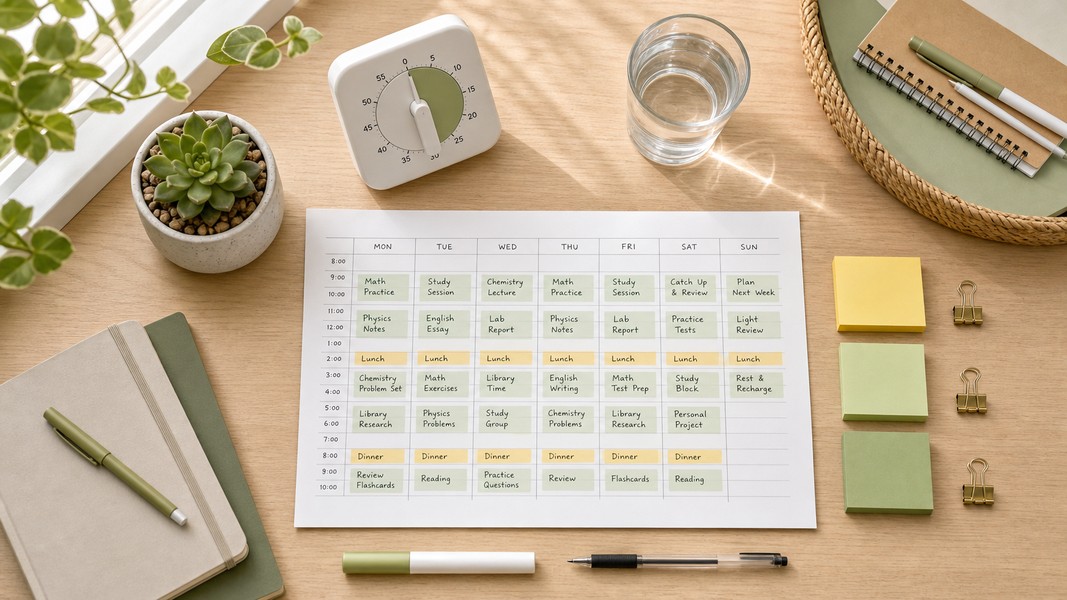
Struggling to manage your time as a student? These 7 evidence-backed tactics fix the real reasons students fall behind and waste hours.

Fathom AI is great for free Zoom notes, but it has real limits. Here are the best fathom ai alternatives for meetings, students, and multi-format capture.