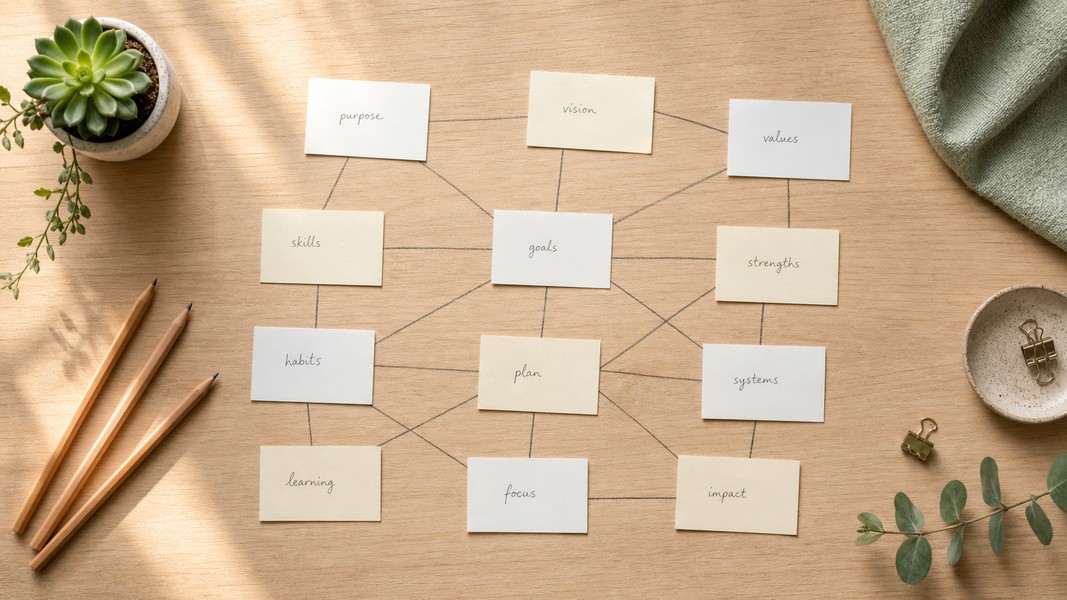
Zettelkasten: How to Build a Knowledge System
July 24, 2026
Learn how the Zettelkasten method works, why linked notes beat linear notebooks, and how to build your own knowledge system from scratch.


April 4, 2026
A complete USMLE Step 1 study plan runs in three phases: a foundation period during MS1 and MS2, a 6-8 week dedicated block, and a final review week. Most U.S. medical students target six weeks of dedicated prep. International medical graduates (IMGs) typically need 10-12 weeks, given a first-attempt pass rate of 76% compared to 94% for U.S. and Canadian graduates.
The minimum passing score is 196, but how you structure your time matters as much as how many hours you log. This guide covers each phase of your USMLE Step 1 study plan in detail, along with daily scheduling, resource selection, and the mistakes that most often derail boards prep.
Study duration depends on where you're starting, not just the calendar date of your exam.
Six weeks is the standard dedicated period for students with a solid preclinical foundation. You should be spending 8-12 hours per day during this block, working through timed question banks and reviewing every wrong answer the same day. Students who integrate active review during MS1 and MS2 often find that six weeks is enough to consolidate without burning out.
Twelve weeks makes more sense if you're an IMG, a repeat taker, or if your preclinical coursework left gaps in core organ systems. An extended timeline lets you spread question bank volume across more days and build stamina gradually.
Four weeks is rarely enough unless you've already scored above 230 on a practice exam and need a short refresh before your test date. Underestimating the time needed is one of the top reasons students underperform.
Whatever timeline you choose, integrate some preparation into your MS1 and MS2 coursework before dedicated ever begins. Students who do this consistently reduce the stress of their dedicated period by avoiding large content gaps going in.
A well-structured plan follows three distinct phases, each with a different goal and daily rhythm. Here's how the complete workflow fits together before diving into each stage:
This phase runs alongside your coursework. The goal is to review high-yield material consistently so that nothing feels completely new when dedicated begins.
Use First Aid as your anchor text and review each organ system as it appears in class. Add Anki flashcards for every topic you miss in quizzes or practice problems. Short, focused videos (Pathoma and Sketchy are the most widely used) reinforce concepts after lectures without overwhelming your schedule.
Keep question exposure light here. Ten to twenty questions per day in study mode, reviewed for explanation rather than speed, is the right approach. The goal is familiarity with question logic, not volume.
This is where the real volume happens. Structure your dedicated period around timed question bank blocks, same-day review, and spaced repetition.
A typical progression moves from two timed blocks per day (80 questions) in week one to three to four blocks per day (120-160 questions) by week four. Each block takes 60 minutes. After each block, spend at least two hours reviewing every wrong answer: rewrite the explanation from memory, identify the gap it exposed, and note any terminology you can't fully define.
On a practical level, mornings work best for memorization-heavy review (First Aid tables, Anki catch-up), mid-day for timed question blocks, and afternoons for targeted content review based on that morning's gaps.
Schedule at least one full rest day per week. Burnout is a bigger risk than under-studying during a six-week block.
Stop introducing new content at least five days before your exam. This phase is for sealing existing knowledge, not filling gaps.
Run one full NBME self-assessment to calibrate your expected score, then spend the remaining days on a light rotation through your weakest organ systems. Avoid any new Anki deck, new resources, or high-volume question blocks. The goal is arriving on test day at full cognitive capacity, not exhausted from a last-minute push.
During dedicated prep, a consistent daily structure prevents decision fatigue and builds the 8-hour stamina you'll need on exam day.
A workable template: two hours of First Aid and Anki review in the morning, two 40-question timed blocks mid-morning and mid-afternoon, two to three hours of block review in between, and 30-45 minutes of light Anki repetition in the evening. That's 10-11 hours including short breaks.
The self-assessment signal to watch for is consistent sub-60% correct on practice blocks. If you're hitting that during week two of dedicated, your foundation phase left too many gaps to cover in the remaining time. Adjust your plan early rather than hoping the gap closes on its own.
Using active recall techniques during your review sessions converts passive re-reading into something your brain actually encodes. Recording a spoken explanation of a concept you're struggling with, then converting that recording into structured notes and flashcards, moves a topic from "recognized" to "owned" much faster than rereading the same paragraph again.
The most common resource mistake is using too many. Students who outperform their peers tend to use five to six resources deeply rather than spreading across ten shallowly.
The core stack most high scorers use: First Aid for high-yield facts, UWorld or AMBOSS as the primary question bank (over 80% of successful Step 1 candidates use one of these two), and Anki for daily spaced repetition. Add Pathoma and Sketchy for visual reinforcement in your weakest systems.
NBME self-assessments are the most accurate predictors of your actual exam score. Run one at the start of dedicated to set a baseline, one at mid-point, and one during your final review week. The score trajectory is the clearest signal for whether your plan is working or needs adjustment.
Voice Memos can accelerate material processing throughout this phase by converting lecture audio, PDF textbook pages, and typed notes into flashcard decks automatically. Rather than manually re-reading First Aid sections you've already highlighted, you record a spoken explanation and let the app generate spaced-repetition cards from it. That's a faster review loop when you're deep into dedicated week four and running short on processing bandwidth.
Active recall improves retention by roughly 50% compared to passive rereading, according to research on retrieval-based learning. For a 280-question, 8-hour exam, that difference compounds. Every percentage point of recall reliability matters more than it does on a shorter test.
The practical implementation is simple. After each question block, close the question bank and rewrite the explanation from memory before reopening it. Circle the specific terminology you couldn't produce. Then add that gap to your Anki deck for the following morning's review.
Spaced repetition handles the maintenance work. You don't need to keep rereading material you already know; the algorithm surfaces what you're at risk of forgetting on exactly the day you need to see it again. This is what makes Anki effective for board prep compared to static flashcard review.
The same retrieval-first logic applies to the MCAT study plan. If you used active recall methods for MCAT prep, you're already familiar with the framework. Step 1 just requires scaling it to a higher content volume across more organ systems.
With Voice Memos, you can feed recorded lecture audio or scanned textbook pages directly into the app and receive a structured flashcard set within minutes. For students covering fifteen or more organ systems during dedicated, this removes the manual card-creation bottleneck that often causes Anki backlogs to stack up mid-block.
Most Step 1 failures come from a predictable set of mistakes, not from lack of effort.
Passive video overconsumption ranks first. Watching Pathoma or Sketchy videos without immediately testing yourself on the content produces the illusion of learning without the neural encoding needed for retrieval under exam conditions. Videos should always be followed by active testing, same day.
The second pattern is ignoring weak areas. When block analysis shows consistent sub-60% performance in a particular organ system, many students default to spending time on their stronger areas because it feels more productive. That's backward: weak areas represent the highest-yield return on time invested during dedicated.
Skipping same-day review is the third pitfall. Reviewing a question block two days later means you've lost the context for why you chose the wrong answer. Same-day review is what turns question bank exposure into long-term learning. This single discipline delivers more than adding another resource to your stack.
The USMLE Step 2 study plan shifts focus from basic sciences to clinical management. Vignettes are longer, and questions test next-best-action judgment rather than mechanism recall.
Most students spend 4-8 weeks on Step 2 preparation at 15-25 hours per week, typically alongside third-year rotations. UWorld and AMBOSS remain the dominant question banks. The key addition is dedicated CCS (clinical case simulations) practice, which accounts for a meaningful share of the Step 2 score.
If you're planning for all three exams, the USMLE Step 3 requires a separate preparation track for Day 2 CCS cases, distinct from the standard MCQ approach.
A strong USMLE Step 1 study plan isn't built around the most resources or the most hours per day. It's built around a clear three-phase structure, consistent daily scheduling, and a retrieval-based review practice that compounds over time. Start your foundation work in MS1, commit to 6-8 focused weeks during dedicated, protect your final review week from new content, and build in the rest your performance actually depends on.
Discover more insights and tips to enhance your productivity
Learn how the Zettelkasten method works, why linked notes beat linear notebooks, and how to build your own knowledge system from scratch.
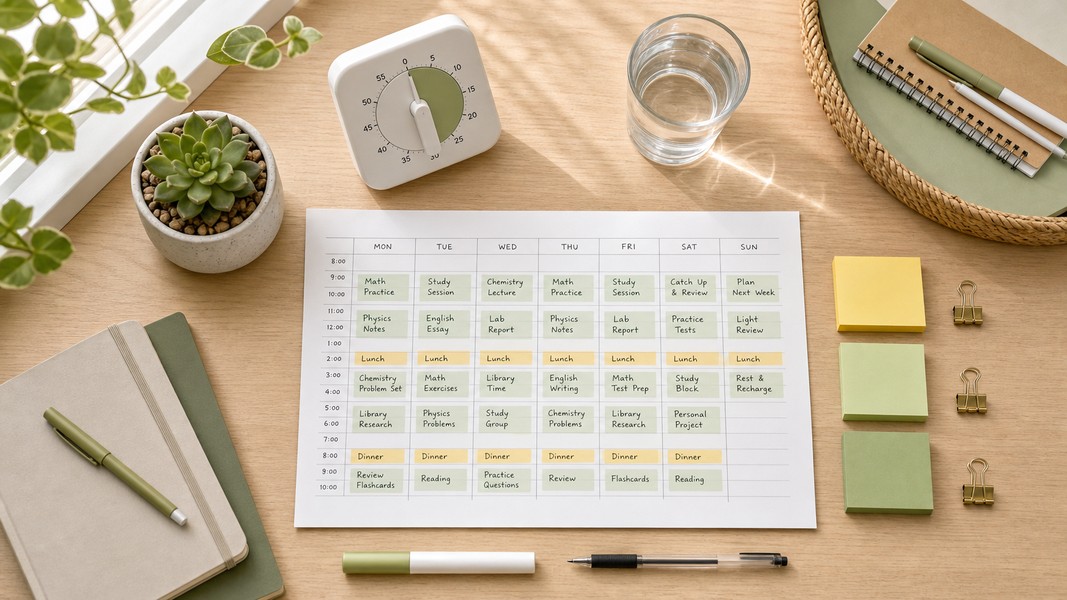
Struggling to manage your time as a student? These 7 evidence-backed tactics fix the real reasons students fall behind and waste hours.
Fathom AI is great for free Zoom notes, but it has real limits. Here are the best fathom ai alternatives for meetings, students, and multi-format capture.